
 Russell Andrews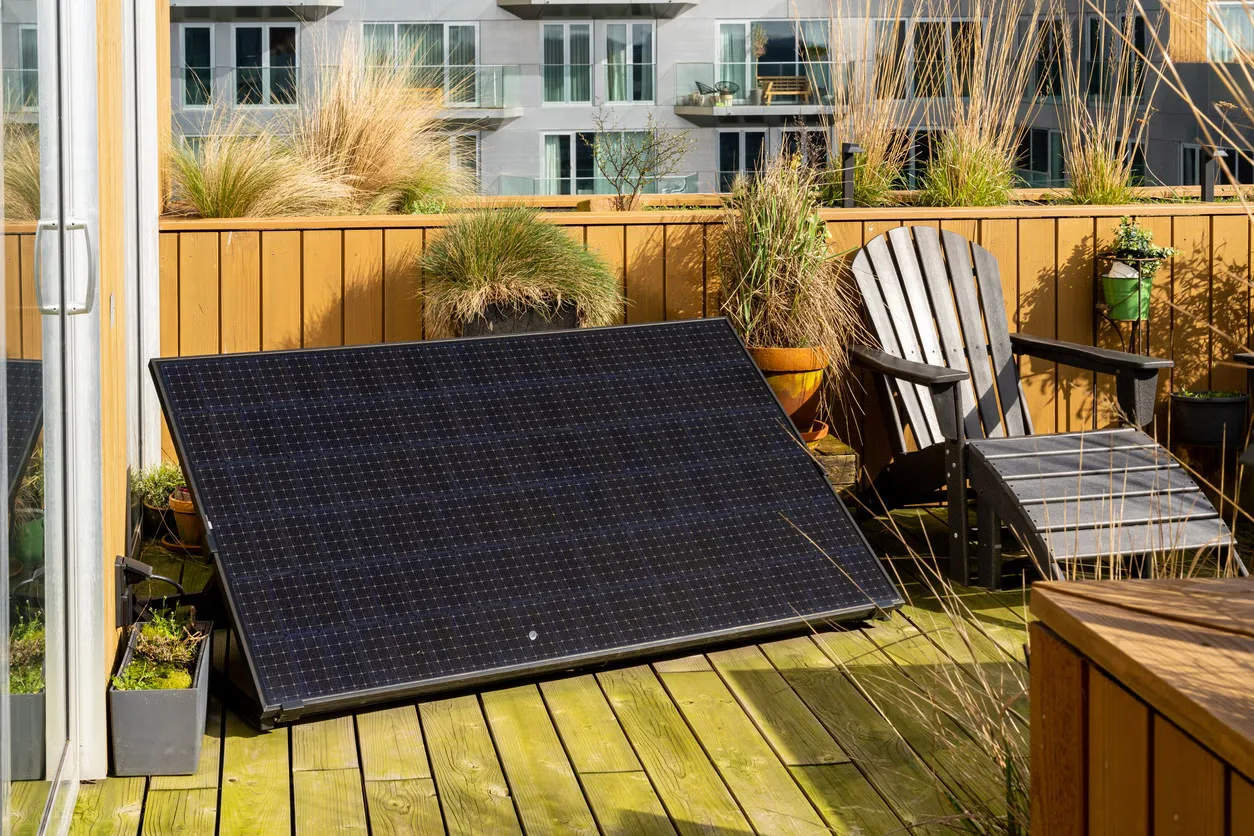
From 27 August, plug-in solar panels became legal to buy and use across England, Scotland and Wales. These are small, low-power panels you plug directly into a normal wall socket, rather than a rooftop system fitted by an installer, and they can now be bought from major retailers including Currys, B&Q, Screwfix, Amazon, Argos and Wickes.
If you're one of our customers and you already have rooftop solar or a battery installed, the question we're already hearing is simple: can you add one of these as well, and does it change anything about your existing system? Here's what's actually changed, and what to check before you buy one.
What's actually changed
Each compliant plug-in solar kit produces up to 800W, which the government estimates can cover around 20% of an average home's electricity use and save up to £110 a year. The panels plug straight into a standard socket, there's no installation cost, and nothing needs to be exported to or drawn from the grid to work. The change follows independent safety testing that DESNZ says is more stringent than the German standard, where similar devices have been in widespread use for several years.
It's worth being clear about what this is and isn't. A plug-in panel is a small supplementary source of power for everyday appliances like a fridge, router or laptop while the sun's out. It's not a replacement for a properly sized rooftop solar system, and it won't materially change the output of one you already have.
The rules that come with it
A few restrictions apply that are worth knowing before you buy:
Only one plug-in solar device is permitted per property under the current regulations. The Energy Saving Trust notes this may be revisited in future, but for now it's a hard limit, not a guideline.
The device has to plug directly into a socket on its own circuit, not shared with lighting or a hardwired appliance like a boiler, and not via an extension lead. If you don't already have a suitable outdoor socket, a qualified electrician needs to fit one.
Registering the device is a legal requirement, not optional paperwork. It's a short process on the UK Plug-In Solar Registration website, needing your name, postcode, and the device's make and model.
If you already have rooftop solar or a battery
This is the part most general coverage of the announcement skips, and it's the one that actually matters if you're already a solar or battery customer. According to the Energy Saving Trust, adding a plug-in panel alongside an existing system is usually possible, but it isn't automatic. Two things specifically need checking:
Whether it overloads your existing setup. You should speak to your original installer, or a qualified electrician, to confirm the extra device won't put more through your system than it's designed for.
Whether your Distribution Network Operator (DNO) needs telling. If adding the plug-in panel pushes your total exported electricity over a certain threshold, you may need to notify your DNO.
Neither of these is difficult to sort out, but skipping them isn't a good idea. An unreported change to your export profile, or a device that isn't accounted for in how your system was originally designed, is exactly the kind of thing that can complicate things later, whether that's a warranty query, an export-payment query, or a straightforward electrical safety issue. If you're a REST customer and you're thinking about adding a plug-in panel, get in touch with our aftercare team before you buy one, not after, so you know whether it's straightforward for your specific setup or worth a proper look first.
Permission you might still need
Buying a compliant panel doesn't override permissions that may already apply to your property. If you rent, or you're a leaseholder in a managed building, you'll usually need sign-off from whoever's responsible for the building before fitting one, particularly if it involves drilling into a wall or adding an external socket. Planning permission can also apply depending on where you live and the type of property, and if you're in a listed building or conservation area it's worth checking with your local authority first. England has introduced a Permitted Development Right specifically to make this easier for houses, but the position varies across England, Scotland and Wales, and Northern Ireland isn't included in this change yet.
Our take
This is a genuinely welcome change for renters and flat owners who've never had a realistic route to generating their own electricity. For our existing customers, it's a smaller and more practical question: does one of these make sense alongside what you've already got, and if so, what needs checking first. We'd rather you ask before you buy than find out after the panel's plugged in. If you're not sure where your setup stands, our team can talk you through it, and if you're starting from scratch, our free quote page is the place to start for a system sized properly around your home rather than a single plug-in device.