
An estimate in seconds
Enter your monthly bill band and a postcode and a yearly saving estimate appears before any contact details are requested.
Free quote for solar in London
Generate more of the electricity your London home needs and buy less of it from your supplier. Start with a free quote, then see how solar and a battery could help with your bills for years to come.
Buy less electricity from your supplier. Get your personal London savings estimate below.
Step 1 of 3
Roughly is fine. It tells us how much solar could do for your home.







Why Londoners ask REST
London homes range from mansion blocks to suburban semis, so a single answer never fits. REST begins with your bill.
Enter your monthly bill band and a postcode and a yearly saving estimate appears before any contact details are requested.
Eurener NEXA panels have 30-year manufacturer warranties on the product and on performance, with Tesla, Duracell, Growatt or Fox ESS storage where it helps.
REST's work is MCS-certified, your deposit is insured via HIES, and EPVS checks and clears the estimate of your savings before installation.
London customers
What REST fitted at two London homes, and what each is estimated to do for the electricity bill.
Case study
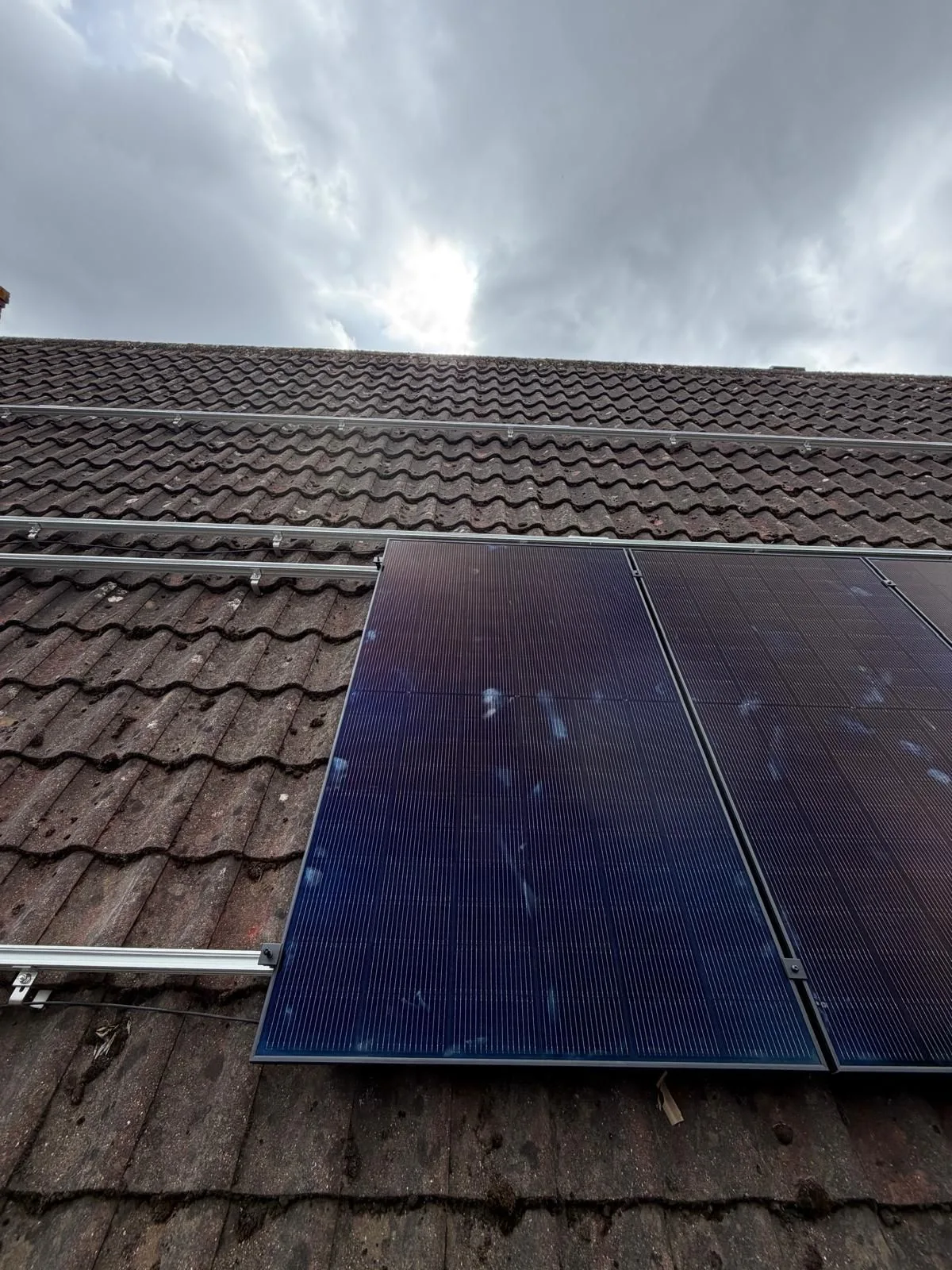
Think of £223 a month, every month, for as long as the lights stay on. That is what Kuljit's London home was set to spend on electricity, from 10,384 kWh a year of grid power.
The answer sits on the roof: 20 panels making power all day, and a big battery keeping the surplus for after dark. When the panels go quiet, the house can keep going on yesterday's sunshine. Three quarters of the generation is projected to go straight into the house, so this is a system aimed at the bill, not at selling power.
Payback is projected at around eight years. After that the system has earned back what it cost and the sunshine can carry on working for you. The long-run projection underneath shows what that could add up to.
*Assumes electricity prices rise 7.04% a year. A projection, not a guarantee.
Case study
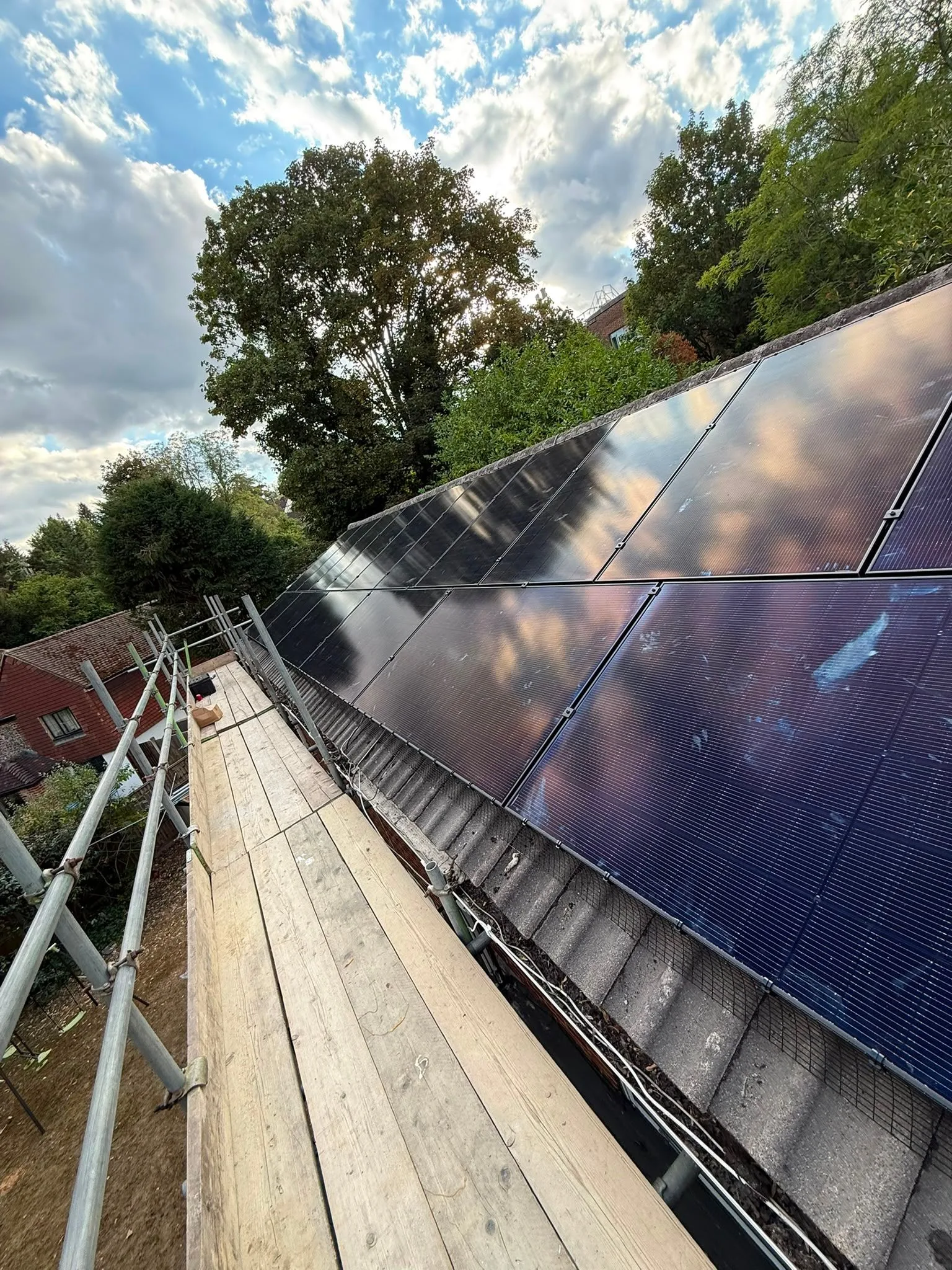
Sixteen panels on a London home that uses 4,327 kWh a year. It is a big roof for a modest bill, and that is the point.
Because the roof out-produces the household, only around a quarter of its output is expected to run the house directly. The rest goes into the batteries or out to the grid, with export income topping the projected benefit.
The projected first-year benefit lands a little above the £1,410 bill, since exports earn money as well as saving it. The supplier's bill still arrives. Payback is projected at around nine years, and the longer story sits in the figure below.
*Assumes electricity prices rise 7.04% a year. A projection, not a guarantee.
Recent REST installs in London
More London installs, each with an estimated benefit.
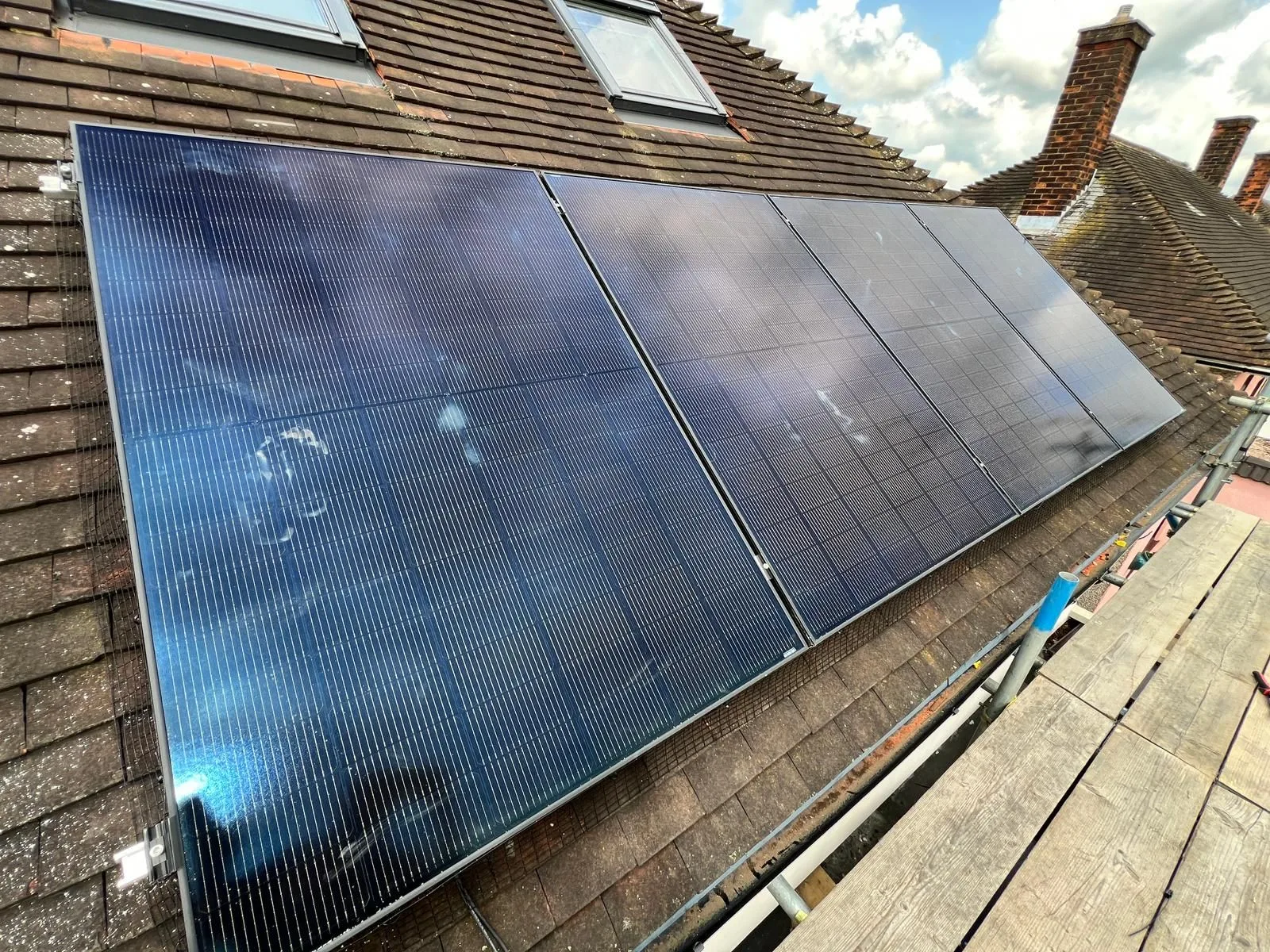
London · May 2024
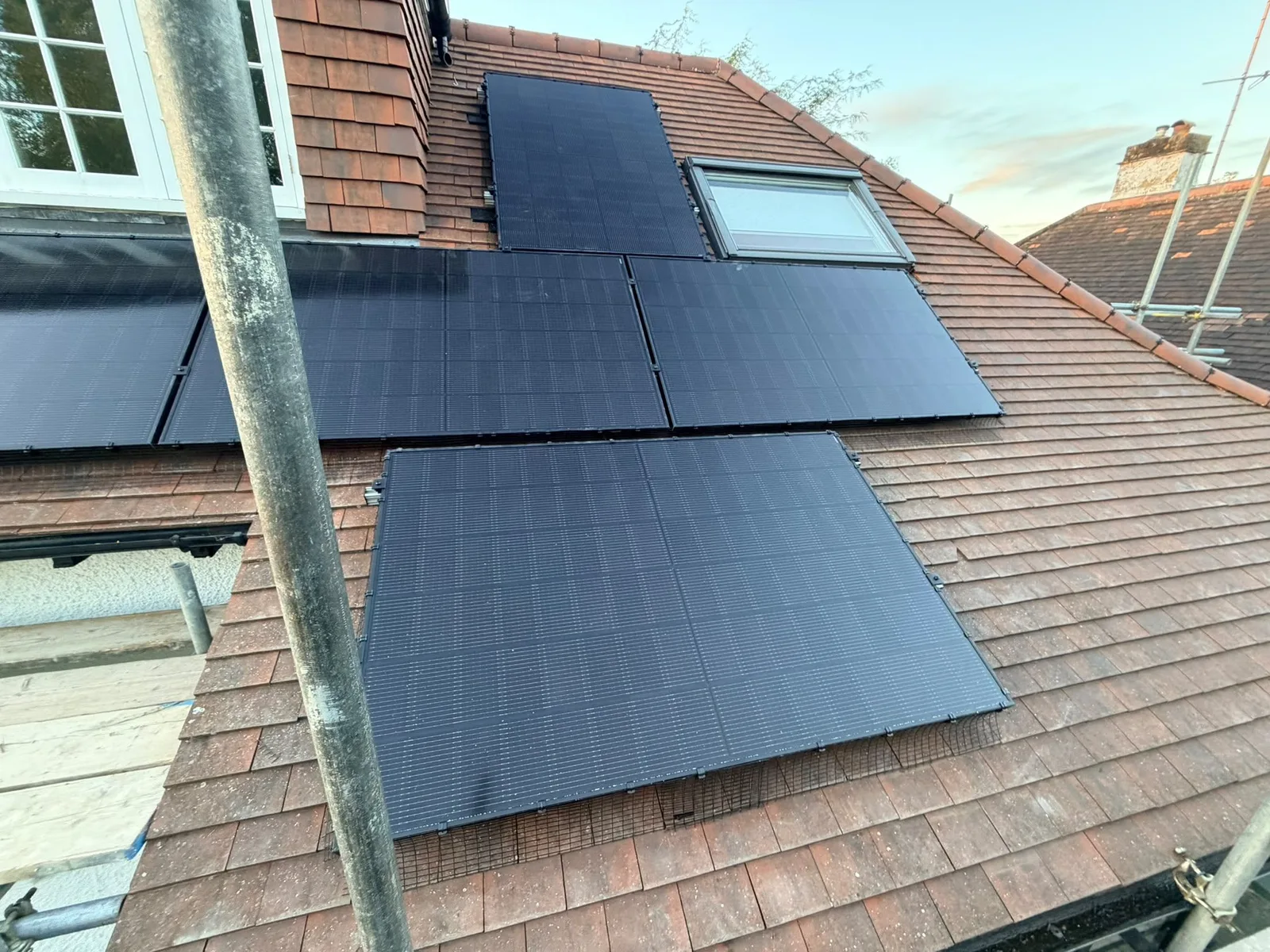
London · September 2026
All savings, spend and generation figures are estimates, not measured results or a guarantee, and they depend on the roof, usage, tariff and future energy prices. These are selected examples, not typical results.
What it means at home
Electricity bills never stop arriving. A solar system moves part of that spending onto your own roof, and the effect carries on for years.
While the sun is up, the panels can run the fridge, the washing machine and everything else switched on, so less is drawn from the grid.
A battery holds spare daytime power for dinner, the lights and the telly once the panels have gone quiet.
After payback, the electricity your roof makes is power you no longer buy. REST's forecast allows for replacing a battery or inverter along the way.
Credibility you can check
Each of these is verifiable, which is the point of listing them.
The manufacturer provides 30 years of cover on the product and another 30 on performance, and REST will step in to help should a claim arise.
Four makers are offered: Fox ESS, Duracell, Growatt and Tesla's Powerwall, sized to the hours your household uses the most electricity.
Your deposit sits inside an insurance-backed HIES scheme, which has its own limits.
EPVS clears every saving figure before the install, using its own calculation. Each is marked as an estimate, with its assumptions in the quote.
Solar in London
London has local complications worth knowing about before a system is designed.
London has hundreds of conservation areas, and rules can differ by borough, with some areas covered by Article 4 Directions. Flats and maisonettes are treated differently from houses, and leaseholders usually need their freeholder's consent. Check your address with your borough.
Most of London connects through UK Power Networks. REST puts in the G98 or G99 request for you; the operator decides how long it takes.
Victorian terraces, interwar semis and larger blocks each offer different roof space, access and shade. The surveyor measures what your roof can actually take.
Useful official pages: Planning Portal: solar panels and planning permission · Find your network operator
What happens next
Pick the monthly band that matches your electricity bill.
The estimate adjusts to London, so the figure fits your area.
Add your details and REST will be in touch with what solar could save your London home.
Common questions
No. You pay nothing for it, and nothing follows from asking.
Your quote shows how REST reached its London numbers. It contains:
Yes. REST can arrange finance, with some routes needing no upfront payment. Finance is subject to status and lender approval, and REST UK acts as a credit broker, not a lender.
Yes. Before a price is fixed, a surveyor looks over the roof, shade and wiring, and the visit is free.
It is a careful figure for a typical home with your bill, and your quote refines it. It remains an estimate rather than a guarantee.
That is where most of the long-term value sits. Once the system has paid back, the electricity your roof makes is power you no longer buy from a supplier, and the proposal shows when REST expects that to happen.
Sometimes. It depends on who owns the roof and whether the freeholder agrees, so raise it early.
No, but they can add checks, especially for anything fixed to a wall that faces the street. Listed buildings need consent. Your borough can confirm.
Yes, if you register for a Smart Export Guarantee tariff. Your supplier decides the rate.
Greater London coverage
REST reviews residential projects throughout the area, subject to survey requirements, access and installation availability.
Check your propertyWestminster, Kensington and Chelsea, Hammersmith and Fulham, Ealing, Hounslow, Brent, Harrow and Hillingdon.
Barnet, Camden, Enfield, Haringey, Islington, Hackney and Waltham Forest.
Newham, Tower Hamlets, Redbridge, Barking and Dagenham, Havering and Greenwich.
Southwark, Lambeth, Lewisham, Bromley, Croydon, Sutton, Merton, Wandsworth, Richmond, Kingston and Bexley.
Free quote
Leave your details and your personal London savings estimate is on its way from REST. No obligation.
Step 1 of 3
Roughly is fine. It tells us how much solar could do for your home.
Projected net savings over 30 years: Kuljit C, London. This is the projection in the customer's own proposal, after the cost of the system and any finance repayments. It assumes electricity prices rise 7.04% a year, panel output falls 1% in the first year and about 0.38% a year after that, battery capacity falls 2.5% a year, and the battery (£1,808) and inverter (£1,000) are replaced every 10 years.
Projected net savings over 30 years: Nabeel F, London. This is the projection in the customer's own proposal, after the cost of the system and any finance repayments. It assumes electricity prices rise 7.04% a year, panel output falls 1% in the first year and about 0.38% a year after that, battery capacity falls 2.5% a year, and the battery (£1,000) and inverter (£750) are replaced every 10 years.
If electricity prices rise more slowly than assumed, the savings will be lower. Projections are not measured results or a guarantee, and they depend on the roof, usage, tariff and future energy prices. These are selected examples, not typical results.