
Your numbers, not an average
The estimator uses your own bill band and postcode. Nothing personal is needed until you ask for the quote.
Free quote for solar in Kent
Put your Kent roof to work. REST can show how panels and a battery could cut what you buy from the grid, with a free home appointment and a quote built around how your household uses power.
Buy less electricity from your supplier. Get your personal Kent savings estimate below.
Step 1 of 3
Roughly is fine. It tells us how much solar could do for your home.








Kent homeowners and REST
REST is a Kent business, and these pages are built around the questions Kent households ask first.
The estimator uses your own bill band and postcode. Nothing personal is needed until you ask for the quote.
Eurener NEXA panels, covered by their maker for three decades on the product and again on output, with Fox ESS, Duracell, Growatt or Tesla batteries wherever storage helps.
REST installs to MCS standards, HIES insures your deposit, and no install is confirmed until EPVS has looked over the savings figures.
Kent customers
Two Kent installs, one built around household use and one that sells a lot of power back to the grid.
Case study
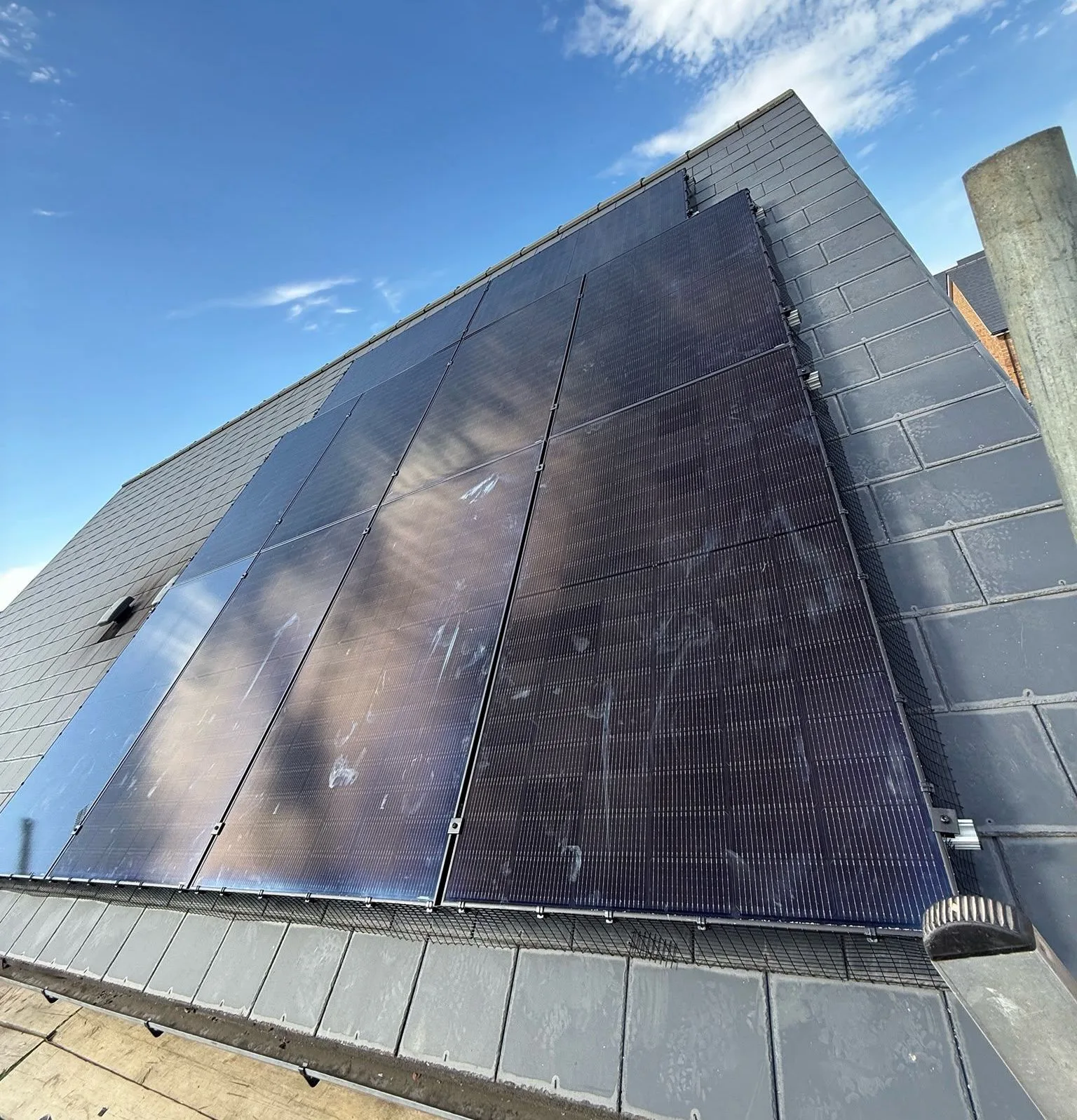
Most solar paybacks are measured in a decade or more. On Kamalanabhan's Gravesham home the projection is five years, the quickest of any install on these pages.
The household was set to spend £1,827 a year on electricity. Twelve panels and a battery turn that around three ways at once: power used straight from the roof, power stored for the evening and surplus sold on, each worth a similar slice of the projected benefit.
That total is a little higher than the bill itself because it counts export income as well as savings. At the five-year mark the system has recovered its cost, and the projection below shows what the decades that follow could hold.
*Assumes electricity prices rise 7.04% a year. A projection, not a guarantee.
Case study
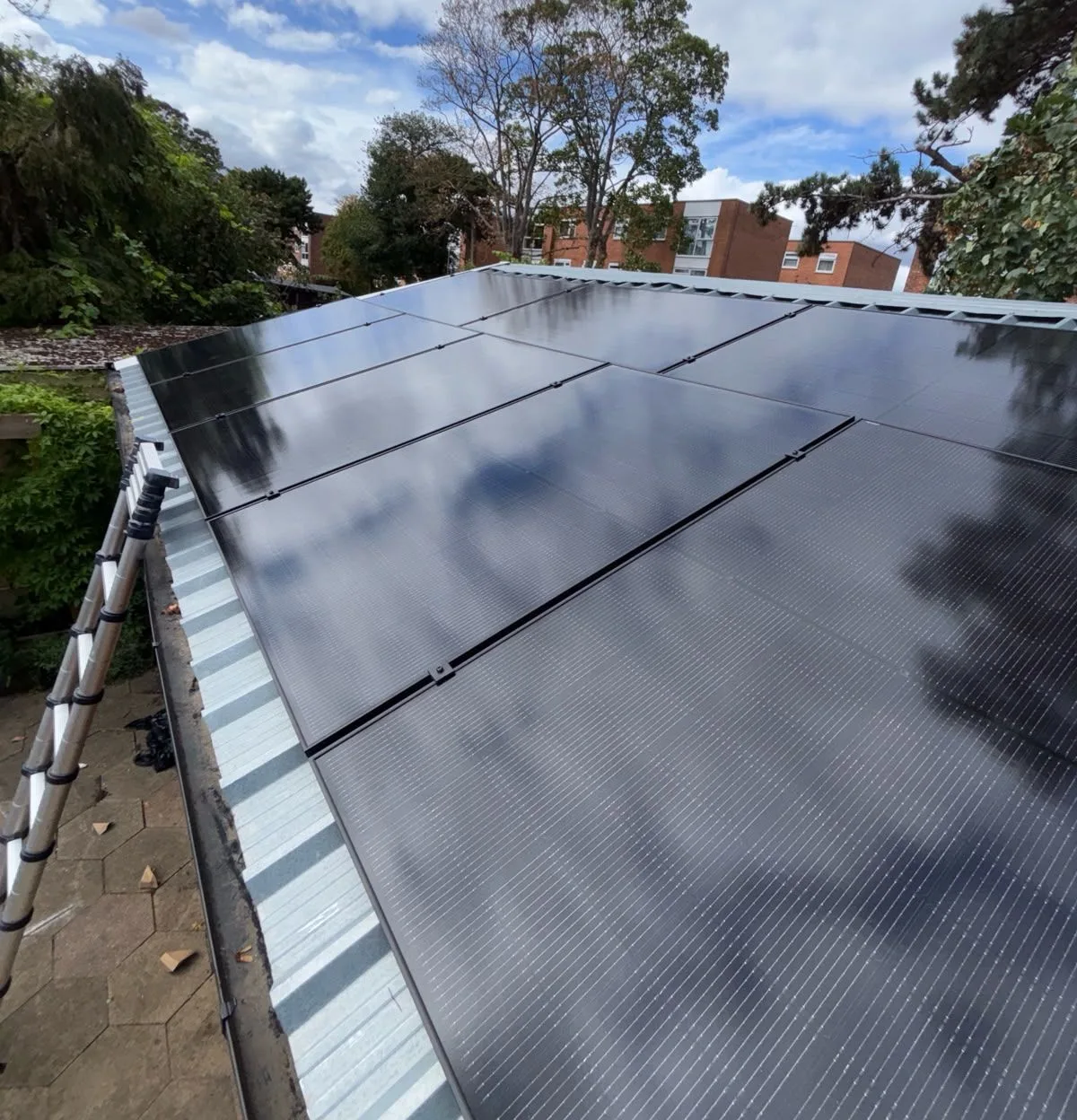
Eighteen panels on a Kent home that uses 4,844 kWh a year is a lot of roof for a modest bill, and REST designed it that way. Rajendra's electricity was set to cost £1,308 a year.
The roof generates around 8,561 kWh, well beyond what the house can use, which is why just over half of the projected benefit is income from the grid. It is a different way of thinking about a roof: not only a way to cut a bill, but something that earns.
The household will still receive a bill from its supplier. But the system is projected to be worth more each year than that bill, with payback at around 11 years. The 30-year projection underneath shows the long run.
*Assumes electricity prices rise 7.04% a year. A projection, not a guarantee.
Recent REST installs in Kent
Recent Kent-area installs, generation and estimated saving.
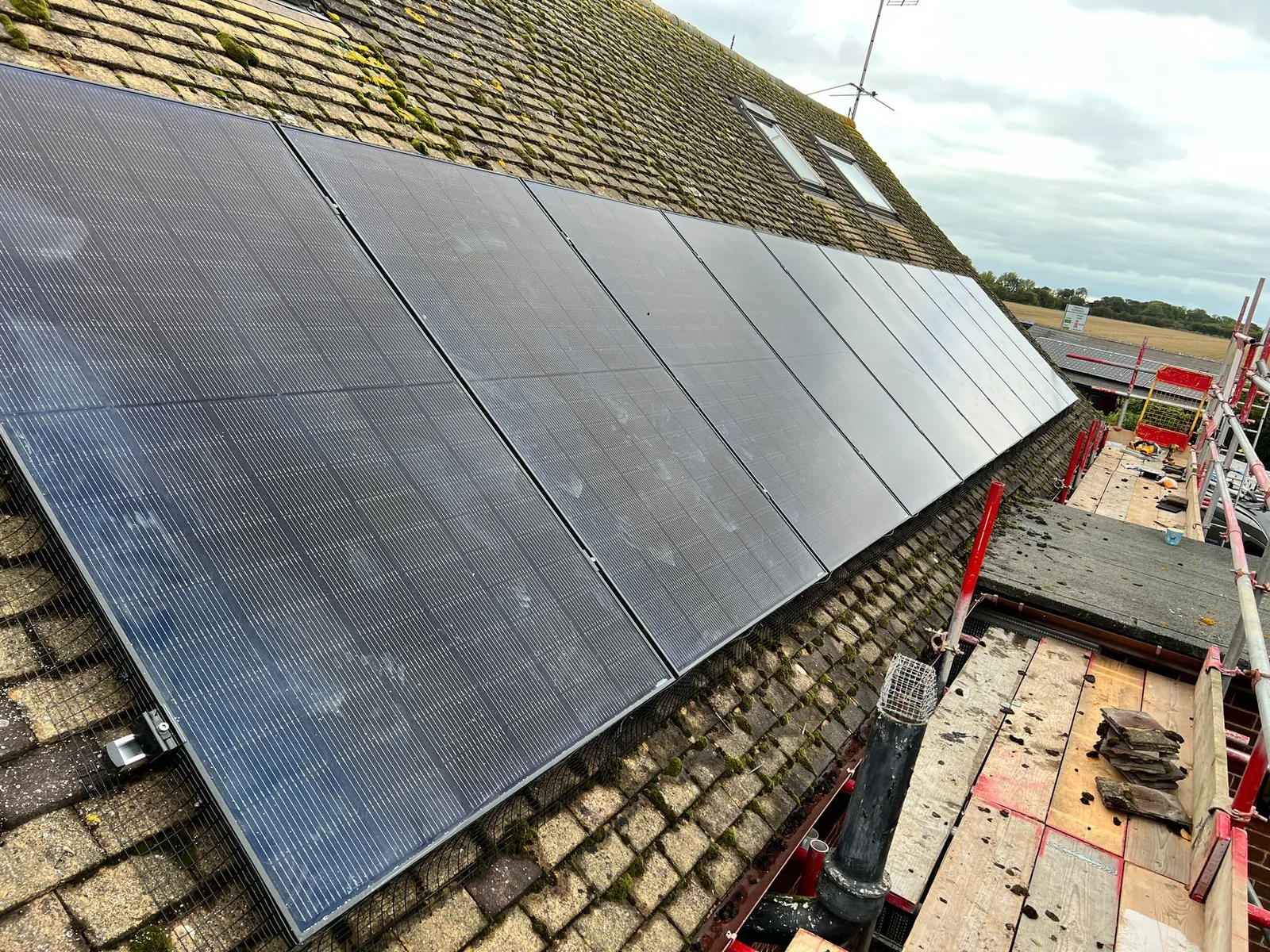
Thanet, Kent · September 2024
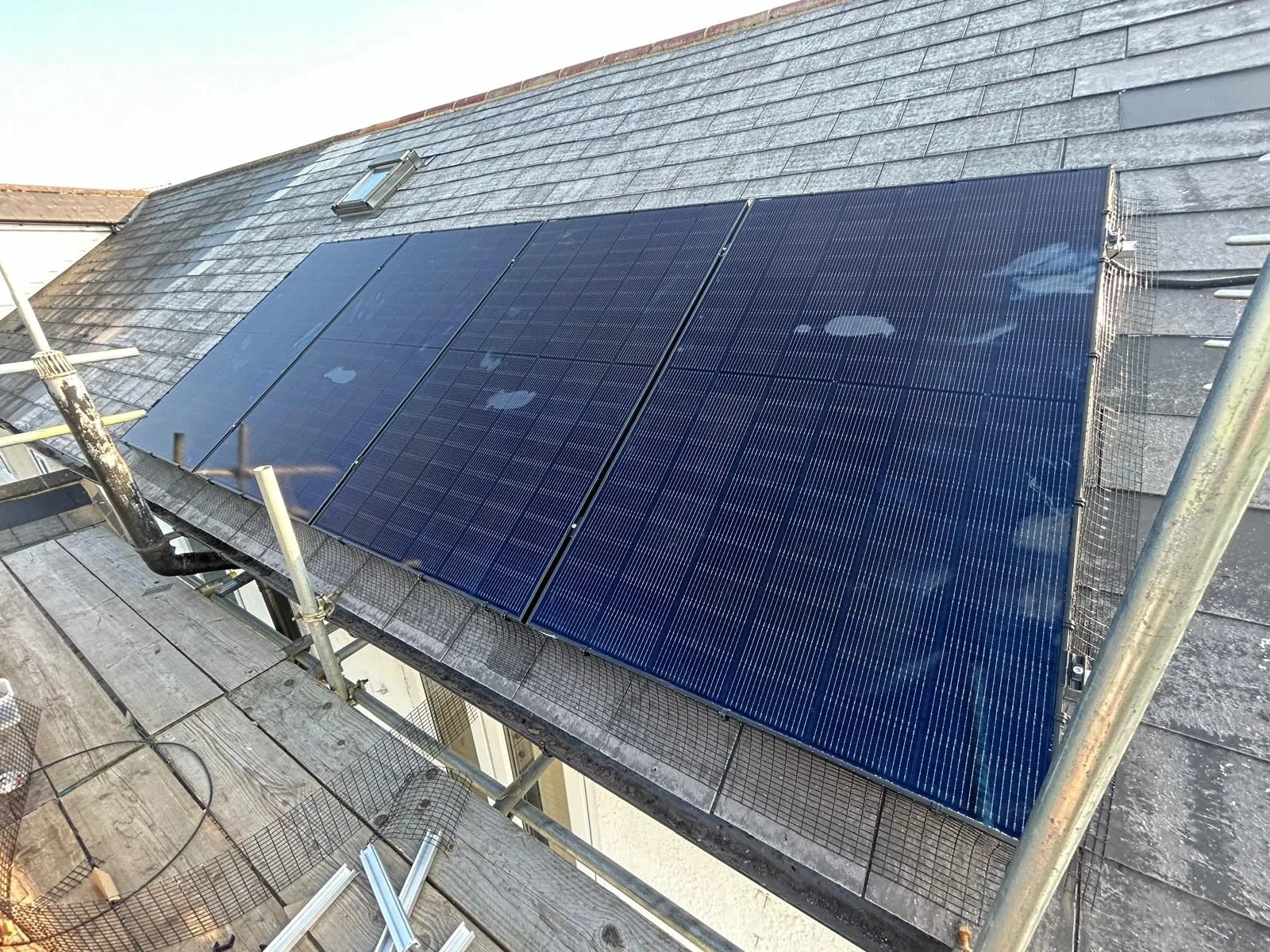
Kent · March 2025
All savings, spend and generation figures are estimates, not measured results or a guarantee, and they depend on the roof, usage, tariff and future energy prices. These are selected examples, not typical results.
What it means at home
Each unit of solar power you use at home is one your supplier does not sell you. Over many years, that adds up to more than a first-year figure shows.
Kettle on, laptop open, dishwasher running: on a bright day the roof can cover a good part of a working household's demand.
Stored power can carry the house through the evening peak, which is often when a household uses the most.
Once the system has earned back its cost, you are still using power you did not have to buy.
Why believe the estimate
Four checkable facts about what stands behind a REST installation.
Eurener NEXA modules come with two separate warranties of 30 years each, one on the product and one on performance. REST helps with a claim if needed.
Choose between Tesla Powerwall, Growatt, Fox ESS and Duracell, with the size set by your evening demand.
HIES provides insurance-backed protection for your deposit, within the limits of its scheme.
Every saving is called an estimate, calculated with the EPVS method, cleared by EPVS before installation and shown with its assumptions.
solar installations in the South East since January 2026, the highest regional total in the government's first breakdown. GOV.UK
Solar in Kent
Local points that can influence a Kent installation.
Medieval centres such as Rochester, Faversham and Tenterden include conservation areas, and parts of the county sit in the Kent Downs National Landscape, formerly an Area of Outstanding Natural Beauty. Listed buildings need separate consent. Most ordinary house roofs need no planning application.
Kent homes connect through UK Power Networks. REST applies for your G98 or G99 connection, but how long the operator takes is out of REST's hands.
Thanet's seafront roofs, village cottages in the Weald and new estates around Ashford and Maidstone present different challenges. The surveyor checks your own roof for space, shade and exposure.
Useful official pages: Planning Portal: solar panels and planning permission · Find your network operator · GOV.UK regional solar figures
Next steps
Choose the band closest to what you pay each month.
The estimate fits Kent and the surrounding area.
Leave your details and REST will come back to you with your own solar savings figure.
Common questions
No. The quote is free and creates no obligation.
Take your time with a proposal for Kent. It shows:
REST can arrange finance, including routes with no upfront cost. Finance is subject to status and lender approval, and REST UK acts as a credit broker, not a lender.
They look over the roof, shade and wiring to confirm the system and the price. There is no charge and no pressure to proceed.
It is a prudent figure for a home like yours. Your quote refines it with the details of your own house, and is still an estimate.
Yes, and it is the part of the numbers many people overlook. After payback, every unit the panels make and you use is one you are not paying for. The forecast in your proposal shows how that builds up.
Roof panels on a house usually need no application, but protected landscapes and conservation areas can add checks. Ask your local council what applies to your address.
That depends on your evening usage. Your quote prices a solar-only system and a solar-and-storage one side by side.
Yes. Once you are signed up to a Smart Export Guarantee tariff, exports earn whatever rate your supplier pays.
Kent coverage
REST reviews residential projects throughout the area, subject to survey requirements, access and installation availability.
Check your propertyCanterbury, Thanet, Dover, Deal, Folkestone, Hythe and surrounding villages.
Maidstone, Ashford, Sittingbourne, Faversham and the surrounding rural communities.
Dartford, Gravesham, Medway, Swale and commuter towns along the Thames and Medway.
Sevenoaks, Tonbridge, Tunbridge Wells, Edenbridge and nearby villages.
Free quote
Pop your details in and REST will come back with your own Kent savings figure. No obligation.
Step 1 of 3
Roughly is fine. It tells us how much solar could do for your home.
Projected net savings over 30 years: Kamalanabhan D, Gravesham, Kent. This is the projection in the customer's own proposal, after the cost of the system and any finance repayments. It assumes electricity prices rise 7.04% a year, panel output falls 1% in the first year and about 0.38% a year after that, battery capacity falls 2.5% a year, and the battery (£1,152) and inverter (£750) are replaced every 10 years.
Projected net savings over 30 years: Rajendra M, Kent. This is the projection in the customer's own proposal, after the cost of the system and any finance repayments. It assumes electricity prices rise 7.04% a year, panel output falls 3% in the first year and about 0.38% a year after that, battery capacity falls 2.5% a year, and the battery (£1,152) and inverter (£750) are replaced every 10 years.
If electricity prices rise more slowly than assumed, the savings will be lower. Projections are not measured results or a guarantee, and they depend on the roof, usage, tariff and future energy prices. These are selected examples, not typical results.