
An estimate first
Pick your bill band and postcode. The estimated yearly saving is shown straight away, and your contact details are optional until you want a quote.
Free quote for solar in Cardiff
Find out how solar could take a bite out of your Cardiff electricity bills for years to come. Get a free quote for your roof and your energy use, with batteries and the long-term picture explained at a home appointment.
Buy less electricity from your supplier. Get your personal Cardiff savings estimate below.
Step 1 of 3
Roughly is fine. It tells us how much solar could do for your home.








Cardiff and South Wales
Welsh homes range from valley terraces to coastal new-builds, so REST works from your own bill and roof.
Pick your bill band and postcode. The estimated yearly saving is shown straight away, and your contact details are optional until you want a quote.
Eurener NEXA panels with 30-year manufacturer warranties on both the product and its performance, plus Duracell, Fox ESS, Tesla or Growatt storage where it suits.
Work to MCS standards, a deposit that HIES insures, and estimates that EPVS has checked and cleared before the install goes ahead.
South Wales customers
Two South Wales homes, and what solar and storage are estimated to save each of them.
Case study
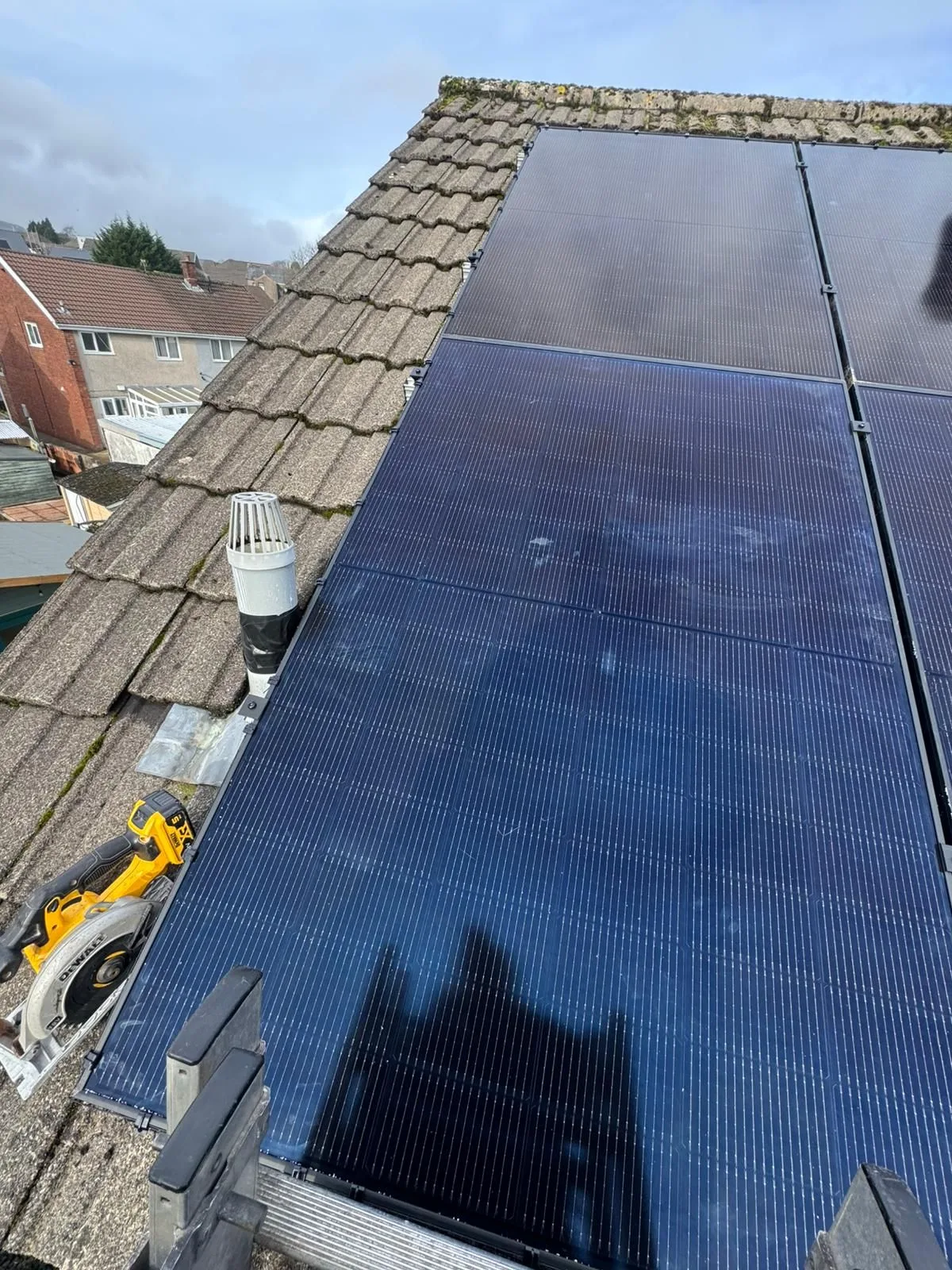
Nine panels. That is all it takes on Michael's South Wales roof, where the household was set to spend £1,159 a year on electricity from 3,619 kWh.
What makes the system work is choice. When the sun is out, the house uses it. When it is not needed, the battery stores it. And when even the battery is full, the surplus is sold. Three routes, each worth roughly a third of the projected benefit.
That puts payback at around 12 years. Small systems make little noise and add up over time, and the 30-year projection below shows how a modest roof can still be a meaningful long-term decision.
*Assumes electricity prices rise 7.04% a year. A projection, not a guarantee.
Case study
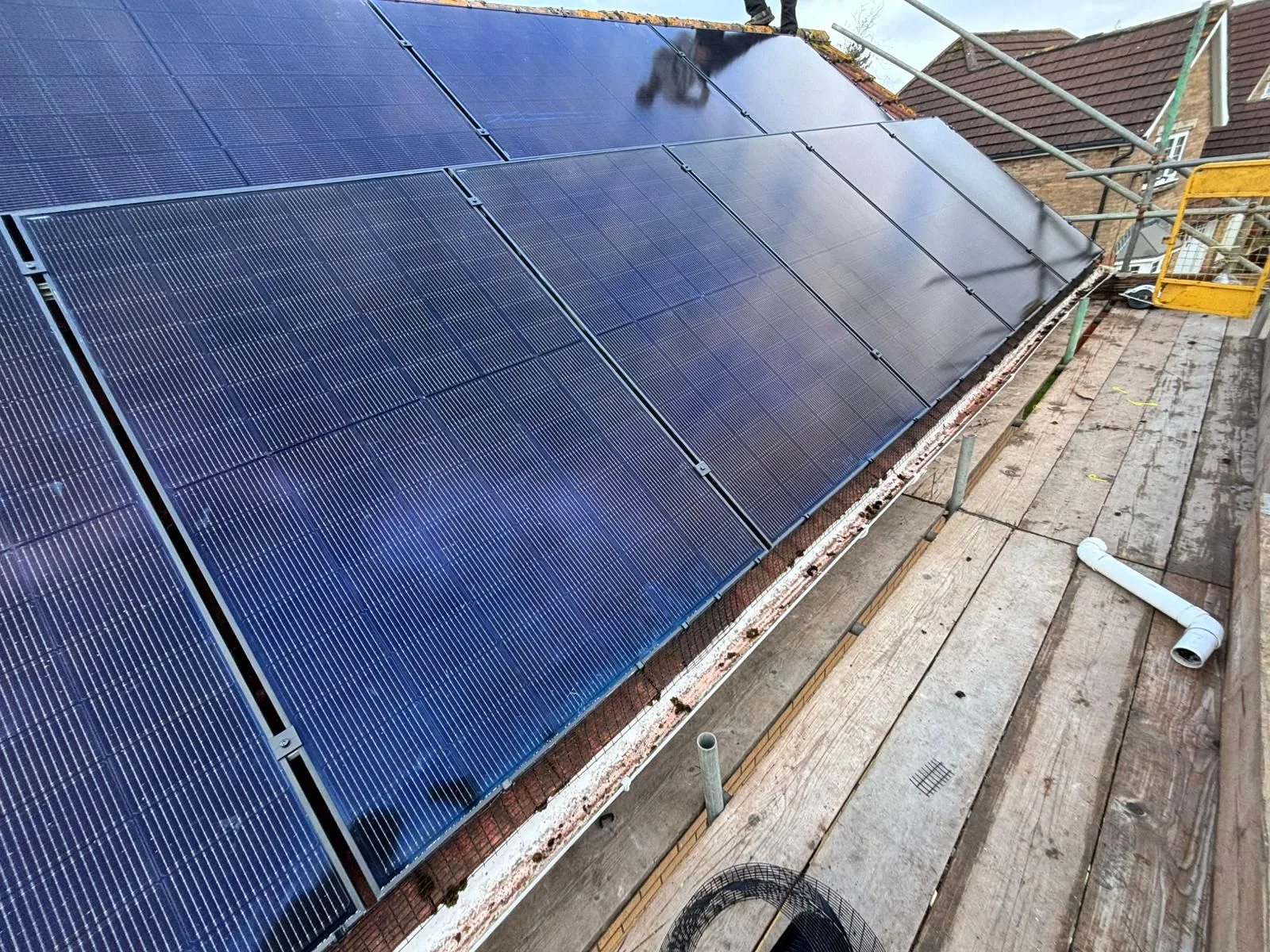
£108 a month. That is what electricity was set to cost at Adeshina's South Wales home, from 5,800 kWh a year, and it is the figure the whole system was designed to push against.
Twelve panels do the generating, and a 5.76 kWh battery gives the home a store to draw on later. Almost all of the projected benefit comes from using that power in the house, directly or from the battery, with exports a small extra on top.
Payback comes at around 12 years on the projection. Beyond that point the system has recovered its cost and keeps trimming what the household buys, and the 30-year figure underneath puts a number on it.
*Assumes electricity prices rise 7.04% a year. A projection, not a guarantee.
All savings, spend and generation figures are estimates, not measured results or a guarantee, and they depend on the roof, usage, tariff and future energy prices. These are selected examples, not typical results.
What it means at home
Generating power at home reduces what you need from a supplier year after year. A long forecast shows how that could look for your household.
During daylight hours the panels can carry part of the load, so less of your daily use comes from the grid.
A battery gives you a second source after sunset, so the evening can lean on stored power rather than on the supplier.
Once payback has come and gone, you still benefit from the power the system makes. REST explains the costs and assumptions behind the forecast.
What stands behind the quote
These are the facts a careful buyer would want, in one place.
A product warranty and a performance warranty, each lasting 30 years, come from the manufacturer. REST helps with any claim.
Duracell, Fox ESS, Tesla Powerwall and Growatt are all available, sized to your evening use.
Insurance-backed cover for your deposit comes through HIES, within the scheme's limits.
The savings maths follows the EPVS method, EPVS clears it ahead of the install, and every figure is marked as an estimate.
rise in solar installations across Wales over the 12 months to July 2026, according to the government. GOV.UK
Solar in South Wales
Wales sets its own planning rules, and a few local points apply.
GOV.WALES says solar panels on a house roof are often permitted development. In a conservation area or World Heritage Site, panels fixed to a principal or side wall that can be seen from the highway need planning consent, and so do listed buildings. Some Cardiff conservation areas also have Article 4 Directions, so check your street.
Cardiff and the valleys are served by National Grid Electricity Distribution's South Wales network. The G98 or G99 grid application is REST's job, while the speed of the reply belongs to the operator.
Terraced streets, hillside valley homes and newer coastal estates behave differently for roof space and shade. The surveyor checks each roof before suggesting a layout.
Useful official pages: GOV.WALES: solar panels and planning permission · Find your network operator · GOV.UK regional solar figures
What happens next
Say which range your monthly electricity bill falls into.
The estimate adjusts to your part of South Wales.
Add your contact details and the REST team returns with your own savings figure.
Common questions
No. It is free, and you are under no obligation to continue.
A written proposal for your property in Cardiff. It sets out:
Yes, with some routes needing no upfront cost. Finance is subject to status and lender approval, and REST UK acts as a credit broker, not a lender.
A surveyor looks at the roof, the shade and your consumer unit so the price can be confirmed. There is nothing to pay and no obligation.
No. It is a careful estimate for a typical home with your bill, refined in your quote and still not guaranteed.
It can be a strong reason to go solar. After payback, the power from your roof carries on cutting what you buy, and the forecast REST gives you allows for the costs of replacing a battery or inverter.
No. Wales has its own permitted development rules, published on GOV.WALES, so check those and your council before you plan work.
It can. Hills and neighbouring buildings cast shade at different times of day, which is why the roof is surveyed before a panel count is proposed.
Yes, if you take out a Smart Export Guarantee tariff. Each supplier sets its own rate.
Cardiff and South Wales coverage
REST reviews residential projects throughout the area, subject to survey requirements, access and installation availability.
Check your propertyRoath, Canton, Llandaff, Whitchurch, Llanishen, Penarth and surrounding communities.
Barry, Cowbridge, Dinas Powys, Llantwit Major and nearby villages.
Newport, Caerphilly, Cwmbran, Pontypool and neighbouring areas.
Bridgend, Pontypridd, Merthyr Tydfil, Neath, Port Talbot and Swansea.
Free quote
Add your contact details and you will hear back with a figure for your Cardiff home, free and without obligation.
Step 1 of 3
Roughly is fine. It tells us how much solar could do for your home.
Projected net savings over 30 years: Michael T, South Wales. This is the projection in the customer's own proposal, after the cost of the system and any finance repayments. It assumes electricity prices rise 7.04% a year, panel output falls 3% in the first year and about 0.38% a year after that, battery capacity falls 2.5% a year, and the battery (£1,152) and inverter (£750) are replaced every 10 years.
Projected net savings over 30 years: Adeshina A, South Wales. This is the projection in the customer's own proposal, after the cost of the system and any finance repayments. It assumes electricity prices rise 7.04% a year, panel output falls 3% in the first year and about 0.38% a year after that, battery capacity falls 2.5% a year, and the battery (£576) and inverter (£750) are replaced every 10 years.
If electricity prices rise more slowly than assumed, the savings will be lower. Projections are not measured results or a guarantee, and they depend on the roof, usage, tariff and future energy prices. These are selected examples, not typical results.