
Estimate first, details second
Choose your bill range and postcode and the page works out an estimated yearly saving. You only add your name and number if you want the full quote.
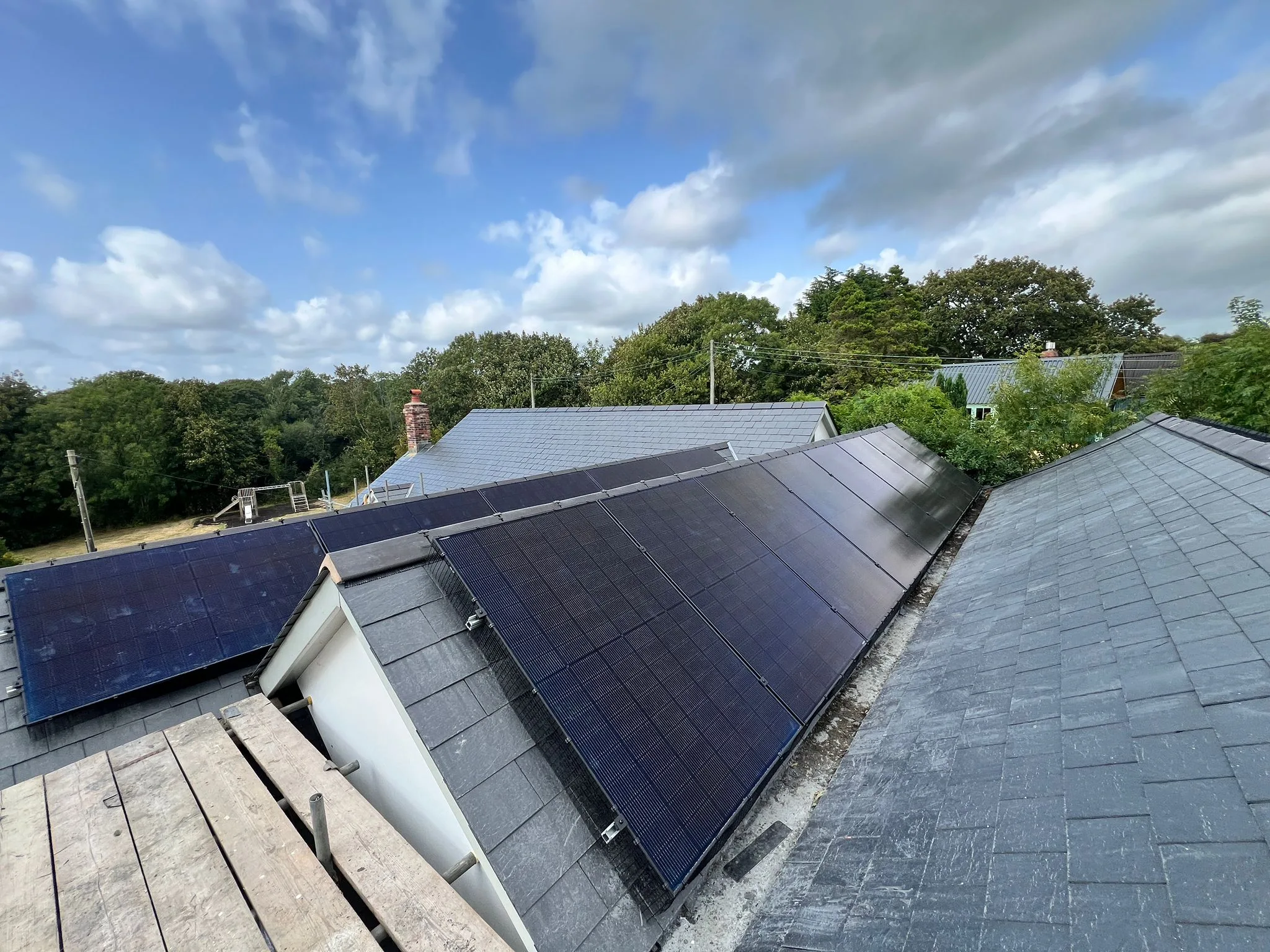
Free quote for solar in Birmingham
Find out what your Birmingham roof could do for your electricity bills. Ask for a free quote for solar and an optional battery, with the first year and the long run both explained.
Buy less electricity from your supplier. Get your personal Birmingham savings estimate below.
Step 1 of 3
Roughly is fine. It tells us how much solar could do for your home.








Why Birmingham homeowners ask REST
Birmingham roofs vary so much that a standard package rarely fits. These are the three things REST puts first.
Choose your bill range and postcode and the page works out an estimated yearly saving. You only add your name and number if you want the full quote.
Eurener NEXA panels carry a 30-year product and performance warranty from the manufacturer. Batteries come from Duracell, Fox ESS, Tesla or Growatt, sized to the evenings in your household.
HIES insures your deposit, and MCS certification covers the installation itself, so there is a route to put things right if a problem comes up.
Birmingham and Solihull customers
One Birmingham install and one in Solihull, and the savings estimated for each.
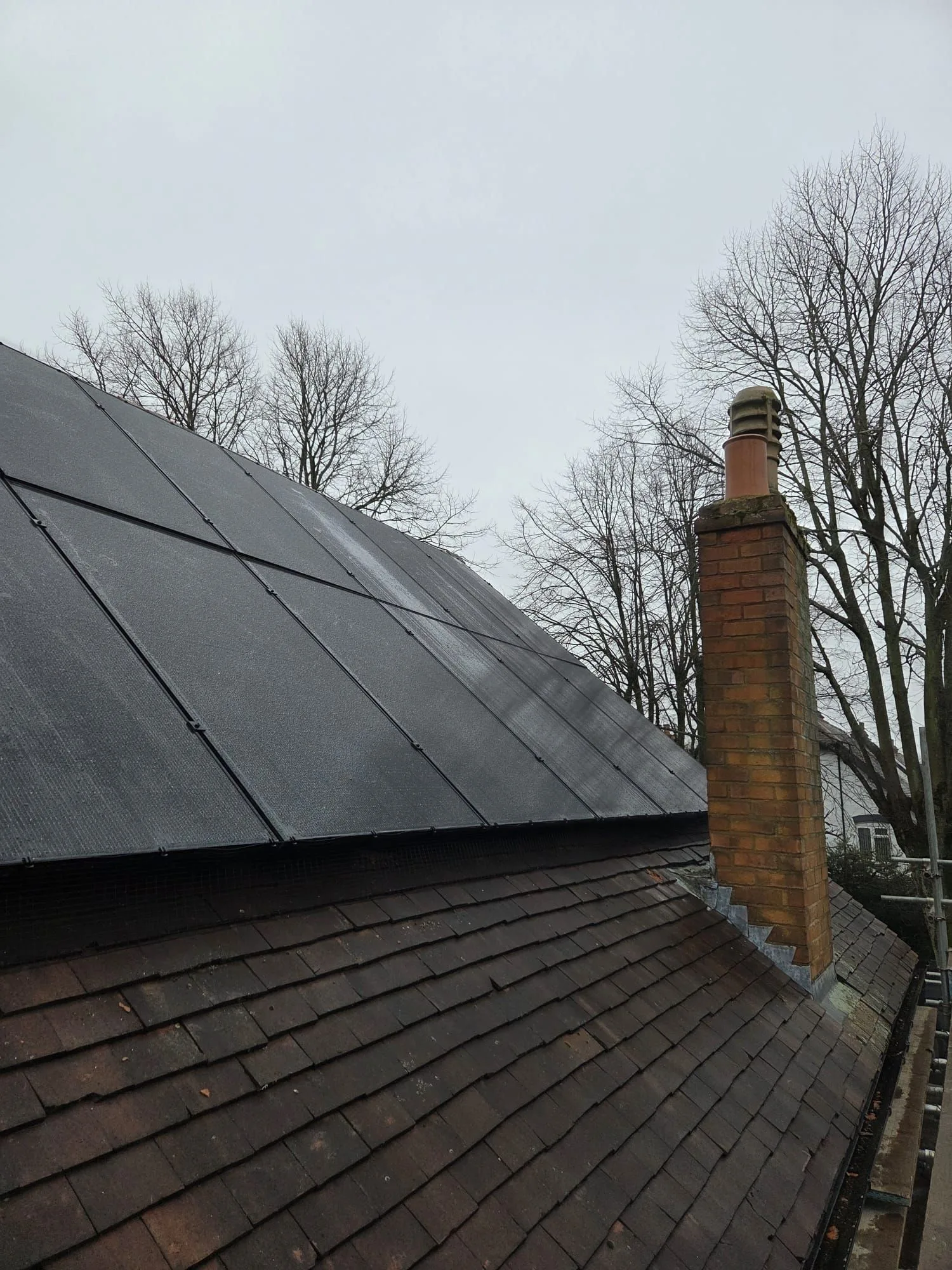
Case study
That is £135 a month, every month, handed to an energy supplier. Mohammed's Birmingham home was set to spend £1,625 a year on electricity, and REST's answer was to think big: 24 panels, enough roof to generate more power over a year than the house uses.
Everything the house can use goes straight into the home. A battery holds the next slice for the evening. And whatever is left over is sold back to the grid, which turns out to be the largest single part of the projected benefit. Three ways to put the same sunshine to work.
Because export income is in the picture, the projected first-year benefit is bigger than the bill itself. That does not mean the bill vanishes: the roof is simply worth more than the power it displaces. Payback is projected at around 11 years, with the 30-year projection underneath mapping the long road.
*Assumes electricity prices rise 7.04% a year. A projection, not a guarantee.
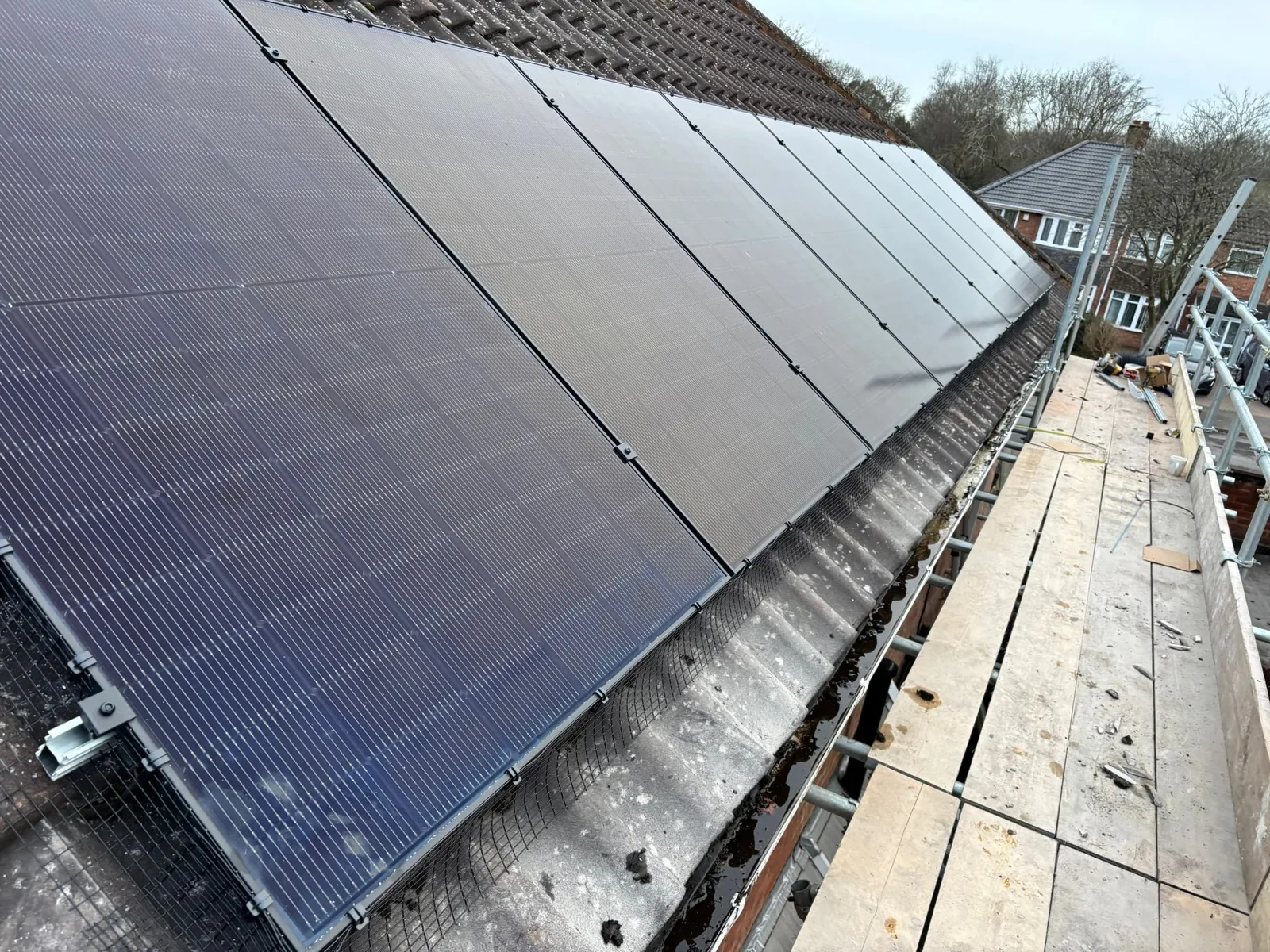
Case study
Solar panels do their best work at lunchtime. Homes tend to do their busiest work later. That gap is the whole story at Razia's Solihull home, where electricity was heading for £1,375 a year.
REST fitted 15 panels and a battery big enough to close it. The afternoon's surplus is saved rather than sold, then released for the evening meal, the lights and the television. Of everything the system is projected to deliver, the battery contributes the most.
It is a patient investment, with payback projected at around 13 years. But once a system has earned back its cost, every evening that can run on stored sunshine is an evening you did not buy from the grid. The 30-year projection below puts a figure on that patience.
*Assumes electricity prices rise 7.04% a year. A projection, not a guarantee.
Recent REST installs in Birmingham
Further Birmingham installs: system fitted, estimated saving.
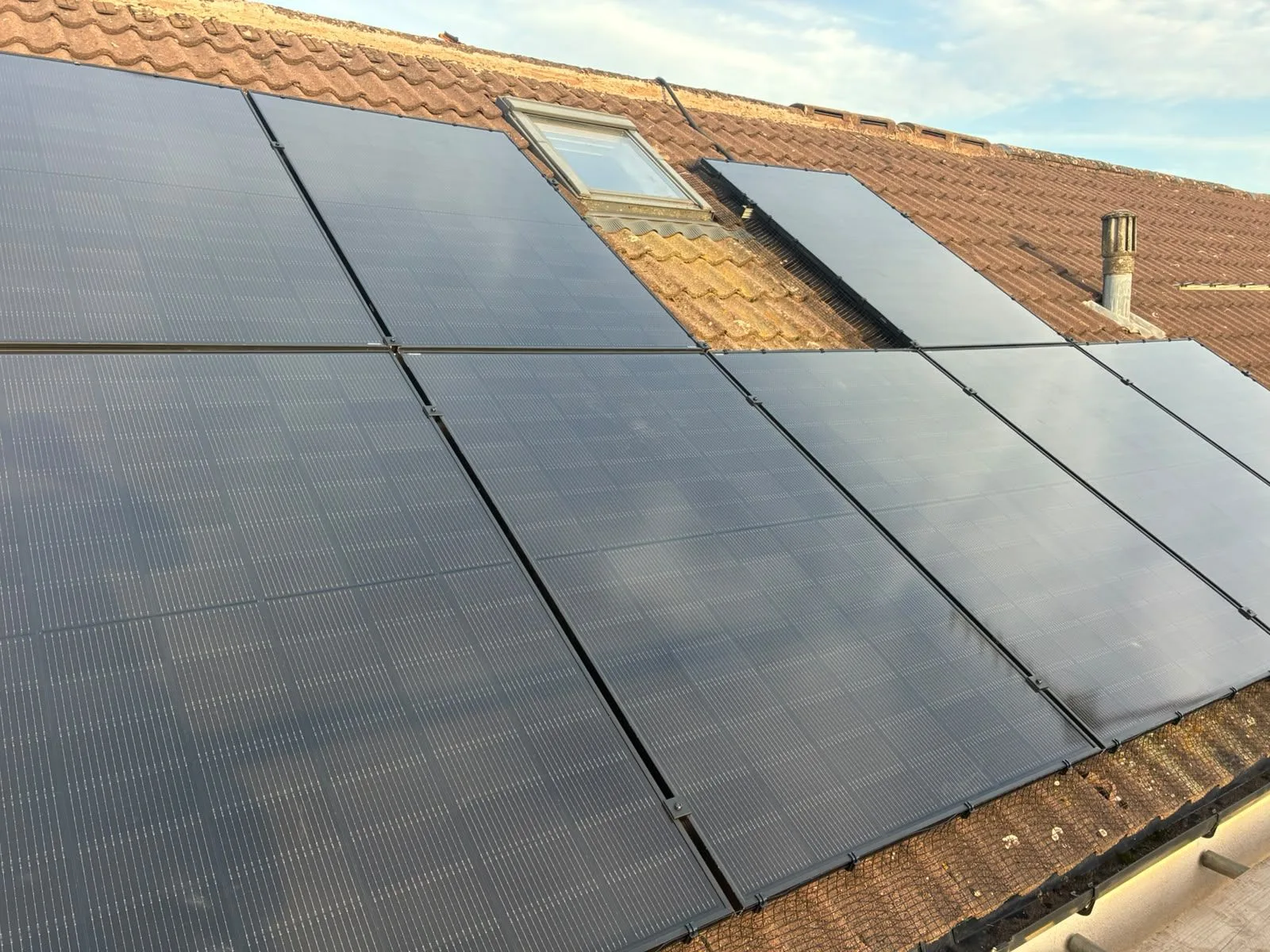
Birmingham · September 2026
All savings, spend and generation figures are estimates, not measured results or a guarantee, and they depend on the roof, usage, tariff and future energy prices. These are selected examples, not typical results.
What it means at home
A first-year estimate is only one part of the decision. Over a longer forecast you can see how generating at home builds up, next to what the installation and upkeep cost.
Washing, drying and charging devices during the day can be done with panel power instead of grid power.
A battery can keep the household going through the evening, the time when homes tend to need power just as the roof stops making it.
After the payback year, every unit of generated power you use is one you did not pay a supplier for.
Standing behind the quote
Equipment, protection and recognition, all of which you can check for yourself.
Thirty years of manufacturer cover apply to the product and, separately, to performance. REST supports you if you ever need to make a claim.
Duracell, Fox ESS, Tesla Powerwall and Growatt. Capacity follows how you use electricity, not a default size.
Insurance-backed deposit protection through HIES, within the limits of the scheme, with dispute help if something goes wrong.
Every savings figure is checked and cleared by EPVS before your install can go ahead. They are still estimates, not promises, and your quote shows what they rest on.
Solar in Birmingham
Three local checks worth knowing about before any work starts.
Birmingham has 30 conservation areas, and the council lists Article 4 Directions in some residential ones, including parts of Moseley, Bournville Village and Edgbaston. Where a direction applies, work that is normally allowed may need planning permission, so check your street first.
Most of Birmingham is served by National Grid Electricity Distribution in the West Midlands. REST makes the G98 or G99 application for you, but the operator sets the timescale and REST cannot promise a date.
Victorian terraces, interwar semis and bigger suburban roofs each leave a different amount of usable space. The surveyor measures your actual roof and the shade across it before suggesting a panel count.
Useful official pages: Birmingham City Council Article 4 Directions · Find your network operator · Planning Portal: solar panels and planning permission
What happens next
Four ranges, one tap. It takes a few seconds.
See an estimated yearly saving for a Birmingham home like yours.
Once your details are in, REST gets back to you with your personal solar savings estimate.
Common questions
No charge and no obligation. You decide what to do once you have seen the numbers.
Prepared for your roof and usage in Birmingham. It includes:
REST offers finance routes, including some with no upfront cost. Finance is subject to status and lender approval. REST UK acts as a credit broker, not a lender.
The estimate here uses your bill range. For the final price a REST surveyor visits, measures the roof and checks the electrics, and that visit is free.
It is a cautious number for a typical home with a bill like yours. Your written quote works from your own roof and consumption and stays an estimate rather than a guarantee.
That is often when it matters most. After payback, each unit the system generates and you use is one you never bought, and your proposal shows the year that is expected to arrive.
Not usually for a house roof. The main exceptions are listed buildings, flats and streets covered by an Article 4 Direction, so check yours with the council.
Yes, if you sign up to a Smart Export Guarantee tariff with a supplier. What you earn depends on the rate that supplier offers.
Your quote sets out the planned programme. The network operator's reply to the grid application can move the date, and REST has no control over that.
Birmingham and the West Midlands coverage
REST reviews residential projects throughout the area, subject to survey requirements, access and installation availability.
Check your propertyEdgbaston, Harborne, Moseley, Kings Heath, Selly Oak and Bournville.
Sutton Coldfield, Erdington, Castle Bromwich, Solihull and neighbouring areas.
Quinton, Halesowen, Oldbury, West Bromwich and Sandwell.
Walsall, Wolverhampton, Dudley, Coventry and nearby communities.
Free quote
Your details in, REST gets in touch with a savings estimate for your Birmingham home. Free, with no obligation to go on.
Step 1 of 3
Roughly is fine. It tells us how much solar could do for your home.
Projected net savings over 30 years: Mohammed K, Birmingham. This is the projection in the customer's own proposal, after the cost of the system and any finance repayments. It assumes electricity prices rise 7.04% a year, panel output falls 1% in the first year and about 0.38% a year after that, battery capacity falls 2.5% a year, and the battery (£1,152) and inverter (£750) are replaced every 10 years.
Projected net savings over 30 years: Razia S, Solihull. This is the projection in the customer's own proposal, after the cost of the system and any finance repayments. It assumes electricity prices rise 7.04% a year, panel output falls 3% in the first year and about 0.38% a year after that, battery capacity falls 2.5% a year, and the battery (£1,152) and inverter (£750) are replaced every 10 years.
If electricity prices rise more slowly than assumed, the savings will be lower. Projections are not measured results or a guarantee, and they depend on the roof, usage, tariff and future energy prices. These are selected examples, not typical results.