
A number before the paperwork
Choose a monthly bill band, type your postcode and a yearly saving estimate appears. Your details are needed only for the full quote.
Free quote for solar in Brighton
Your Brighton roof could supply a good share of the electricity your household uses. REST can show whether solar and a battery make financial sense, with a free quote that looks well beyond the first year.
Buy less electricity from your supplier. Get your personal Brighton savings estimate below.
Step 1 of 3
Roughly is fine. It tells us how much solar could do for your home.








Brighton and Sussex homeowners
Sea air, steep streets and conservation areas all affect a Sussex installation, which is why REST looks at the house itself.
Choose a monthly bill band, type your postcode and a yearly saving estimate appears. Your details are needed only for the full quote.
Eurener NEXA panels with separate 30-year product and performance warranties from the manufacturer, alongside batteries from Duracell, Fox ESS, Tesla or Growatt.
REST's installers are MCS-certified, deposits are insured through HIES, and EPVS checks and clears each savings estimate before an install is booked.
Sussex customers
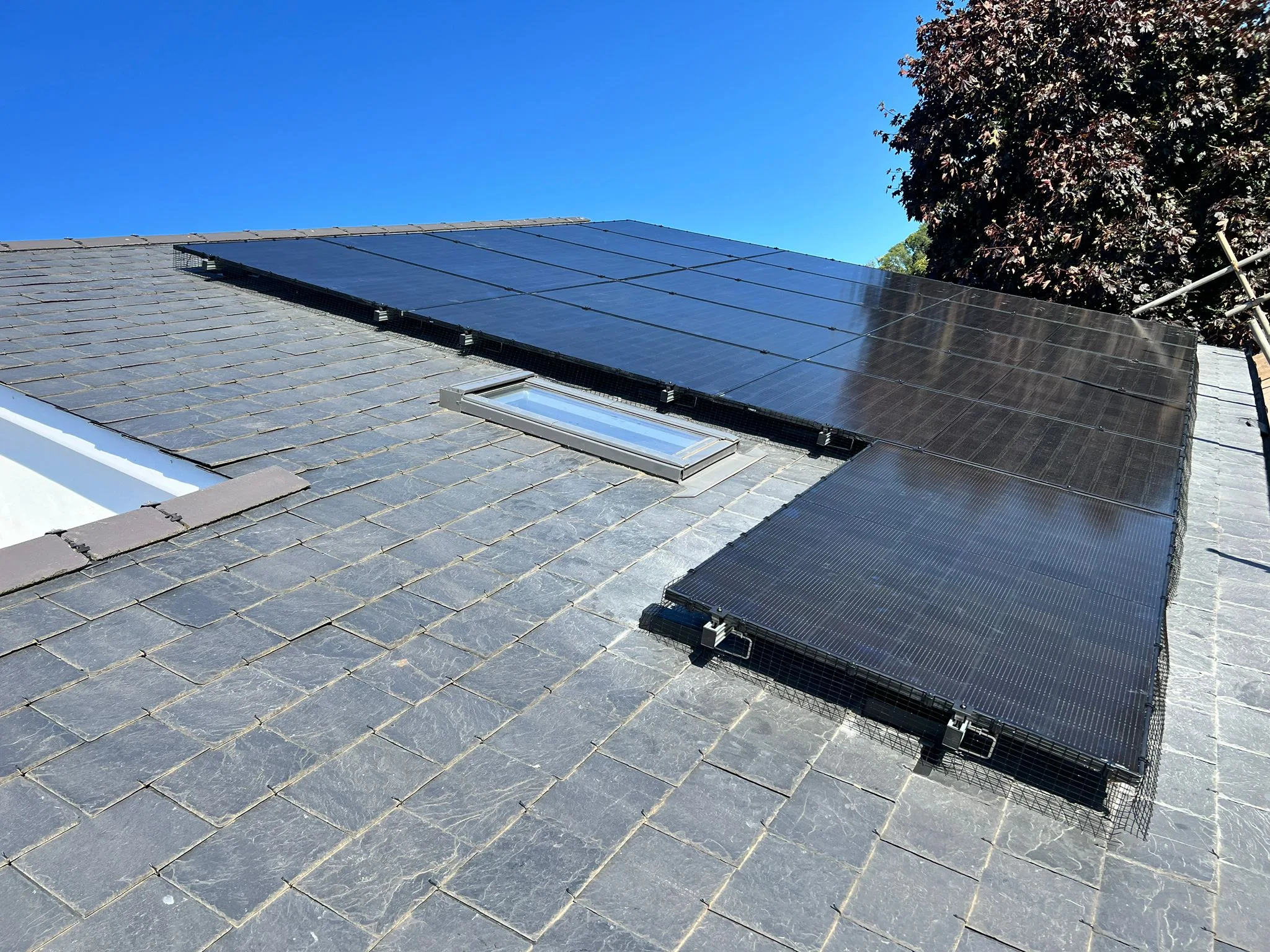
One Sussex install, and what it is estimated to do for a large electricity bill.
Case study
At £3,055 a year, electricity was a serious bill at Saeid's Sussex home, and 12,470 kWh is a lot of power to find. Bills this size are where solar stops being a nice idea and starts being arithmetic.
So REST built for a hungry home: 19 panels to generate, two batteries to help carry the day's surplus into the evening. Very little of this system is designed to be sold. The roof works for the household first, and more than half of what it makes is put to use the moment it is made.
Count nine years to payback, on the projection. Beyond that, a household used to a very large bill has the long run on its side, and the 30-year view beneath puts a number on it.
*Assumes electricity prices rise 7.04% a year. A projection, not a guarantee.
Recent REST installs in Brighton and Sussex
Other Brighton homes now generating their own power.
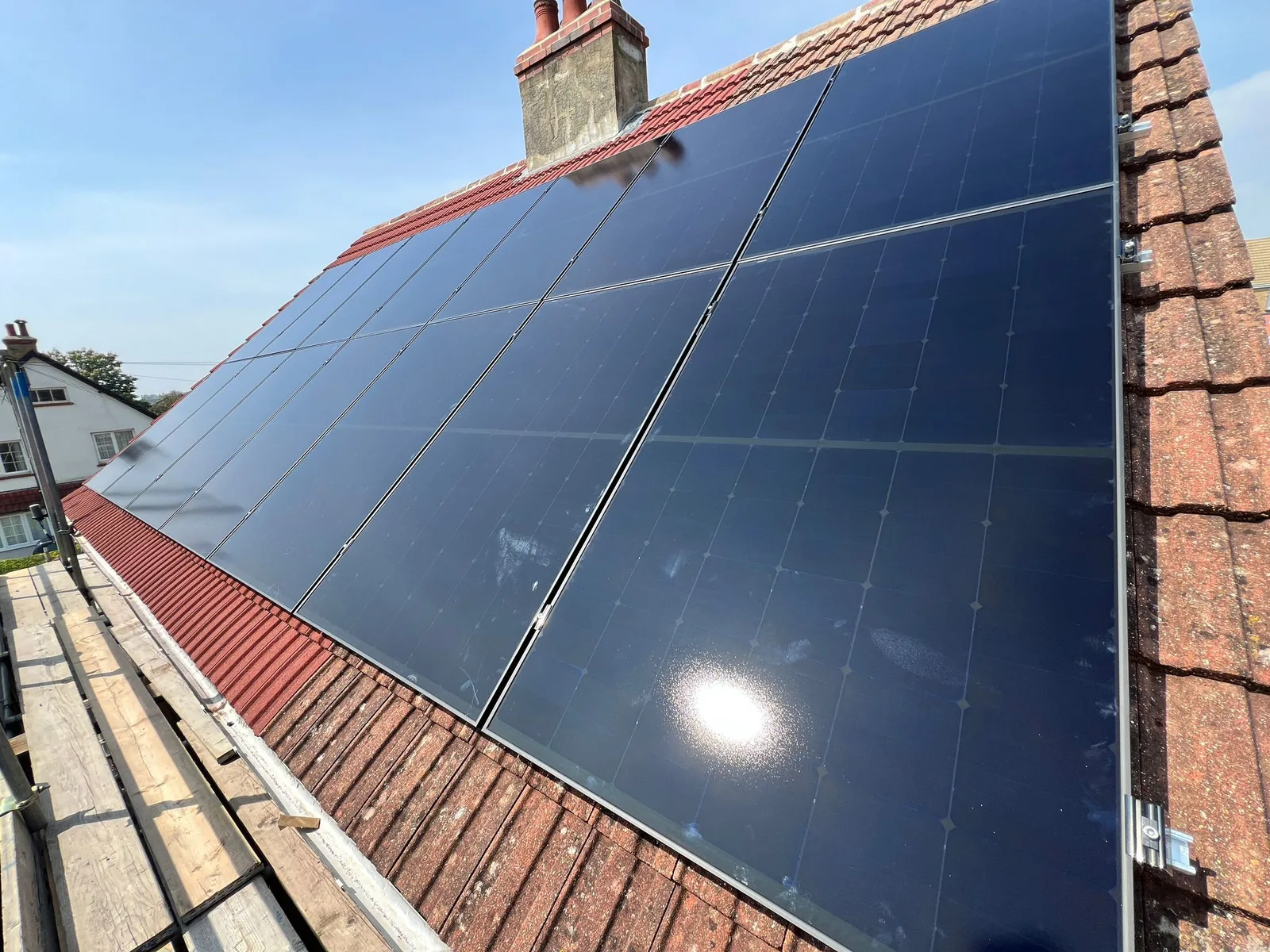
Brighton and Hove · May 2024
All savings, spend and generation figures are estimates, not measured results or a guarantee, and they depend on the roof, usage, tariff and future energy prices. These are selected examples, not typical results.
What it means at home
Rather than judging solar by one year's estimate, think about what home generation could contribute over its life.
Bright coastal days can be put to work, with the roof supplying the house for a good part of the day.
Storage lets a home that uses a lot of power in the evening draw on the day's generation instead of the grid.
After payback, you are using electricity from your own roof, and the forecast shows what REST expects the system to be worth in those later years.
Why the estimate is credible
You can verify each of these without taking our word for it.
Eurener provides separate 30-year warranties for the product and its performance, with REST assisting if you ever need to claim.
Duracell, Fox ESS, Tesla and Growatt, with capacity chosen around your evening usage.
A scheme with insurance behind it protects the deposit you pay, within its stated limits.
EPVS signs off each estimate before your install is confirmed, and your quote lists the assumptions, so you can judge it yourself.
solar installations in the South East overall, 14% more than a year ago, according to the government's regional figures. GOV.UK
Solar in Brighton and Sussex
Three local points worth checking before you commit.
Brighton & Hove City Council notes that rules for flat-roof panels in conservation areas have been relaxed, though prior approval from the council is still needed there. Houses outside conservation areas, Article 4 areas and listed buildings usually need no application.
Most of Sussex connects through UK Power Networks, though parts of West Sussex are served by Scottish and Southern Electricity Networks. REST submits the G98 or G99 application and the operator sets the pace.
Regency terraces, Victorian villas and exposed seafront homes each need different fixings and checks. The surveyor allows for wind exposure and shade on your actual roof.
Useful official pages: Brighton & Hove City Council: planning rules for solar panels relaxed · Find your network operator · Planning Portal: solar panels and planning permission
What happens next
Choose the monthly band that fits your electricity spend.
The estimate adapts to Sussex, so the figure suits your area.
Leave your contact details and REST gets back to you with a savings figure made for your Brighton roof.
Common questions
None. The quote is free, and you can step away whenever you like.
A free proposal for your Brighton address and bills. It has:
REST offers finance options, some with no upfront cost. Finance is subject to status and lender approval, and REST UK acts as a credit broker, not a lender.
They confirm the roof size and condition, shading and electrics, so the quote is firm. The visit costs nothing and carries no obligation.
It is based on an average home with a bill like yours. The quote replaces those assumptions with details of your property, and remains an estimate.
Yes, it is a central part of the decision. After payback the system carries on supplying your home, and your proposal shows how REST expects the savings to build in the later years.
Not by themselves. Salt air and wind affect the fixings and equipment choice, and the surveyor allows for exposure when specifying your system.
For many houses no, but conservation areas, Article 4 areas and listed buildings are the exceptions. Check your address with Brighton & Hove City Council.
It can be exported. What you are paid is set by the Smart Export Guarantee tariff you sign up to with a supplier.
Brighton and Sussex coverage
REST reviews residential projects throughout the area, subject to survey requirements, access and installation availability.
Check your propertyBrighton, Hove, Portslade, Rottingdean and surrounding neighbourhoods.
Worthing, Shoreham, Lancing, Littlehampton and nearby communities.
Lewes, Haywards Heath, Burgess Hill and surrounding villages.
Eastbourne, Seaford, Newhaven and nearby towns, with Southampton and Hampshire covered further along the coast.
Free quote
Leave your contact details and REST gets back to you with an estimate for your Brighton property. No obligation.
Step 1 of 3
Roughly is fine. It tells us how much solar could do for your home.
Projected net savings over 30 years: Saeid Z, Sussex. This is the projection in the customer's own proposal, after the cost of the system and any finance repayments. It assumes electricity prices rise 7.04% a year, panel output falls 1% in the first year and about 0.38% a year after that, battery capacity falls 2.5% a year, and the battery (£1,300) and inverter (£750) are replaced every 10 years.
If electricity prices rise more slowly than assumed, the savings will be lower. Projections are not measured results or a guarantee, and they depend on the roof, usage, tariff and future energy prices. These are selected examples, not typical results.