
 Russell Andrews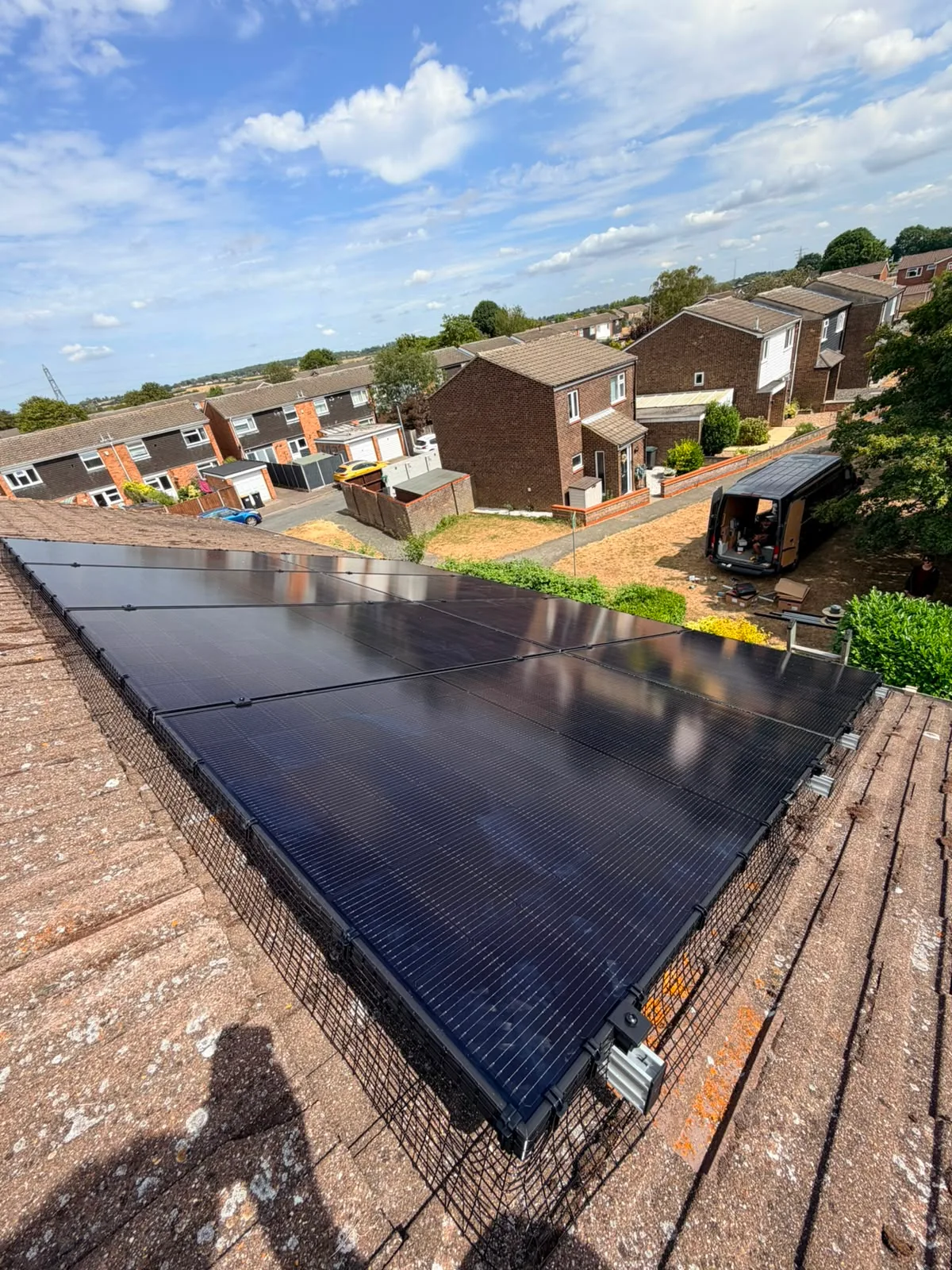
Solar panels on listed buildings and in conservation areas raise questions a standard installation never has to answer: what permissions apply, what heritage officers will accept, and which design choices protect a building's character while still delivering an effective system. This guide covers the permissions you should expect, then the practical installation options that tend to gain consent.
Do I need permission for solar on a listed building or in a conservation area?
Works that affect the character of a listed building normally need listed building consent, and solar installations on designated heritage assets are assessed against the asset's significance. Conservation areas also create extra controls: rooftop panels visible from a public viewpoint often need planning permission too. Before any work starts, we confirm the exact consent needed so you don't risk unauthorised alterations.
How local authorities and Historic England look at proposals
Historic England advises assessing the effect of a PV installation on the building's significance and recommends avoiding prominent roof slopes where possible. Local planning authorities give special regard to conserving designated heritage assets and weigh any harm against public benefits, including reduced carbon and energy bills. We prepare the information planning officers usually request, such as visual impact drawings and a heritage or design statement.
Practical installation options we use when consent is required
Rear or less visible roof slopes: placing panels on roof planes not visible from the street is the least disruptive option and often gains consent more easily.
Low-profile and flush-mounted systems: panels mounted parallel to the roof plane reduce visual impact; where permitted, mounting systems that sit close to the tiles and avoid tilted frames are used.
Non-roof alternatives: ground-mounted arrays hidden behind hedges or on garden structures can be possible in some curtilages, but special rules apply in conservation areas and curtilage-listed settings.
Solar slates and integrated tiles: these can be specified for certain roofs where appropriate, but they are not always suitable for prominent historic roof coverings and may still need listed building consent.
Recent planning details to be aware of
Permitted development rules have exceptions for conservation areas and listed buildings: these protections mean many installations require prior approval or full applications. One practical change that may help some properties with flat roofs is the updated allowance for flat-roof panels to project above the roofline up to certain limits, introduced in recent statutory instruments. That does not remove the need to consider heritage impact where the property is listed or within a conservation area, and we check the latest statutory and local rules for every project.
How we help owners with applications and consent
An on-site survey and a short heritage impact note come first, setting out where the panels will go and why that location is the least harmful. Where required, we prepare the visual impact drawings and paperwork planning officers look for, and can liaise with conservation officers directly. If listed building consent or planning permission is needed, work will not start until the necessary consents are in place.
What we include in a typical submission
Photographs showing public viewpoints and the proposed panel locations.
Drawings or annotated photos showing panel layout and fixation method.
A short explanation of alternative locations considered and why they were rejected.
Design and product choices that reduce risk of refusal
Low-reflectance modules, parallel mounting, and placement on less prominent roof planes are the starting preferences on sensitive properties. Where appropriate, we specify compatible battery systems from our home battery storage range to maximise self-consumption and reduce visible cabling. For a full home energy upgrade, our complete energy package can be staged to reduce impact on planning outcomes.
When solar is not suitable
Some listed assets are so sensitive that any rooftop array would cause unacceptable harm. In those cases, alternatives such as energy efficiency measures, discreet ground-mounted arrays where the local authority permits, or offsetting options within the property are worth discussing. Realistic expectations are set at survey stage, so you know whether a submission is likely to succeed.
Next steps with REST
If your home is listed or in a conservation area, start with a survey and a pre-application conversation with the local authority. As an MCS-certified, HIES-protected installer working across England and Wales from our Canterbury, Kent base, we offer that first step as part of our survey service and can provide a clear costed plan for design, paperwork and installation. Get a free survey and planning check via our get a free quote page.
Further reading and official guidance used when preparing applications: Historic England guidance on installing photovoltaics, and government guidance on conserving the historic environment.