 Russell Andrews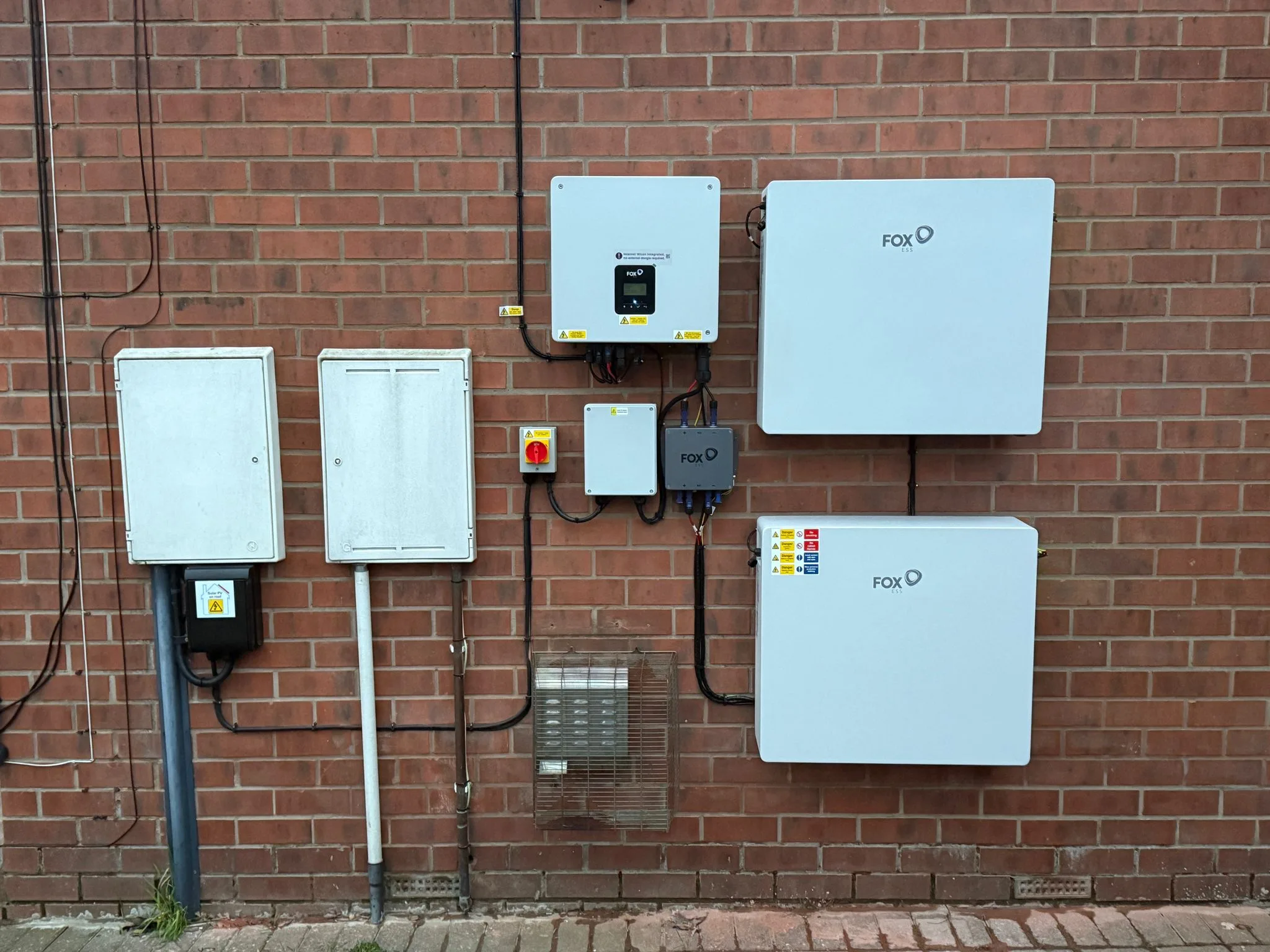
When a homeowner asks us whether to choose string vs micro-inverters, they want a clear answer for their roof, budget and future plans. This guide covers what each system does, the trade-offs for typical UK roofs, how the choice interacts with battery storage and export payments, and the practical considerations that go into designing an installation.
What an inverter does and the two basic architectures
An inverter turns the direct current electricity that solar panels make into alternating current the house and grid use. There are two common approaches. A string inverter links several panels in series and converts their combined output in one central unit. Micro-inverters sit under each panel and convert DC to AC at module level, so each panel works independently.
String vs micro-inverters: core pros and cons
Here are the strengths and weaknesses we see most often on UK homes.
Cost: String inverters are usually cheaper upfront because one box covers many panels. Micro-inverters have higher hardware and installation costs because each panel needs its own electronics.
Shading and roof layout: Micro-inverters keep each panel working at its best if part of the array is shaded or some panels face a different direction. With string inverters, one shaded panel can reduce output for the whole string.
Reliability and replacement: A single string inverter is simpler to replace on the wall if it fails. Micro-inverter faults are typically limited to one panel but can require roof access to swap an under-module unit.
Monitoring and diagnostics: Micro-inverters commonly offer panel-level monitoring. String systems can get similar visibility using optimisers or add-on monitoring, but panel-level data is usually better with micro-inverters.
Battery pairing: The two architectures need different equipment when a battery is added later, which is covered in more detail below.
How this affects typical UK homeowners
For a simple south-facing roof with little shading, a string inverter is often the right call because it balances cost and performance. For roofs with dormers, multiple aspects, chimneys or frequent shading, micro-inverters, or module-level power optimisers, usually recover more generation over a year and make sense despite the higher initial cost.
Performance, warranties and lifetime cost
Micro-inverters can give higher output in partial-shade situations and where panels are not all aligned. However, because they contain electronics on the roof, their long-term reliability and the cost of any rooftop repairs are important considerations. String inverters sit on the wall and can be replaced more cheaply if necessary. Both options are presented to customers with honest modelling rather than assuming one size fits all.
How the choice links to battery storage and export
If you plan to add battery storage for solar, the inverter architecture changes the wiring and may affect system cost. Hybrid string inverters combine PV and battery management in one unit, which can simplify installation. Micro-inverter systems pair with AC-coupled batteries that need a compatible battery inverter. We size battery systems and explain any additional equipment required so customers see the true comparison.
Export payments under the Smart Export Guarantee are available provided the installation is MCS certified and you follow your SEG supplier's steps. The inverter type does not prevent SEG payments, but accurate metering and certification do. We're an MCS certified installer, which keeps SEG eligibility and warranty paperwork straightforward.
Practical checklist we use when recommending an inverter
Survey shading, orientation and roof complexity and present both yield models.
Explain likely replacement costs and where the electronics sit, roof or wall.
Show battery pairing options and the additional equipment for micro-inverters.
Model expected annual generation, export and self-consumption under realistic UK weather, and include SEG registration steps referencing current Ofgem guidance and supplier lists.
Discuss monitoring preferences and how panel-level data might help maintenance.
How we help at REST
Every quote sets out both options and shows the projected generation differences, cost implications and how a future battery would integrate. When customers want panel-level production data, micro-inverters or optimisers are proposed. When cost and simple replacement matter more, string or hybrid string inverters are the recommendation. Read about our approach to inverter technology on our inverters and smart tech page and request a bespoke proposal on Get a free quote.
Final practical advice
Choose the inverter that matches your roof complexity and future plans for storage or EV charging. For many UK homes, a well-sized string or hybrid inverter gives the best value. For roofs with shading, multiple aspects, or where panel-level monitoring matters, micro-inverters often justify the extra cost. Both scenarios are shown in every proposal so you can decide with clear numbers.