
Your bill sets the estimate
The estimator turns your bill range and postcode into a cautious yearly saving, shown before any contact details are asked for.
Free quote for solar in Cambridge
See how solar could fit your Cambridge home's electricity use and budget. At a free appointment REST explains the system price, the battery options and savings that carry on well past year one.
Buy less electricity from your supplier. Get your personal Cambridge savings estimate below.
Step 1 of 3
Roughly is fine. It tells us how much solar could do for your home.








For Cambridge households
Cambridge mixes historic streets, student lets and newer estates, so there is no single answer. REST starts with your bill.
The estimator turns your bill range and postcode into a cautious yearly saving, shown before any contact details are asked for.
Eurener NEXA panels, with warranty cover from the manufacturer lasting 30 years for the product and 30 for performance, and Duracell, Fox ESS, Tesla or Growatt storage if it suits.
HIES insures the deposit you pay, the installation is MCS-certified and every savings figure passes an EPVS check before work begins.
Cambridgeshire customers
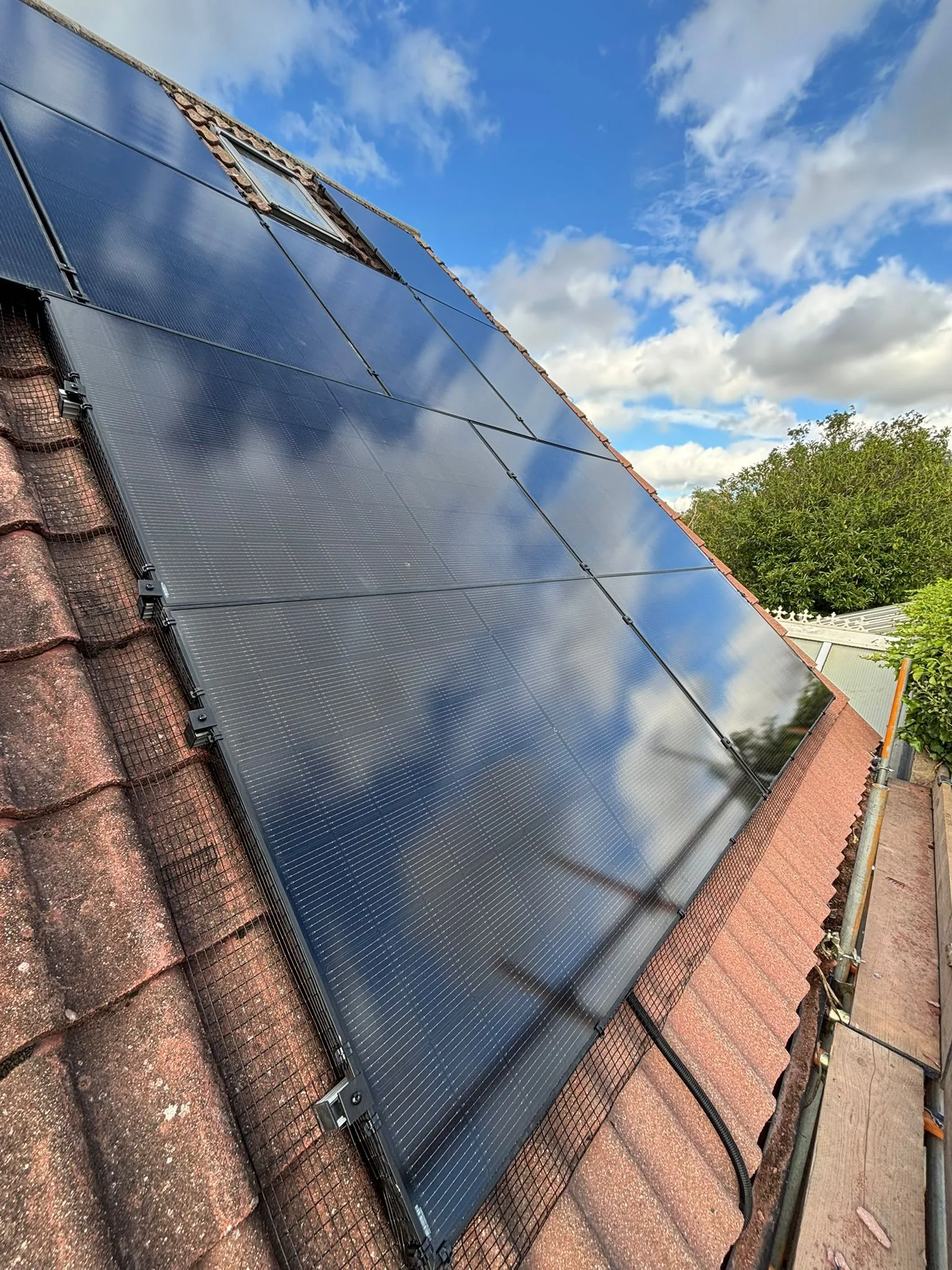
Two Cambridgeshire homes, and the part a battery plays in the estimated savings.
Case study
Over a year, the 14 panels on Jamie's Cambridgeshire home are projected to generate more electricity than the household uses: 5,911 kWh against 5,000. On paper, that is a surplus. In practice, it depends entirely on when the sun shines.
That is where the battery earns its place. Rather than exporting the midday surplus for a small payment, the home can hold it back and use it when the house is busy. In the projection it outranks both solar used directly and exports.
Payback is projected at around 11 years. Until then it is a quiet investment, and afterwards a bill of £102 a month has something working against it. The 30-year figure below shows the longer picture.
*Assumes electricity prices rise 7.04% a year. A projection, not a guarantee.
Case study
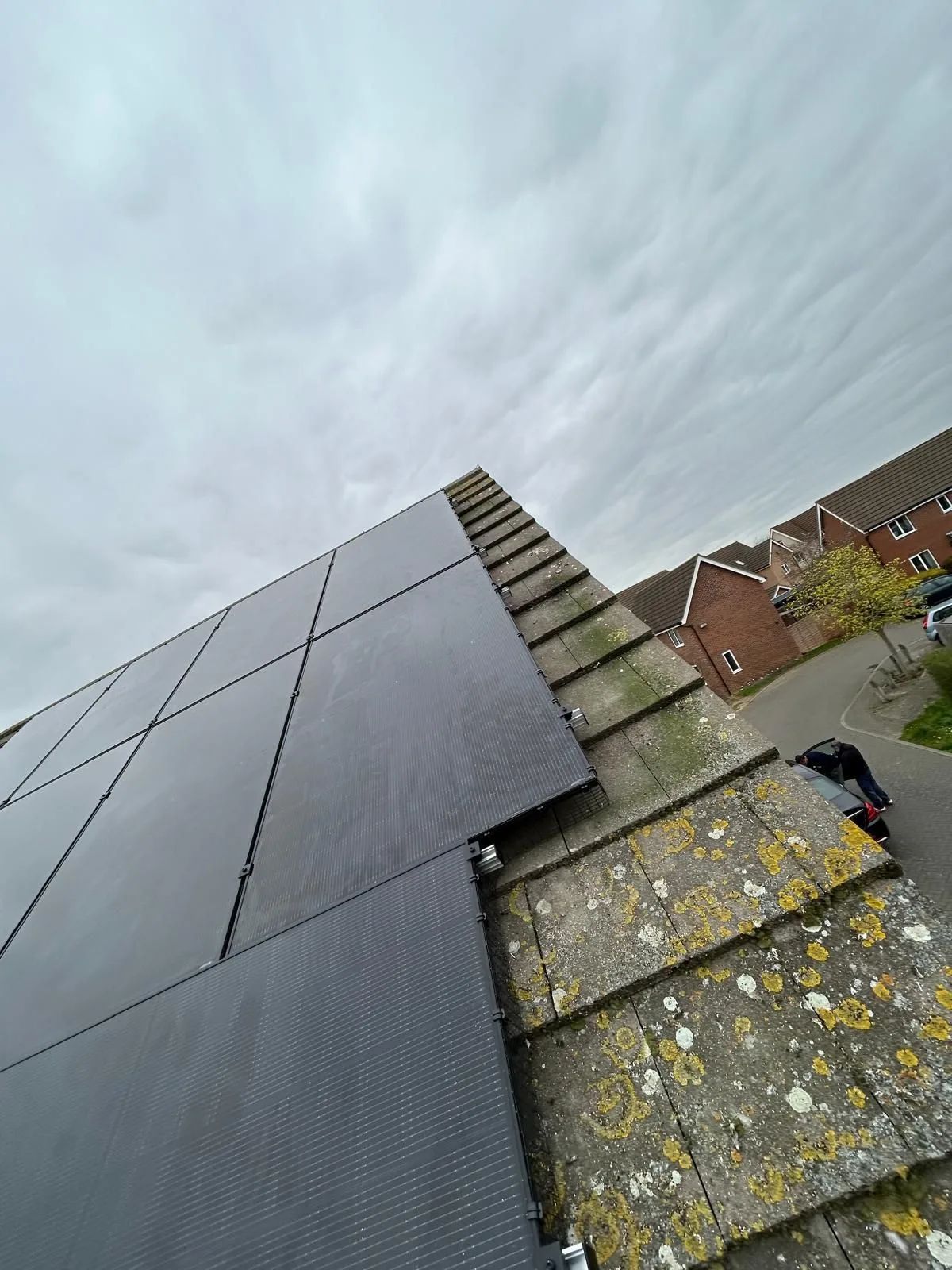
Not every household has a bill that makes the headlines. Valentin's Cambridgeshire home was set to spend £1,080 a year on electricity, £90 a month, from 4,000 kWh. Plenty of homes look just like that.
The 10-panel system is modest, and the battery is where much of its value comes from. Instead of selling the afternoon's spare power, the home keeps it for the evening, so the sun gets a second shift.
Payback is projected at around 12 years, so this is a decision for the long run. If you plan to be in your home for the next ten, twenty, thirty years, that is exactly the horizon where the projection below starts to matter.
*Assumes electricity prices rise 7.04% a year. A projection, not a guarantee.
Recent REST installs in Cambridge
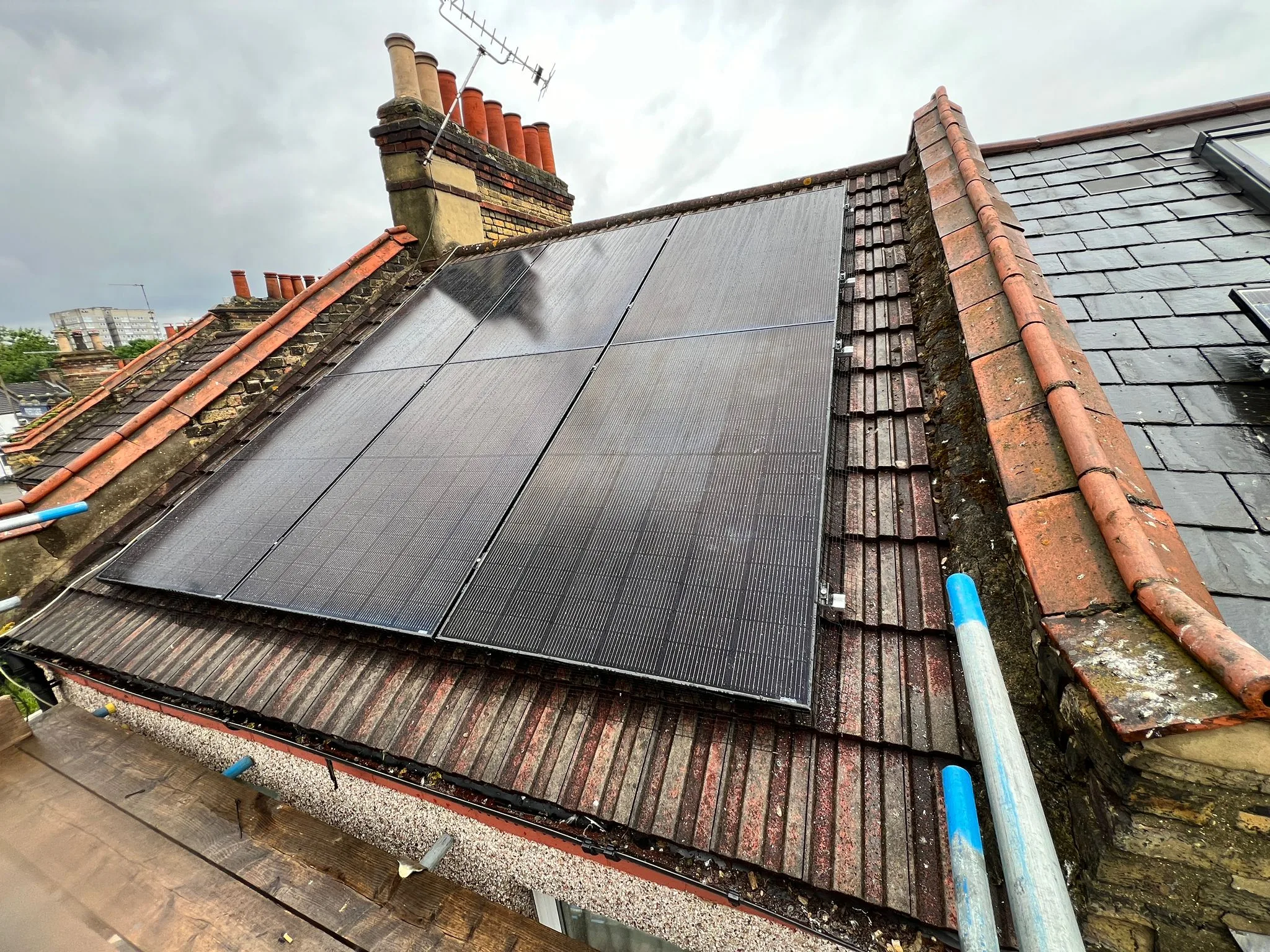
Other homes REST has fitted around Cambridge, with estimated annual benefit.
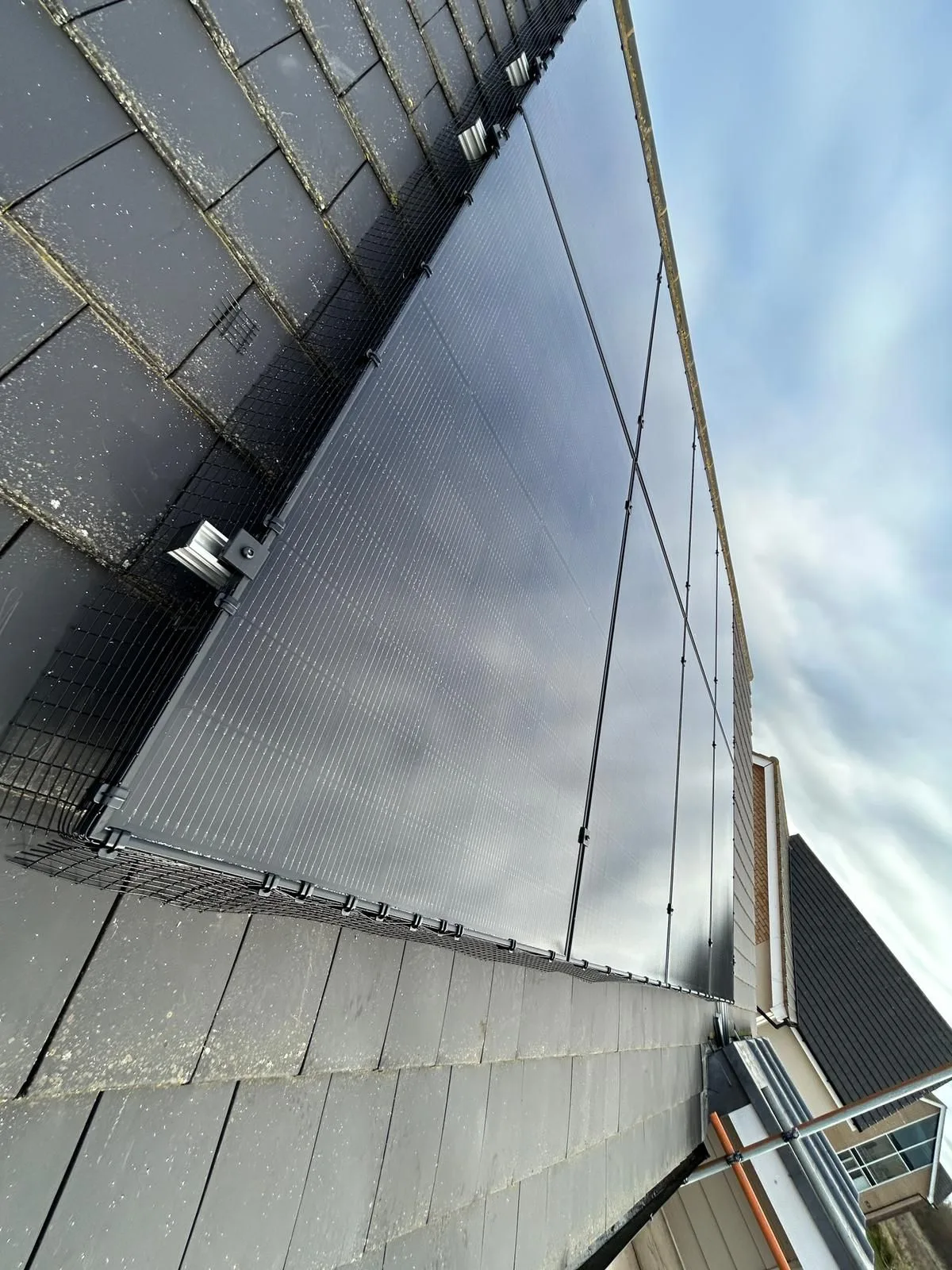
Cambridgeshire · November 2025
All savings, spend and generation figures are estimates, not measured results or a guarantee, and they depend on the roof, usage, tariff and future energy prices. These are selected examples, not typical results.
What it means at home
Electricity made and used at your property replaces power you would otherwise buy. A long forecast shows the potential value, with surplus exports adding another source.
When the panels are working, the house draws on them first. Whatever it does not use can be stored or exported.
A battery lets you move some of the day's generation into the evening, instead of having it all go out to the grid.
After payback, your own solar power keeps replacing power you would otherwise buy. A fair comparison includes future costs and how tariff changes are modelled.
Trust, with evidence
Each point can be checked independently, which is how it should be.
NEXA panels have a 30-year product warranty and a separate 30-year performance warranty, both from the manufacturer. REST helps with claims.
Choose from Duracell, Fox ESS, Tesla Powerwall or Growatt, sized to when your household uses electricity.
HIES gives the deposit you pay insurance-backed protection, subject to the scheme's limits.
Each saving is calculated the EPVS way, labelled as an estimate and shown with its assumptions, and EPVS must clear it before we install.
solar installations now in place across the East of England, a 15% increase on a year earlier, says the government's first regional data. GOV.UK
Solar in Cambridge
Three points that often matter for Cambridge homes.
The city centre sits within the Historic Core Conservation Area, and planning decisions there scrutinise panels closely. Listed buildings need their own consent. Many houses elsewhere can fit roof panels without an application, but check your address with the council.
Cambridge connects through the Eastern Power Networks area of UK Power Networks. REST applies for the G98 or G99 connection on your behalf, and the operator decides how quickly it responds.
Terraces near the centre often have narrow, shaded roofs, while newer estates on the edge usually offer cleaner pitches. The surveyor measures what is genuinely usable on your roof.
Useful official pages: Planning Portal: solar panels and planning permission · Find your network operator · GOV.UK regional solar figures
Next steps
Four ranges cover everything from under £100 to £300 or more.
A Cambridge postcode lets the estimate fit your area.
Your details reach REST, who return with a solar savings figure for your home.
Common questions
No. The estimate and quote are free, and nothing obliges you to continue.
System and cost for your Cambridge home in one document. It includes:
Yes, including routes with no upfront cost. Finance is subject to status and lender approval, and REST UK acts as a credit broker, not a lender.
To measure the roof, check for shade and inspect the wiring, so the price you are given is firm. It costs nothing.
Use it as a cautious guide. Your quote swaps in your own roof and consumption, but it is still only an estimate.
Yes, and the forecast in your proposal shows it. Past the payback point, each unit of your own solar power that you use is one you do not buy.
They might. The city centre is a conservation area, and listed buildings need extra consent, so confirm your address with the council first.
It depends on how much electricity your household uses after dark. The quote sets solar by itself against solar with storage, so the difference is visible.
Yes. A Smart Export Guarantee tariff from your supplier pays you for exports, at that supplier's rate.
Cambridge and Cambridgeshire coverage
REST reviews residential projects throughout the area, subject to survey requirements, access and installation availability.
Check your propertyChesterton, Trumpington, Newnham, Cherry Hinton and surrounding districts.
Histon, Impington, Sawston, Cambourne and nearby villages.
Ely, Soham, Newmarket fringe and surrounding communities.
Huntingdon, St Ives, St Neots and nearby towns, with Norwich and Norfolk covered separately.
Free quote
Your details reach REST, who return with a Cambridge estimate for your household. No obligation.
Step 1 of 3
Roughly is fine. It tells us how much solar could do for your home.
Projected net savings over 30 years: Jamie H, Cambridgeshire. This is the projection in the customer's own proposal, after the cost of the system and any finance repayments. It assumes electricity prices rise 7.04% a year, panel output falls 3% in the first year and about 0.38% a year after that, battery capacity falls 2.5% a year, and the battery (£1,100) and inverter (£750) are replaced every 10 years.
Projected net savings over 30 years: Valentin T, Cambridgeshire. This is the projection in the customer's own proposal, after the cost of the system and any finance repayments. It assumes electricity prices rise 7.04% a year, panel output falls 1% in the first year and about 0.38% a year after that, battery capacity falls 2.5% a year, and the battery (£1,152) and inverter (£750) are replaced every 10 years.
If electricity prices rise more slowly than assumed, the savings will be lower. Projections are not measured results or a guarantee, and they depend on the roof, usage, tariff and future energy prices. These are selected examples, not typical results.