
A figure from your own bill
The estimator turns a bill band and postcode into a yearly saving. Your name and number come later, only if you want the full quote.
Free quote for solar in Norwich
Set your Norwich electricity bills beside what solar could do. REST offers a free appointment to explain a suitable system, what it costs and what it could save you year after year.
Buy less electricity from your supplier. Get your personal Norwich savings estimate below.
Step 1 of 3
Roughly is fine. It tells us how much solar could do for your home.







Norwich and Norfolk
Norfolk skies are brighter than people assume, and East Anglia is one of the sunnier parts of England. Your bill and your roof decide the rest.
The estimator turns a bill band and postcode into a yearly saving. Your name and number come later, only if you want the full quote.
The NEXA panels' warranty from Eurener lasts thirty years for materials and thirty for power output, and batteries from Duracell, Tesla, Fox ESS or Growatt are available where they help.
MCS certification covers the installation, HIES insures your deposit, and the savings are validated by EPVS before the install is booked.
Norfolk and Suffolk customers
One install from East Suffolk and one from Norfolk, and what each is estimated to save.
Case study
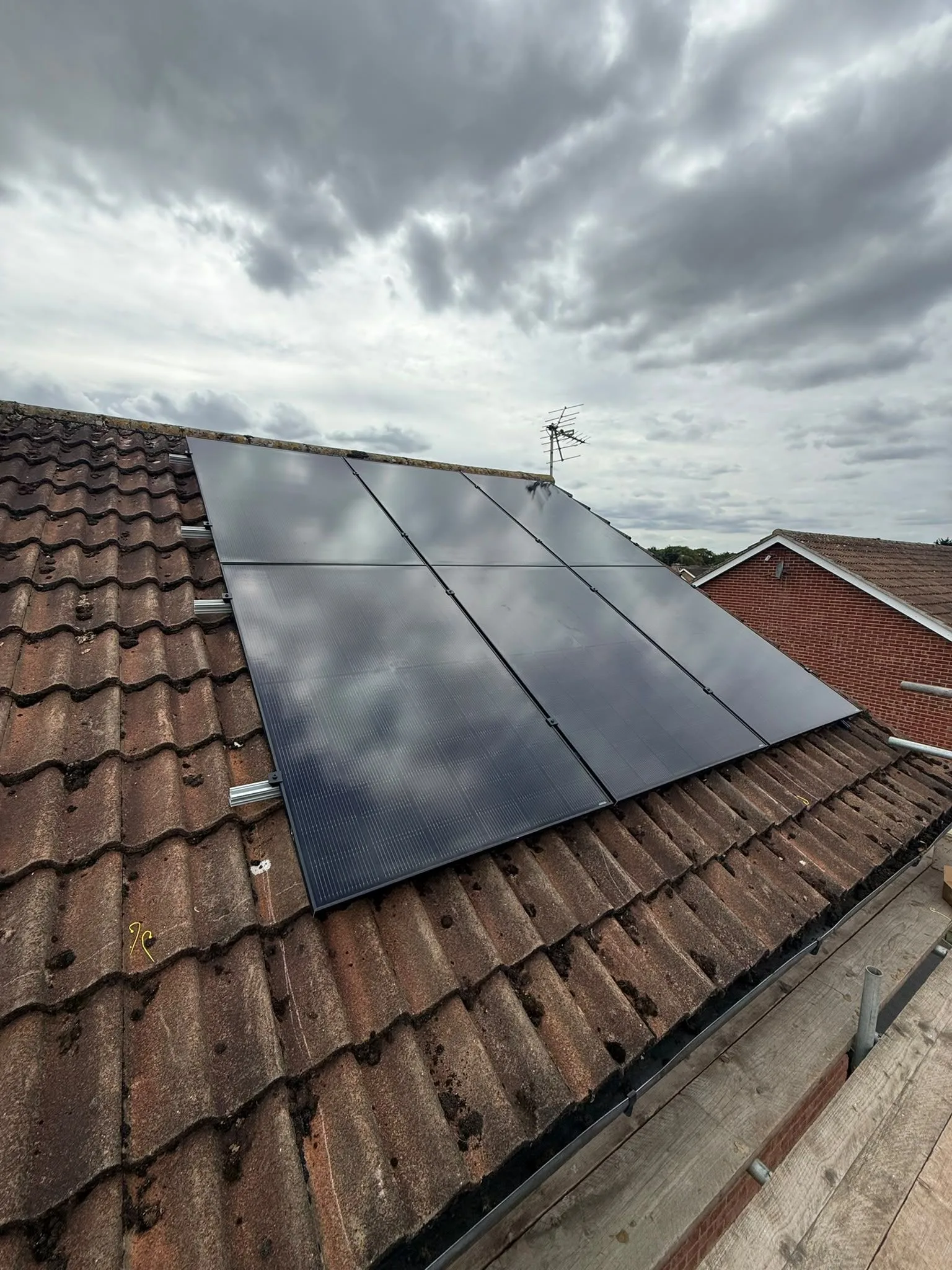
Twelve panels, one battery, and a household set to spend £1,467 a year on electricity: Emanuel's East Suffolk home is a simple system with a flexible job.
The roof's power can be used the moment it is made, held in the battery for the evening or sold to the grid, and each route contributes a similar share of the projected benefit. Whatever the sun makes has somewhere useful to go.
Payback is projected at around 13 years. The longer wait reflects a smaller roof, and the 30-year projection below shows what the decades after could hold.
*Assumes electricity prices rise 7.04% a year. A projection, not a guarantee.
Case study
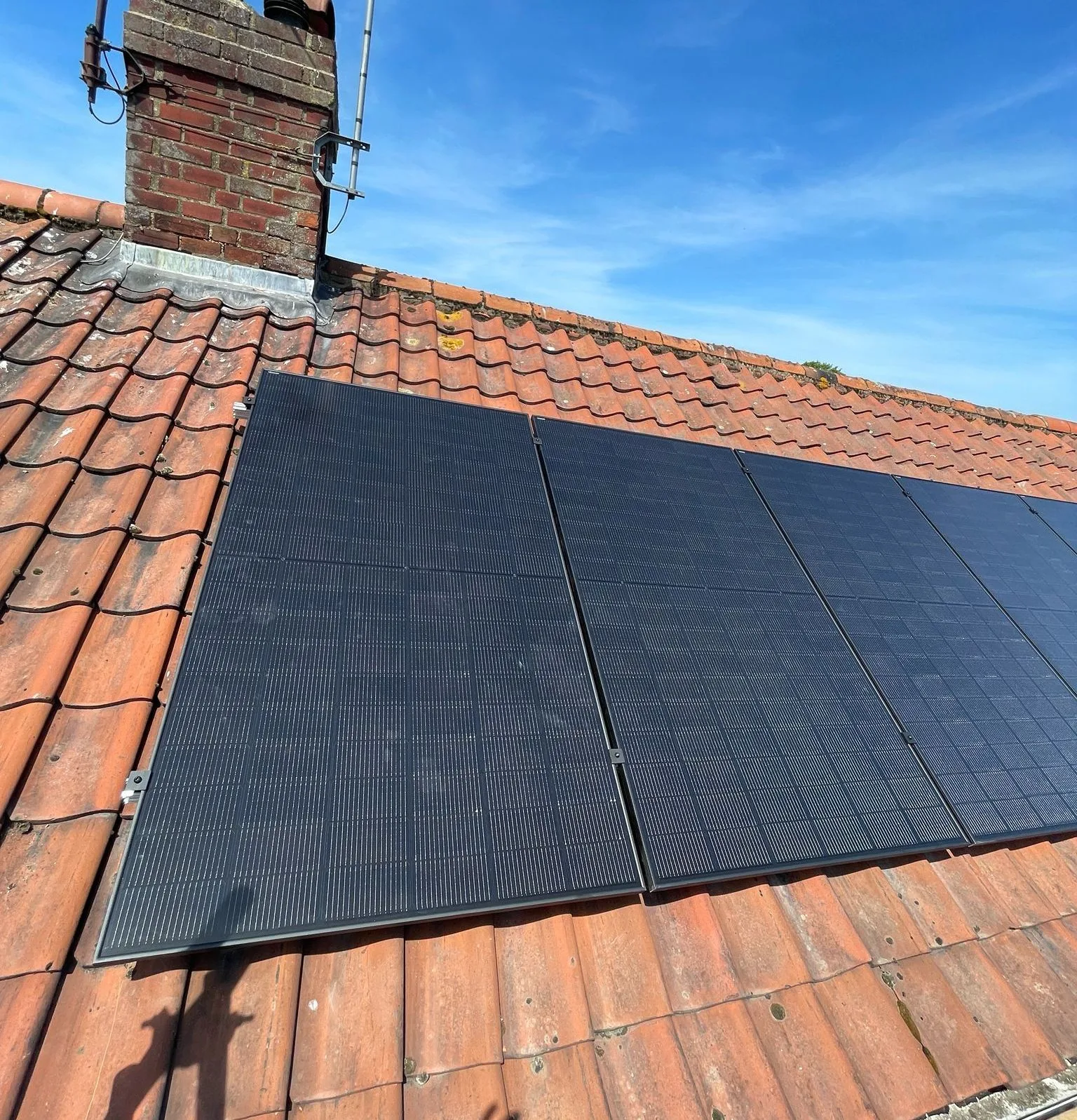
Jonathan's Norfolk home was set to spend £842 a year on electricity, the smallest bill on these pages. Which makes what the system is projected to do all the more interesting.
The projected first-year benefit is £1,048, higher than the bill, because three things are counted: power used directly, the battery's contribution and income from selling surplus. Bills will still arrive. The point is that this system is projected to earn its keep and then some.
Nine years is the projected payback, and the projection beneath shows how a low-bill home could still come out ahead over the long run.
*Assumes electricity prices rise 7.04% a year. A projection, not a guarantee.
All savings, spend and generation figures are estimates, not measured results or a guarantee, and they depend on the roof, usage, tariff and future energy prices. These are selected examples, not typical results.
What it means at home
Buying electricity is a continuing expense. Solar meets part of that need from your roof instead, with a battery and exports adding to the value.
On a sunny day the roof can take the weight of the daytime load, which reduces what you pay for at the meter.
Charge stored by the battery lets some of the evening run on your own power.
Once the system has paid for itself, you carry on using power you made, rather than paying for every unit.
Credibility, itemised
Each of these can be checked without REST's help.
Thirty years of manufacturer cover applies to materials, and another thirty to performance. REST helps if a claim is ever needed.
Fox ESS, Duracell, Tesla and Growatt systems are offered, sized to the hours you use the most electricity.
Your deposit is protected by an insurance-backed HIES scheme, subject to its limits.
Savings are estimates only, worked out on the EPVS calculation and passed by EPVS before installation, with the assumptions listed in your quote.
Solar in Norwich
Local things worth knowing before you plan a system in Norwich.
Norwich's medieval centre is largely a conservation area, and listed buildings need separate consent. Parts of the Broads have their own planning authority, the Broads Authority. For an ordinary house elsewhere, roof panels usually need no application.
UK Power Networks serves Norwich through its Eastern network. REST must submit the G98 or G99 request; the response time is the operator's.
The terraces of the Golden Triangle, 1930s estates and fresh developments all offer different roof shapes. The surveyor measures your own roof and checks for shade before suggesting a layout.
Useful official pages: Planning Portal: solar panels and planning permission · Find your network operator
What happens next
Choose the range closest to what you pay monthly.
The estimate reflects Norwich and the wider Norfolk area.
Share your contact details and REST gets in touch with what solar could save you.
Common questions
It does not, and you are free to walk away afterwards.
A proposal for your Norwich home, built around your roof. It covers:
You can pay outright or ask about finance, including some options with no upfront cost. Finance is subject to status and lender approval, and REST UK acts as a credit broker, not a lender.
To measure the roof and inspect shade and wiring, so the number you receive is a firm price. It costs nothing.
Quite. It assumes a typical home with your bill, and the quote then uses your own roof and usage. It is still an estimate, not a promise.
It can be, because the system keeps working after it has paid for itself. The proposal sets out the expected payback year, and what the savings could look like in the years afterwards.
It can. Parts of the Broads have a separate planning authority, so check with them if you are close to the water.
East Anglia is among the drier, brighter parts of the country, and panels also work in daylight on cloudy days. Roof direction and shade matter most.
Yes: a Smart Export Guarantee tariff pays for what you send back, and the supplier chooses the rate.
Norwich and Norfolk coverage
REST reviews residential projects throughout the area, subject to survey requirements, access and installation availability.
Check your propertyGolden Triangle, Eaton, Thorpe St Andrew, Hellesdon and surrounding areas.
Aylsham, Wroxham, Rackheath and nearby communities.
Wymondham, Diss, Long Stratton and surrounding villages.
North Norfolk, Great Yarmouth, Dereham and nearby towns subject to availability, alongside Cambridge and Cambridgeshire.
Free quote
Give REST your contact details and postcode and you will receive your own Norwich estimate.
Step 1 of 3
Roughly is fine. It tells us how much solar could do for your home.
Projected net savings over 30 years: Emanuel R, East Suffolk. This is the projection in the customer's own proposal, after the cost of the system and any finance repayments. It assumes electricity prices rise 7.04% a year, panel output falls 3% in the first year and about 0.38% a year after that, battery capacity falls 2.5% a year, and the battery (£1,152) and inverter (£750) are replaced every 10 years.
Projected net savings over 30 years: Jonathan F, Norfolk. This is the projection in the customer's own proposal, after the cost of the system and any finance repayments. It assumes electricity prices rise 7.04% a year, panel output falls 1% in the first year and about 0.38% a year after that, battery capacity falls 2.5% a year, and the battery (£1,152) and inverter (£750) are replaced every 10 years.
If electricity prices rise more slowly than assumed, the savings will be lower. Projections are not measured results or a guarantee, and they depend on the roof, usage, tariff and future energy prices. These are selected examples, not typical results.