
 Russell Andrews
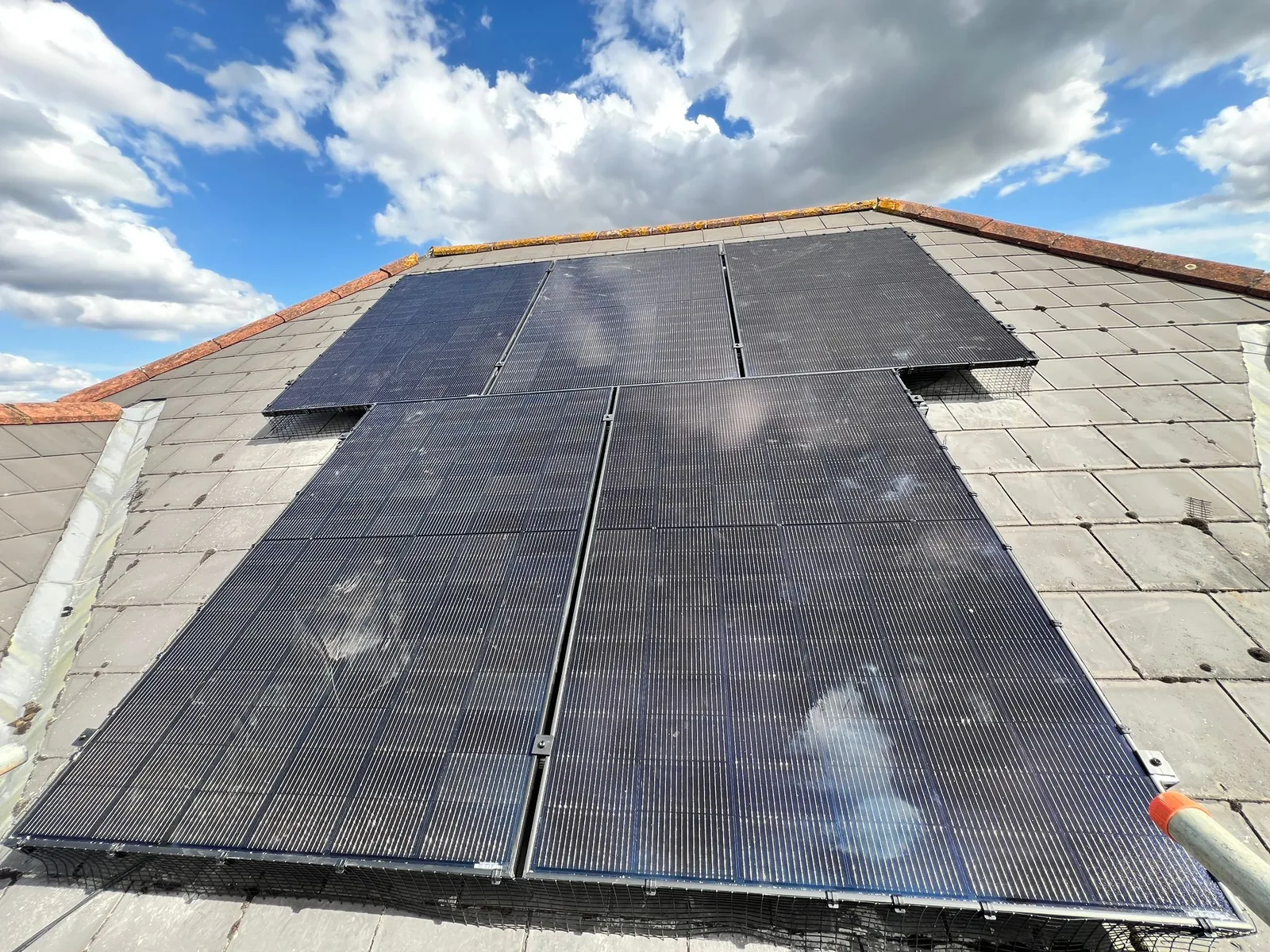
How many solar panels do I need? For most homes the answer is a system of around 4 to 4.5 kWp, which the Energy Saving Trust and Which? both describe as typical, and which comes to roughly 9 to 12 panels depending on their wattage. The right number for your home depends on your electricity use and your roof, and this guide shows how it is worked out so you know what to expect from a survey.
Panels versus system size
Installers quote systems in kilowatts peak, written kWp. That is the combined rated output of all the panels, not a count of panels. The number of panels depends on the wattage of each one.
As a worked example, a 4 kWp system made from 400 W panels uses 10 panels. The same 4 kWp built from 450 W panels uses about nine. Higher wattage panels can deliver the same output from fewer panels, which is useful on a smaller roof.
Real systems, real numbers
Recent REST installs in Leicestershire show the range. A 9 panel, 4.5 kWp system sits alongside a 14 panel, 7 kWp system and a 16 panel, 8 kWp system, each paired with a battery. Their estimated first-year benefits were £1,567, £1,602 and £1,552. These are selected examples and estimates, not typical results or a guarantee. You can see more on our case studies page.
Step 1: Start from what you use
Your bill and supplier account show your annual electricity use in kWh. For context, Ofgem's typical medium household figure, applied from 1 July 2026, is 2,500 kWh a year. Homes with an electric vehicle, a heat pump or people at home all day use more, and a larger system gives them more of their own power to draw on.
Step 2: See what your roof offers
Which? says a 4 kWp system needs about 20 square metres of roof space, so a good share of a typical roof is available. South-facing roofs give the highest output, and the roof pitch and a clear view of the sky help, but east and west faces are widely used too. Southern areas also receive around 20 percent more solar energy than the far north, which is good news for homes across much of England and Wales.
If your roof has more than one face, a design can use each of them. A survey measures the usable area and the shading, so your panel count is based on your actual roof, not a standard package.
Step 3: Match the system to your day
Electricity you use as it is generated is worth more to you than electricity you export. The Energy Saving Trust says your savings depend on how much solar electricity you use yourself, whether you are paid for exports and where you live.
A battery lets you use more of what you generate by saving the midday surplus for the evening. Our guide on whether solar batteries are worth it shows how it works, and the Smart Export Guarantee pays for anything you still export.
Step 4: Plan for the home you want
If you plan to add an electric vehicle charger or a heat pump, a larger system gives you room to grow. A good design looks at the household you expect to have and the roof you have available, and makes the most of both.
What a survey checks
At survey, our team looks at the usable area of each roof face, the pitch and direction, any shading from trees or buildings and your electricity use. From that they recommend a panel count, the panel wattage and where each panel goes, and they explain the choice. You see the reasoning behind the design, and can ask for options with more or fewer panels.
Typical sizes at a glance
| Home | What a design often looks like |
|---|---|
| Smaller roof or lower use | A compact system sized to the usable roof, often fewer than 10 panels. |
| Typical family home | Around 4 kWp to 4.5 kWp, which is roughly 9 to 12 panels depending on wattage. |
| Larger roof, higher use, EV or heat pump | A larger system, often paired with a battery. |
These are illustrations, not quotes. Panel counts depend on the exact panels chosen and the layout of your roof.
Get a design built around your home
The Energy Saving Trust offers a free solar panel calculator for a first estimate, and our savings calculator gives another view. A proper assessment goes further. It produces the number of panels, their wattage, where they will go and the estimated annual generation in kWh for your specific roof.
REST UK installs across England and Wales, and our team can survey your roof and explain the sizing choices. You can read more about our solar panel range, or request a free quote to see a system designed around your home.