
 Russell Andrews
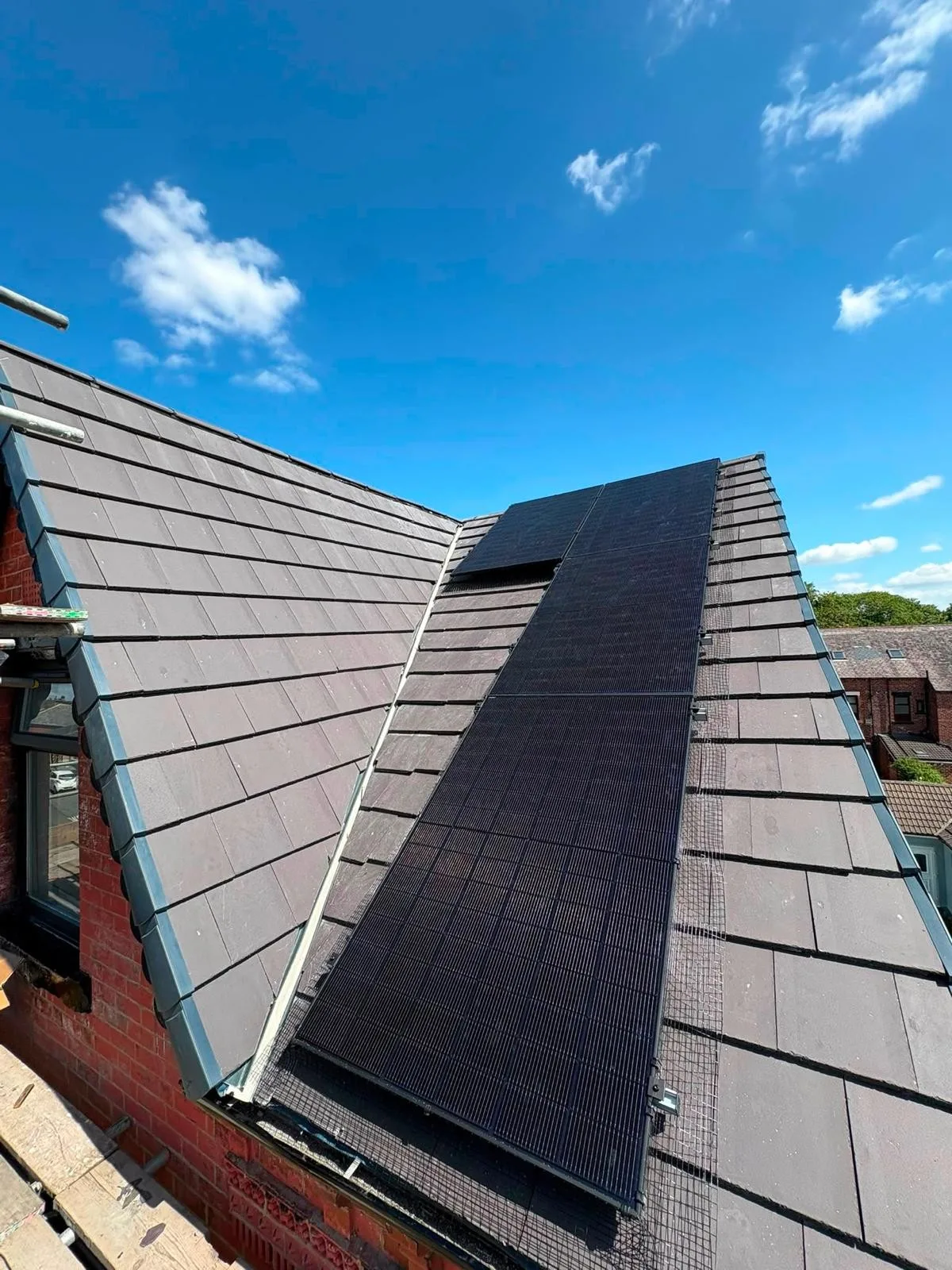
A modern solar panel is a little under 2 metres tall and a little over a metre wide. For example, the datasheet for Eurener's 440 W MEPV 132 module gives its size as 1895 x 1039 x 30 mm, and it weighs 21 kg. At REST UK, we design the layout for each roof ourselves, so you can see exactly how many panels fit and where they go before you decide.
Typical solar panel dimensions
Panel size depends on the model and its power. As a guide, the Eurener 440 W datasheet lists a panel that is 1895 mm tall, 1039 mm wide and 30 mm thick, and 21 kg in weight. That is roughly two square metres of roof for each panel. Eurener's NEXA series covers a range from 420 W to 715 W, and your quote confirms the exact module for your system.
At REST UK: our panels come from Eurener, and we confirm the model, its size and its power in your written quote.
How much roof space does a system need?
That depends on the size of the system. Which? says a 4 kWp system needs about 20 square metres of roof space. To see how a system's size relates to its panels, divide the system size by the power of each panel: for example, ten 400 W panels make a 4 kWp system. Our guide on how many solar panels you need walks through the same steps for your own electricity use.
At REST UK: our team measures your roof, checks the direction it faces, looks for shade and then lays the panels out so you can see the plan. Request a quote and we will show you how many panels your roof could take.
What affects how many panels fit
- The shape of the roof. Dormers, chimneys, skylights and vents take up space.
- Safe edges. Panels are set back from the edges of the roof for safety and access.
- Which slopes you use. A south-facing slope is best, but east and west slopes can also be used.
- Panel size and power. Higher-powered panels can mean fewer panels for the same system size.
- Portrait or landscape layout. The way the panels are turned changes how neatly they fit.
At REST UK: we design around your roof and your electricity use, so the system fits your home rather than a standard template. Our specialist team can answer questions about your own roof if you fill in our form or ask the chatbot on our contact page.
Weight and your roof
A single 440 W panel weighs 21 kg according to its datasheet, so a full system adds a modest load spread across the roof. We assess the roof structure as part of the survey, and we explain anything we find before any work begins.
At REST UK: our survey covers the roof's condition and layout, and we put the design and the equipment details in writing so you know exactly what is going on your home.
Orientation, tilt and layout
The size of the panels is only one part of the design. The direction your roof faces, its angle and any shade all affect how much a system can generate, and the layout is chosen to make the most of each. A south-facing slope is usually best, and our guide to how solar panels perform in winter shows that a well-designed system keeps working through the colder months.
Do you have a small or awkward roof?
Smaller or more complicated roofs can still work well, because a good design makes the most of the space available. Flat roofs use mounting frames, and our guide to flat roof solar panels explains how. If you are unsure, tell us about your roof on the form and our specialist team will let you know what is possible.
Have a question we have not covered? Fill in our form and our specialist team will give you a direct answer, or ask our chatbot on the contact page.
Why homeowners choose REST UK
We are MCS certified for solar PV, protected through HIES, and registered with the FCA as a credit broker (FCA 824643). Our own team surveys, designs and installs every system across England and Wales, and REST UK is rated 4.3/5 on Trustpilot from more than 721 reviews. Our accreditations page lists each certificate so you can check it yourself.
Dimensions vary by model. Figures were checked on 5 November 2026 and can change, so please rely on the model and size confirmed in your written quote.