
 Russell Andrews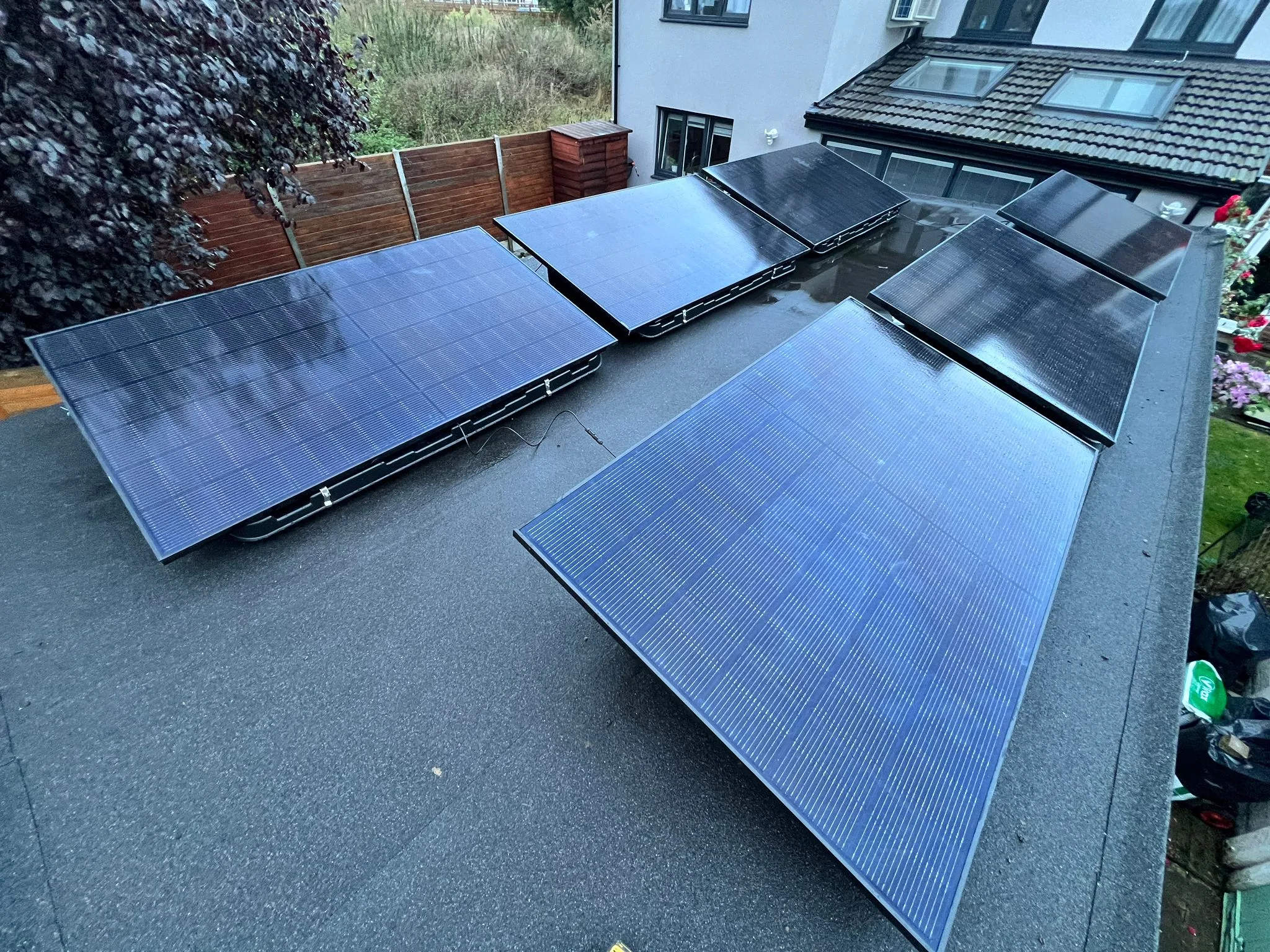
Yes, flat roof solar panels can generate electricity for your home, and panels are normally tilted rather than laid horizontally. Roof strength, condition and mounting design determine whether an installation is suitable. Our advice is to establish those essentials before deciding how many panels to install. (energysavingtrust.org.uk)
For homeowners exploring our residential solar installations, the starting point is the roof itself, not a standard panel package. This guide explains the decisions worth understanding before you commit.
By Russell Andrews. Updated 14 September 2026.
Are flat roof solar panels right for your property?
A flat roof is not automatically a barrier to solar. Energy Saving Trust confirms that panels can be installed on flat roofs, usually on tilted supports. (energysavingtrust.org.uk) Whether yours is an extension, garage or main roof, start with these practical checks.
Structure and roof covering
The structure must support the panels, mounting equipment and any ballast, alongside the relevant wind and snow loads. Ballast means additional weight used to stabilise the mounting system. Drainage and protective materials beneath the supports also need consideration. (clenergy.com)
Tell us about existing leaks, previous repairs and any planned roof replacement. Keep roof drawings and information about the covering available, if you have them. We recommend resolving uncertainty about the roof before treating a proposed panel layout as final.
Usable space and shade
Roof measurements alone do not establish panel capacity. A layout needs maintenance access and appropriate separation from roof edges, where wind loads are higher. (clenergy.com) Nearby trees and buildings also matter because shading reduces generation. (energysavingtrust.org.uk)
If you are considering solar panels on a garage roof, include its position relative to the house in your enquiry. Photographs taken safely from ground level are useful discussion material. Please do not climb onto the roof to gather measurements.
How the mounting system changes the design
We use Clenergy mounting systems, including for flat-roof installations. That does not mean every property should receive the same configuration. The mounting choice needs to follow the roof requirements, rather than the other way round.
Ballasted mounting
Some flat roof solar mounting systems use weighted supports. Clenergy's residential brochure describes low-tilt ballasted arrangements, including configurations with concrete blocks holding the base in place. It also describes alternatives for different roof constructions. (clenergy.com)
Ballast quantities are site-specific. Clenergy's installation guidance accounts for location, building height, layout and roof surface, rather than prescribing one weight for every installation. (clenergy.com) Avoid assuming that adding more weight is a suitable answer to an exposed roof.
Tilt and direction
Clenergy's published range includes low-tilt arrangements and an east-west option. These are examples of available mounting approaches, not a promise that a particular model will suit your property. (clenergy.com)
South-facing, unshaded panels are ideal for maximum generation, although east- and west-facing panels also work. (energysavingtrust.org.uk) Our recommendation is to discuss the proposed orientation alongside your roof constraints. Ask for the layout to be explained in plain English: where the panels face, why that arrangement was chosen and which areas remain clear.
Planning permission and project costs
Do you need planning permission?
On 30 November 2023, the government announced changes allowing solar on domestic flat roofs under permitted development rights in England. These rights remain conditional, including restrictions affecting conservation areas. The announcement is not blanket permission for every property. (gov.uk)
For a project planned as of 14 September 2026, confirm the applicable requirements with your local planning authority before installation. Do not apply the England announcement to a property elsewhere in the UK. Give the authority the proposed layout and flag any heritage designation or existing planning restriction.
What should the budget include?
We would not treat a general national solar price as your flat roof solar installation cost. Energy Saving Trust identifies system size, equipment and installation complexity among the factors affecting solar pricing. (energysavingtrust.org.uk)
For a useful budget conversation with our team, request a clear distinction between:
The proposed panels and electrical equipment.
The roof mounting arrangement.
Access and installation requirements.
Any roof work or additional assessment that remains unresolved.
Optional equipment, priced separately from the core system.
Battery storage for solar deserves its own decision. A battery stores surplus generation for later use. (energysavingtrust.org.uk) Explore our home battery storage options if that fits your plans, but do not assume it must be included simply because your roof is flat.
Prepare for a useful conversation with our team
The best first enquiry gives us a clear picture of the property and what you want to achieve. You do not need to specify the mounting hardware yourself.
Before contacting us, gather:
Your address and the type of building involved.
Approximate roof dimensions, if already known.
The roof covering, approximate age and repair history.
Existing photographs or drawings showing roof features.
A recent electricity bill and a description of when you use most electricity.
Also tell us whether your priority is reducing daytime grid use, storing electricity for evenings or preparing for future changes at home. That keeps the discussion focused on your needs rather than panel count alone.
Ready to explore flat roof solar panels? Request a free quote and share the information you have. Start with the roof and your electricity use, then build the proposal around them.