
 Russell Andrews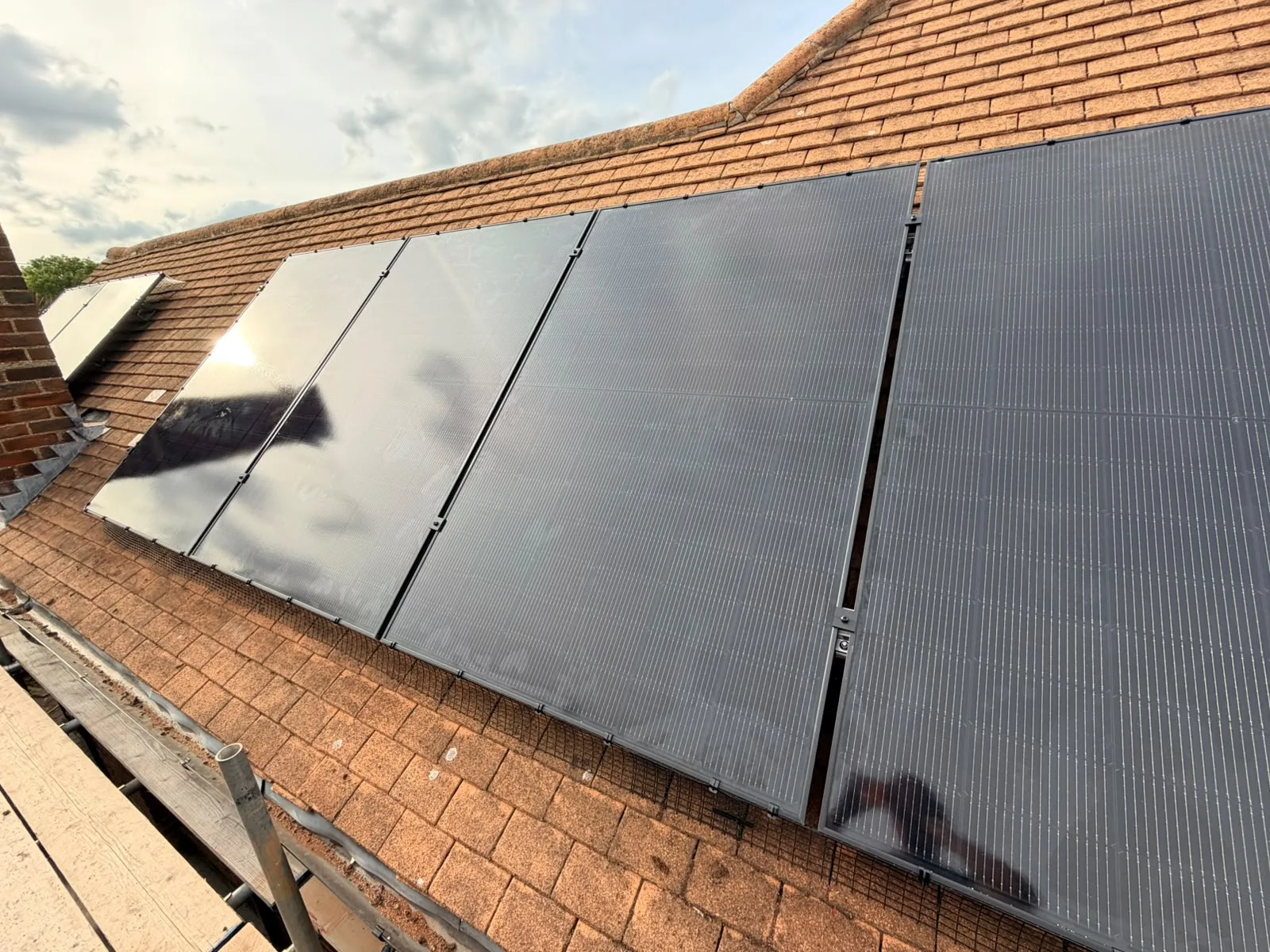
UK solar installations are breaking monthly records in 2026, but the full-year result is not yet known. Solar Energy UK reported on 14 September that March reached a record 28,861 MCS-certified solar installations. Its forecast of around 300,000 rooftop systems by December remains a projection, not a completed total. Our advice: use the news as a reason to investigate solar, not a deadline to buy. (solarenergyuk.org)
By Russell Andrews
Updated 28 September 2026.
UK solar installations: which records have actually fallen?
The strongest confirmed installation headline concerns individual months. Alongside March’s record, Solar Energy UK reported 28,489 MCS-certified solar installations in July and 28,200 in June. These are counts of installed systems, not individual panels. (solarenergyuk.org)
A separate government release, published on 27 August 2026, reported nearly 172,000 installations across the UK from January through July. That series covers homes, businesses and larger projects. Rooftop systems accounted for more than seven in ten installations during July. (gov.uk)
MeasureReported figureHow to read itRecord month for MCS-certified solar28,861 in March 2026A monthly installation record. (solarenergyuk.org)Government deployment countNearly 172,000, January to July 2026A year-to-date total, not a full-year result. (gov.uk)Industry full-year outlookAround 300,000 rooftop installationsA forecast dependent on the trend continuing. (solarenergyuk.org)
These sources should not be added together or treated as interchangeable. Keep the reporting period and dataset attached to each number, especially when comparing headlines.
There is also a publication-date wrinkle. As of 28 September, the government’s August deployment release is scheduled for 29 September 2026. It is not yet available, so this article does not present an August government total. (gov.uk)
What the growth tells homeowners, and what it does not
The expansion is not confined to one sunny corner of the country. The government reported increases in every UK nation and English region over the preceding 12 months. The South East added 22,628 installations during the first seven months of 2026. (gov.uk)
New homes also contribute to the headline numbers. Solar Energy UK reported that more than half of England’s MCS-certified solar installations so far in 2026 were on new-build properties. The national total therefore should not be read as a count of existing homeowners choosing a retrofit. (solarenergyuk.org)
For an existing home, the useful question is more personal: what could this roof generate, and how would the household use it? An unshaded south-facing roof is ideal, but east-facing and west-facing roofs also work. Nearby trees, chimneys and buildings affect performance. (energysavingtrust.org.uk)
Our residential solar service is for homeowners ready to explore that question. Before speaking with our team, gather these details:
Your annual electricity consumption, rather than just your monthly payment.
When the home is occupied and which appliances run during daylight hours.
Any roof repairs you are considering.
Planned changes, such as an electric car or electric heating.
We recommend bringing those details to the conversation before choosing a panel count. Start with what you want the system to do, rather than copying a neighbour’s installation.
Look beyond panel numbers to the electricity you use
Solar panels generate electricity from daylight, including on cloudy days. The financial benefit depends partly on how much generation you use yourself and what happens to the surplus. A national installation record cannot establish your household’s savings. (energysavingtrust.org.uk)
Match storage to your routine
Battery storage for solar lets you keep surplus daytime generation for later. It deserves consideration if your main electricity demand comes after sunset. Battery sizing depends on both your consumption and the electricity available to store. (energysavingtrust.org.uk)
Our home battery storage options belong in that discussion, rather than being treated as an automatic addition. We recommend considering the extra cost alongside the expected benefit. Storage also involves energy losses, and a battery does not remove the seasonal difference between summer and winter generation. (energysavingtrust.org.uk)
Separate bill savings from export income
Using electricity at home and selling surplus electricity are different benefits. The Smart Export Guarantee provides a route to export payments in England, Scotland and Wales. Northern Ireland has different arrangements, so households there should check export options with their energy supplier. (energysavingtrust.org.uk)
For any solar panel payback period discussed with our team, ask which assumptions sit behind it. We recommend separating the installation cost, expected generation, household use and export income. Treat the result as an estimate, not a promised repayment date.
Turn the headlines into a practical next step
Record installation numbers are encouraging, but they are not a substitute for a clear proposal. Our recommendation is to make the decision around three questions:
Does the proposed system suit the property? Discuss the roof layout, shading and any planned building work.
Can you follow the financial assumptions? Request a clear explanation of the estimated benefits and what could change them.
Do you understand what you are buying? Review the equipment, installation scope, exclusions and product-specific warranty documents before committing.
Certification belongs in that discussion too. We are an MCS-certified installer. Keep that separate from the economics: certification should never be presented as a promise of a particular saving.
There is no need to make your decision fit a record-breaking month. The better objective is a system you understand and a cost you are comfortable with. If you are ready to explore your property’s options, request a free quote and bring your electricity-use details to the conversation.