
 Russell Andrews
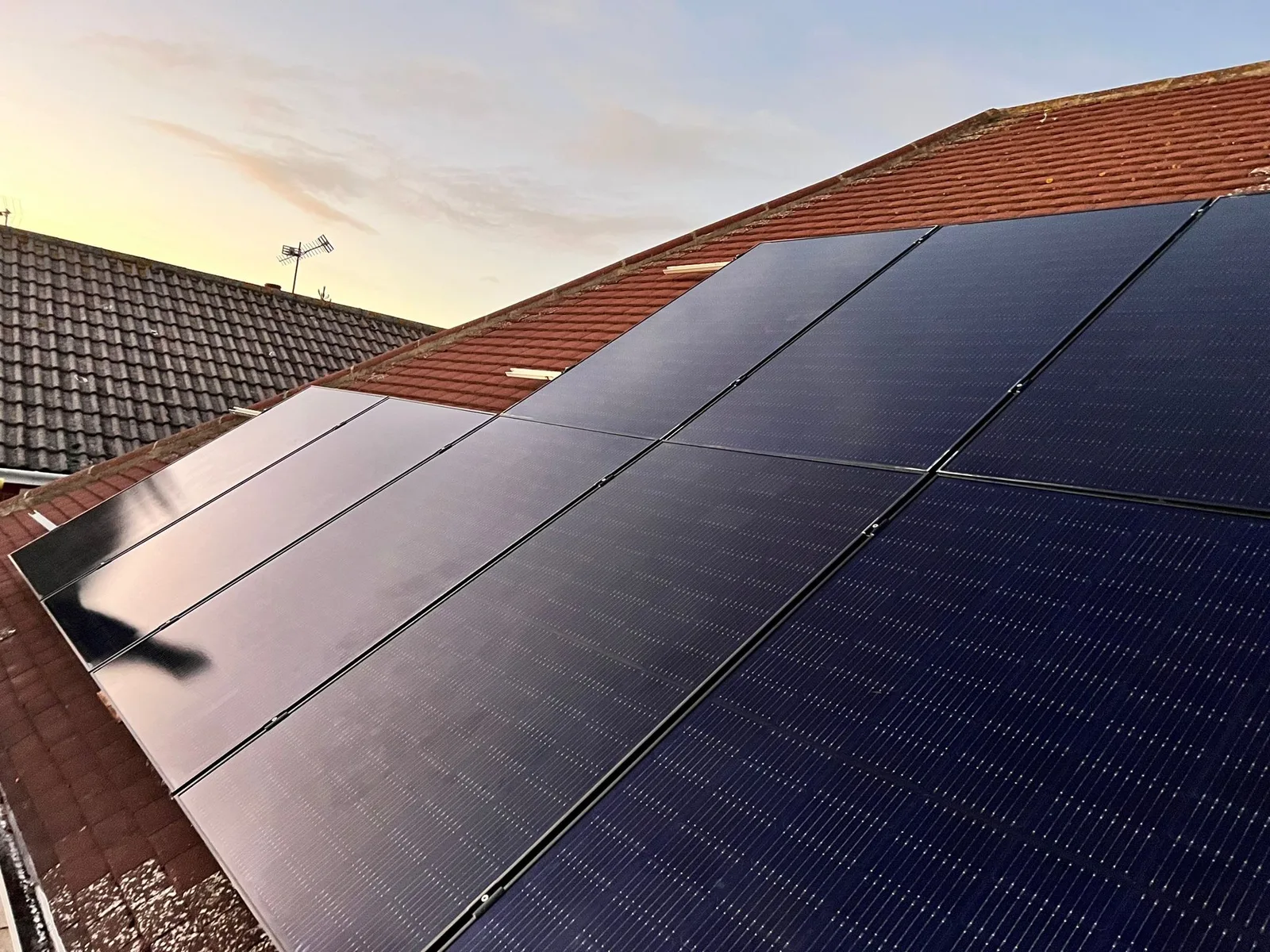
Solar panel lifespan is one of the strongest points in favour of going solar. The Energy Saving Trust says panels should last 25 years or more, and Which? cites a life expectancy of around 50 years for monocrystalline panels. That means a system fitted today can keep supplying your home for decades. This guide explains what supports that, what the warranties cover and how to look after your system.
A long-term asset for your home
Solar panels have no moving parts, which is part of why they last. Once installed they work every daylight hour with very little attention. The Energy Saving Trust says the main job is to keep nearby trees trimmed to minimise shading, and that in the UK rain cleans panels tilted at 15 degrees or more.
Because panels last for decades, the benefit builds year after year. Each year your roof supplies part of your electricity, so the longer you own the system, the more it gives back. Our guide to whether solar panels add value to your home looks at what the research says about the property as well.
Panels keep performing year after year
Panels lose a small amount of output as they age, and the research is reassuring. The US National Renewable Energy Laboratory reviewed nearly 2,000 measured rates and found a median of 0.5 percent a year, with 80 percent of results below 1 percent a year.
As an illustration, at 0.5 percent a year a panel would still deliver about 94 percent of its original output after 12 years and about 88 percent after 25. NREL's later work found that cooler climates see lower losses than hotter ones, which is good news for the UK.
Warranties built for the long term
Eligible Eurener NEXA double-glass bifacial panels supplied through our Premium Partner programme have a 30-year product warranty and a separate 30-year performance warranty, subject to the manufacturer's terms. Your quote identifies the exact model and cover that apply. REST helps you with any warranty claim. The inverter and any battery have their own warranties too. The Energy Saving Trust says most inverters carry at least a five year warranty, often extendable up to 15 years. Our guides on how solar inverters work and which inverter brand suits your roof go into more detail, and our inverters and smart tech page shows what we install.
Protection beyond the product
Your deposit and your installation have protection too. REST is a HIES member. For an eligible installation, ask us to confirm its registration and provide the protection documents so you can see what is covered. You can read about the scheme on our HIES protection page. REST is also MCS certified, and an MCS installation comes with a certificate for your records. Our accreditations page sets it all out.
Batteries and the whole system
A battery adds to the value of a solar system, and manufacturers back them with their own warranties. The Energy Saving Trust gives a typical battery life of about 10 to 12 years, so it is worth asking how many charge cycles the warranty covers. Our guide to whether solar batteries are worth it shows what a battery adds.
Built to stay put: mounting and workmanship
A lasting system depends on how it is fixed to the roof as well as the panels themselves. REST uses Clenergy mounting systems, including for flat-roof installations, and for some ballasted flat roofs it uses Renusol mounting systems with tubs and sandbags. Good fixings, a tidy installation and a certified installer all help the system do its job for decades. Our guide to flat roof solar mounting explains the options.
Looking after your system
- Keep shade down. Trim nearby trees so the panels have a clear view of the sky.
- Let the rain help. Panels tilted at 15 degrees or more are rinsed by rain. Ground-mounted panels or dusty areas may benefit from occasional cleaning.
- Use the app. Monitoring shows your daily output, so a change is easy to spot.
- Keep the paperwork. Your installer should leave written details of maintenance checks, the main inverter signals and troubleshooting guidance.
Think about the roof first
Panels can last decades, so it makes sense to start with a roof in good order. The Energy Saving Trust notes that installation costs can fall if scaffolding is already up for roof repairs, so timing the two together can be efficient. Our survey looks at the roof covering as part of the design.
A system you can rely on
If you are considering solar, you can read about our solar panels and request a free quote. We will explain the warranty for each part of the system in writing, so you know exactly what is covered and for how long.