
 Russell Andrews
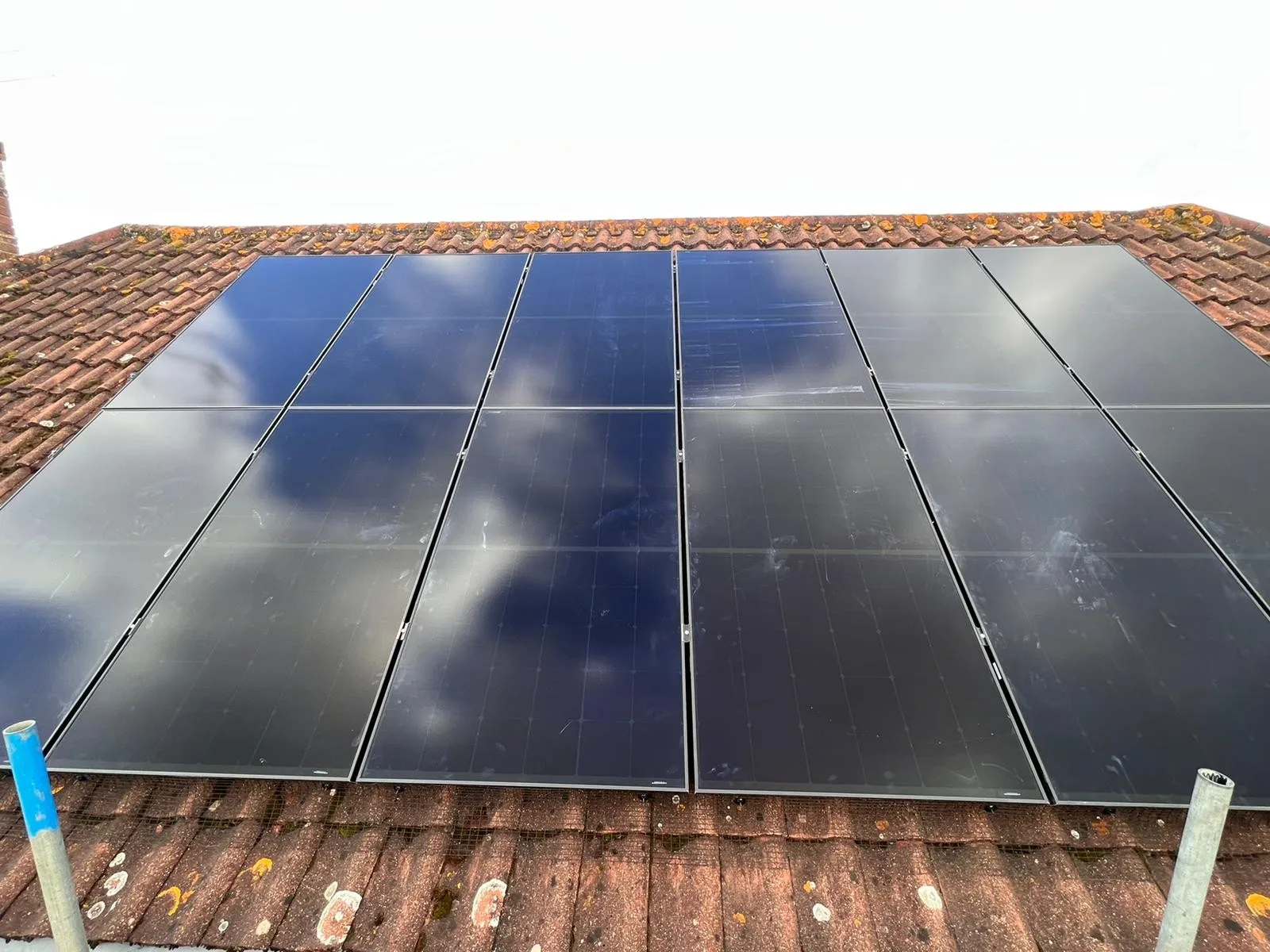
Solar panel efficiency is the share of the sunlight hitting a panel that it turns into electricity, and modern panels are better at it than ever. Industrially produced modules achieve real-world efficiencies of 20 to 22 percent, according to the US Department of Energy, and the best domestic panels tested by Which? in July 2026 reached up to 23.7 percent. This guide explains what the numbers mean and why they are good news for your roof.
What efficiency measures
Efficiency compares the electrical power a panel produces with the sunlight energy landing on its surface. A panel rated at 22 percent turns more than a fifth of the light that reaches it into electricity.
It is a measure of how much power you get from a given area. A higher efficiency lets you fit more output on a smaller roof, which is why premium panels are popular for homes where space is valuable.
Where the numbers come from
- Production panels. The US Department of Energy gives 20 to 22 percent for industrially produced modules in real-world conditions.
- The best domestic panels. Which? lists the most efficient domestic panel from each of eight brands in July 2026. They range from 20.3 percent to 23.7 percent, and six of the eight are at 22 percent or more.
- The research frontier. The US Department of Energy says monocrystalline silicon cells can exceed 27 percent in ideal laboratory conditions, so the technology keeps moving forward.
What the percentage means in watts
Under standard test conditions, which use 1,000 watts of sunlight per square metre, a 22 percent efficient panel produces about 220 watts for every square metre of its surface. A 20 percent panel produces about 200 watts. That is why comparing watts per square metre is a quick way to see how much output you can fit on your roof.
It also explains the rise in panel wattage. Modern domestic panels commonly run from 370 W to 640 W, according to the models Which? tested in July 2026, so a smaller number of panels can deliver the system size you want.
Why efficiency helps your home
More efficient panels make more electricity from every square metre. That helps in three ways.
- A smaller roof can still host a worthwhile system.
- A larger system fits within the same space, which suits homes planning an electric vehicle charger or heat pump.
- You can make good use of two or more roof faces.
Our guide to how many solar panels you need shows how roof space and usage fit together.
Higher efficiency can also mean fewer panels for the same system size, which gives a tidier roof and fewer fixings. If you are weighing two options, ask us to show both on your roof, with the total kWp, the number of panels and the estimated annual generation for each, so you can pick the one that suits your home.
Quality is more than one number
Which? scores panels on maximum power and energy production, with efficiency one part of the picture, and says all panels in its Recommended Brand award must score five stars for efficiency. Reliability, warranty and how the panels pair with your inverter matter too. Our guide to string versus micro inverters explains the choices, and the premium European panels REST installs carry a manufacturer product warranty and performance warranty.
Keeping efficiency high over the years
Good panels keep delivering. The US National Renewable Energy Laboratory reviewed nearly 2,000 measured rates and found a median loss of 0.5 percent a year, so a panel that starts near 22 percent is still performing strongly after two decades. Our guide on solar panel lifespan covers the warranties.
A design that gets the most from the panels
Panel efficiency is one part of a well-designed system. Position, tilt, shading and the inverter all shape what your home receives. That is why a survey of your own roof tells you more than a datasheet, and why REST designs each system around the property.
What to look for on a datasheet
- Module efficiency, and whether it is for the panel or just the cell.
- Maximum power in watts, and the panel size, so you can compare watts per square metre.
- The performance warranty, including the guaranteed output over the years.
- MCS certification, since MCS says a certificate may be required for some grants and incentives.
See what the right panels could do on your roof
REST UK explains the panel options we use and designs the system around your roof and your usage. You can read about our solar panels, or request a free quote and ask us to show what a high-efficiency option could do on your own roof.