
 Russell Andrews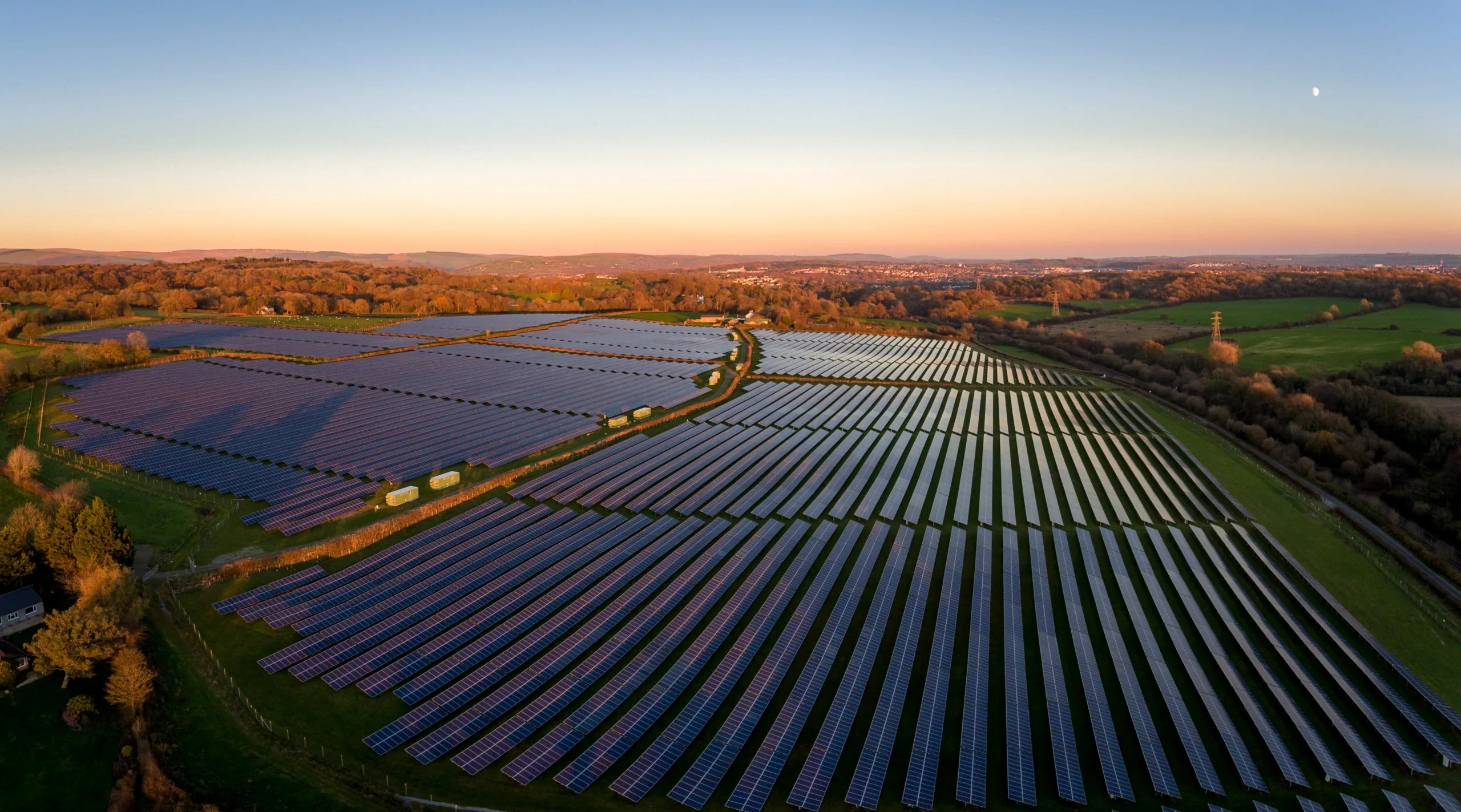
Agrivoltaics means combining solar generation with continued agricultural use of the same land - grazing sheep beneath a solar array, or positioning panels to give crops useful shade rather than taking a field out of production entirely. For UK farmers facing both rising energy costs and pressure on farmland, it's a genuine way to add income without giving up the land's primary use. (solarpanelsforfarms.uk)
By Russell Andrews
What this actually looks like in practice
The most common UK form is solar grazing - sheep or poultry grazing the ground beneath and between panel rows, which keeps vegetation managed without machinery and lets the land keep producing. Crop-based agrivoltaics, where panels are raised and spaced to let arable or horticultural crops grow underneath, is less widespread here but growing, particularly for shade-tolerant crops.
This isn't the same as a conventional solar farm, which typically takes land out of agricultural production for the life of the installation. The point of agrivoltaics specifically is that farming continues alongside generation.
Why UK planning policy now treats this differently
The UK government's solar roadmap targets 45-47GW of solar by 2030, and its planning guidance now explicitly recognises agrivoltaics as a distinct category - the dual-use nature of the land is treated as a material consideration in planning assessments, rather than the proposal being judged as if it were a conventional solar farm removing land from food production. That's a genuine, relatively recent shift worth knowing about if you were told a few years ago that solar wasn't realistic on productive farmland. (solarpanelsforfarms.uk)
Grant funding available in 2026
Funding varies by nation and changes over time - always confirm current eligibility and deadlines before assuming a figure below still applies:
England: the Improving Farm Productivity grant offers up to 25% funding toward solar PV equipment, with grants generally ranging from £15,000 to £100,000 depending on project scale.
England (SFI): the Sustainable Farming Incentive's renewable energy add-on introduced for 2026 pays £40-£80 per hectare annually for land used for agricultural solar.
Wales: the Welsh Government has allocated ring-fenced funding for agricultural solar, with individual grants from roughly £12,000 to £100,000.
Scotland: funding is available through the SRDP for renewable energy projects on farms, with grants up to £500,000 for larger schemes.
Northern Ireland: DAERA's energy efficiency scheme covers up to 40% of installation costs.
What actually makes a site suitable
Not every field is a good agrivoltaics candidate. Grid connection capacity and distance from the nearest suitable substation is often the single biggest practical constraint, and can make an otherwise ideal field unviable or push project costs up significantly. Beyond grid access, worth assessing honestly before committing time to a proposal:
| Consideration | Why it matters |
| Grid connection capacity | Often the deciding factor on viability and project cost, more than the land itself |
| Existing land use | Grazing land adapts more easily than land already in intensive arable use |
| Panel height and spacing | Needs to suit whichever livestock or crop will share the land, not a generic layout |
| Soil and drainage | Needs managing carefully during installation to avoid long-term damage to the land's agricultural value |
The honest trade-offs
Upfront cost is real and substantial, even with grant support covering part of it - financing this alongside normal farm cashflow needs proper planning, not just an assumption that grant funding closes the gap. Land management also gets more complex: integrating grazing rotations or crop management around a solar array takes coordination that a conventional solar farm simply doesn't require, since there's no livestock or crop to think about there. Weigh these honestly against the additional income and land-use efficiency before treating agrivoltaics as a straightforward decision.
Considering solar on farm or rural land? Request a free quote and our agriculture and rural solar team can talk through whether your specific land and current use makes sense for this.