
 Russell Andrews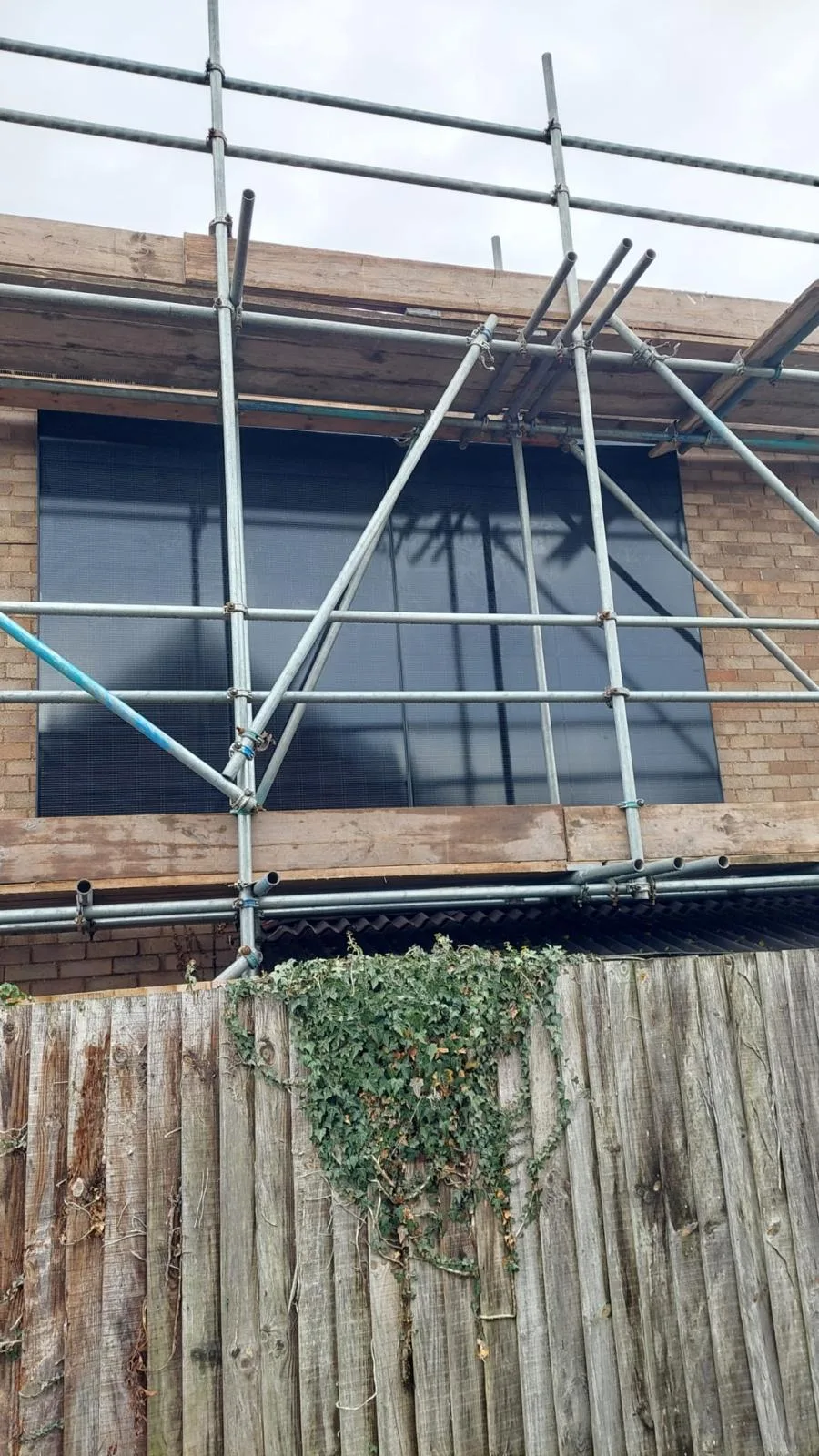
Yes, vertical solar panels can generate electricity on a suitable UK wall. However, a wall should not be assumed to match the output of a well-positioned, sloping roof. Our advice is to explore this option where roof space is limited, then check generation, mounting suitability and permissions before committing. Panel angle and orientation both affect the result.
By Russell Andrews
This guide explains the considerations rather than promising a particular wall-mounted installation. For our residential solar service, bring the wall location into your initial enquiry so its suitability can be discussed before choosing equipment.
How vertical solar panels differ from roof panels
Here, vertical means the panel surface stands at 90 degrees to the ground. It does not simply mean a roof panel has been arranged upright in portrait format. Solar modelling treats the panel's angle from horizontal separately from its compass direction.
Wall-mounted solar panels may sit parallel to the building or project outwards on angled supports. For a useful comparison, specify the actual panel angle rather than just describing the system as wall-mounted. The generation estimate needs that angle and the direction the panels face.
Compare the location, not just the panel rating
A panel's rated power describes its performance under standard test conditions, not the electricity it will produce throughout the year. The European Commission's solar modelling tool accounts for location, angle, orientation and system losses. It also provides monthly generation estimates.
We recommend comparing the proposed wall with the roof space actually available, rather than an imaginary perfect roof. Request the same panel capacity in both estimates, with the assumptions shown clearly. That makes it easier to see what the location changes.
Check the monthly figures as well as the annual total. A claim about strong performance during one season is not enough to establish the best arrangement for your home. The modelling tool can show how production changes through the year.
Would your wall be a sensible location?
Start with sunlight. Energy Saving Trust identifies an unshaded, south-facing roof as ideal and highlights the effect of nearby trees and buildings. Applied to a wall, our practical takeaway is to investigate shade before getting attached to a particular panel layout.
Photograph the whole elevation, not just the clear patch where panels might fit. Include neighbouring buildings, roof overhangs and nearby trees. Note when you took each photograph, so a sunny lunchtime picture is not mistaken for an all-day assessment.
What to resolve before choosing fixings
Our recommendation is to make these questions part of the design brief for solar panels on a wall:
What is the wall made from, and what condition is it in?
How will the supporting structure and wind exposure be assessed?
Does the proposed mounting arrangement follow the equipment manufacturer's instructions?
How will fixings and cable entries preserve weather protection?
Will panels obstruct windows, vents, access routes or future maintenance?
What access will be needed if a panel requires replacement?
Include ventilation in that discussion. The Joint Research Centre explains that restricted airflow behind panels increases operating temperature, which affects performance. A neat appearance is not a reason to disregard the required mounting clearance.
Do not buy a bracket kit first and try to make the building fit its requirements afterwards. Resolve the mounting proposal before ordering equipment.
Do wall installations need planning permission?
Planning position checked on 10 September 2026: England's domestic solar permitted development rules changed on 27 August 2026. Houses and blocks of flats now have different eligibility requirements, with a 12-month transitional provision for the previous rules.
Under the new rules for houses, wall-mounted equipment must not project more than 0.2 metres where the wall abuts a highway. On other walls, the limit is 0.4 metres. For blocks of flats, the wall projection limit remains 200 millimetres. These limits are only part of the conditions.
Restrictions also concern protected locations and buildings. In conservation areas and World Heritage Sites, the rules restrict installations on walls facing a highway. Leaseholders may need the freeholder's or management company's permission.
Check the exact proposal with your local planning authority before work starts. Planning Portal's guidance covers England, not a single UK-wide regime. For properties in Scotland, Wales or Northern Ireland, confirm the applicable local requirements.
For your discussion with us, have the property type, proposed wall, approximate projection and any known planning restrictions ready. Keep planning questions separate from the mounting assessment: the brief should address both.
Costs, batteries and your next step
We would not use a standard rooftop price as a wall-mounted quote. General solar panel installation costs vary with system size, access and the way equipment is incorporated into the building. That makes a clearly defined scope more useful than an unsupported national average for this arrangement.
For a meaningful project discussion, request separate allowances for panels, mounting, electrical equipment, access and any building work. Check whether permissions, structural assessment and making good are included or remain to be resolved. Avoid treating an incomplete estimate as the finished project cost.
Considering battery storage for solar? A battery stores surplus electricity for later use; it does not increase the panels' generation. Our home battery storage options are worth discussing alongside your expected surplus and evening consumption, rather than adding storage automatically.
The useful question is whether vertical solar panels make good use of your available space, at a cost you are comfortable with. To start that conversation, request a free quote and tell us why you are considering the wall. Include photographs, your postcode and recent electricity usage, and ask us to confirm whether the proposed arrangement is suitable for us to take forward.