
 Russell Andrews
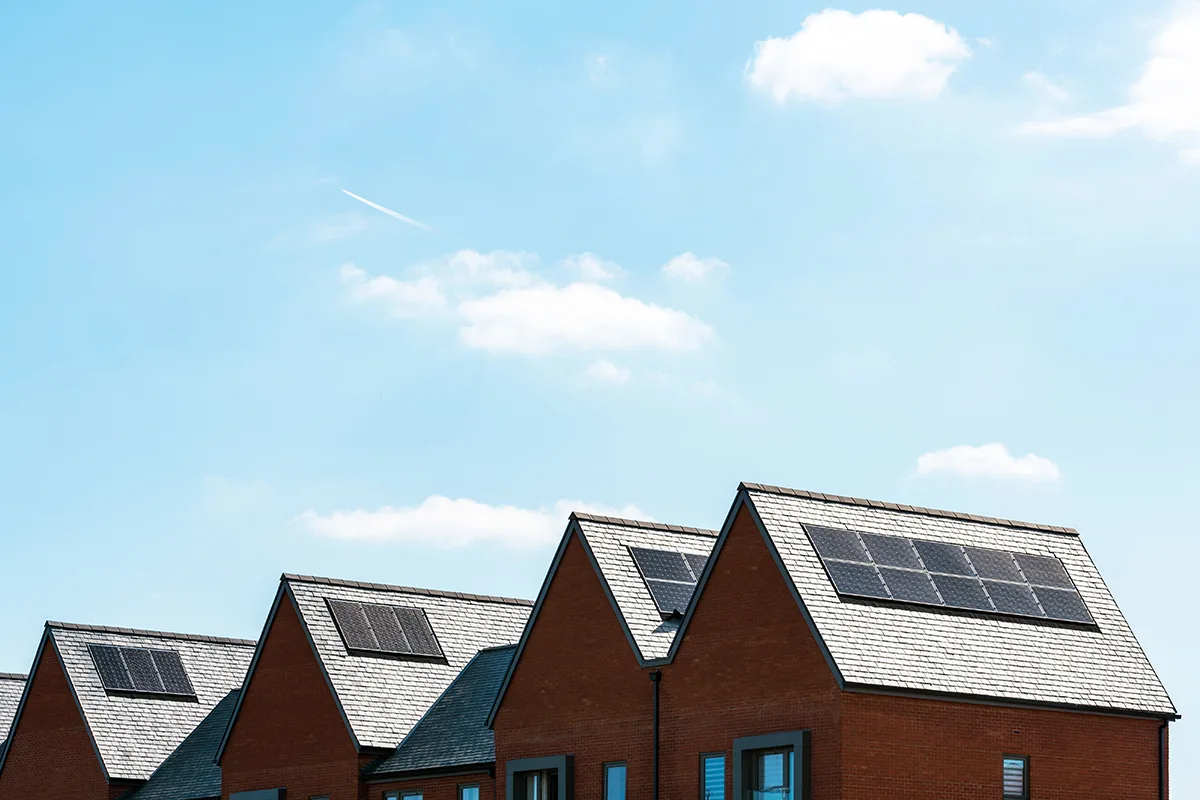
The best direction for solar panels in the UK is south, but a roof facing east or west still works well, and the right design can make a difference on almost any roof. At REST UK, our own team surveys your roof and designs the layout around its direction, angle and shade, then shows you the expected generation in writing. Fill in our form and we will tell you what your roof can do.
How roof direction affects solar panel output
According to Switch Together, which cites MCS irradiance data, roughly speaking panels facing south-east or south-west produce about 94 percent of a south-facing roof, east or west about 80 to 85 percent, and north-east or north-west about 65 to 70 percent. These are estimates, because angle, shade and location all matter as well.
- South: the strongest direction, with the sun high through the day.
- South-east and south-west: very close to south.
- East and west: good, and often useful because generation shifts to the morning or evening.
- North: lower output, and a design question for our team.
At REST UK: we use your roof's real direction and angle in your design, so you see an estimate for your home, not a national average.
Why east and west roofs are worth a look
Many homes use more electricity in the morning and evening. Panels on east and west faces generate at those times, so the electricity is more likely to be used at home. Splitting panels across two faces can also spread generation across the day, which suits a battery well. Our guide to solar battery storage explains how.
At REST UK: if your roof faces east and west, we can design panels on both faces. Ask us on the form.
What about a north-facing roof?
North-facing panels generally produce less, so the question is whether other parts of the roof, a garage, an extension or a flat roof could host the panels instead. Our guide to flat roof solar panels shows how a different mounting can change the answer.
At REST UK: our specialist team looks at every surface you have, including the back of the house, and tells you straight what is worth installing.
Angle, shade and space matter too
Direction is one of several factors. A roof pitch around the middle of the typical range often works well, and shade from chimneys, trees or neighbours can reduce output more than a small change in direction. Our guide to solar panel efficiency explains the details.
What we look at in a survey
- Which way each roof face points.
- The pitch of the roof.
- Shade from trees, chimneys and neighbouring buildings.
- Usable space for panels, including any outbuildings.
- How you use electricity through the day.
That information goes into a written design, so you can see the reasoning before you decide.
At REST UK: the same team that surveys your roof installs your system, and our Maintenance and Aftercare service offers annual health checks and long-term performance support.
Have a question we have not covered? Fill in our form and our specialist team will give you a direct answer, or ask our chatbot on the contact page.
Does the direction change the right system size?
Yes. A roof that faces slightly away from south may call for a few more panels, or a higher-rated panel, to reach the same generation. Panels with a higher rating squeeze more output from limited space, which can make up for a less than perfect direction. Splitting an array across two roof faces can also help it match your daily routine.
The right answer is always specific to your home, because pitch, shade and the way you use electricity change the maths. That is why we put the layout, the number of panels and the expected generation in writing before you decide, and why we would rather survey your roof than guess from a photo. Our guide to how many panels you need explains the sizing thinking.
At REST UK: our specialist team will tell you straight what your roof can achieve. Fill in the form and we will come back with a direct answer.
Why homeowners choose REST UK
We are MCS certified for solar PV, protected through HIES, and registered with the FCA as a credit broker (FCA 824643). Our own team surveys, designs and installs every system across England and Wales, and REST UK is rated 4.3/5 on Trustpilot from more than 721 reviews. Our accreditations page lists each certificate so you can check it yourself.
Output percentages are estimates based on a published UK guide and vary by roof. Information was checked on 5 November 2026.