 Russell Andrews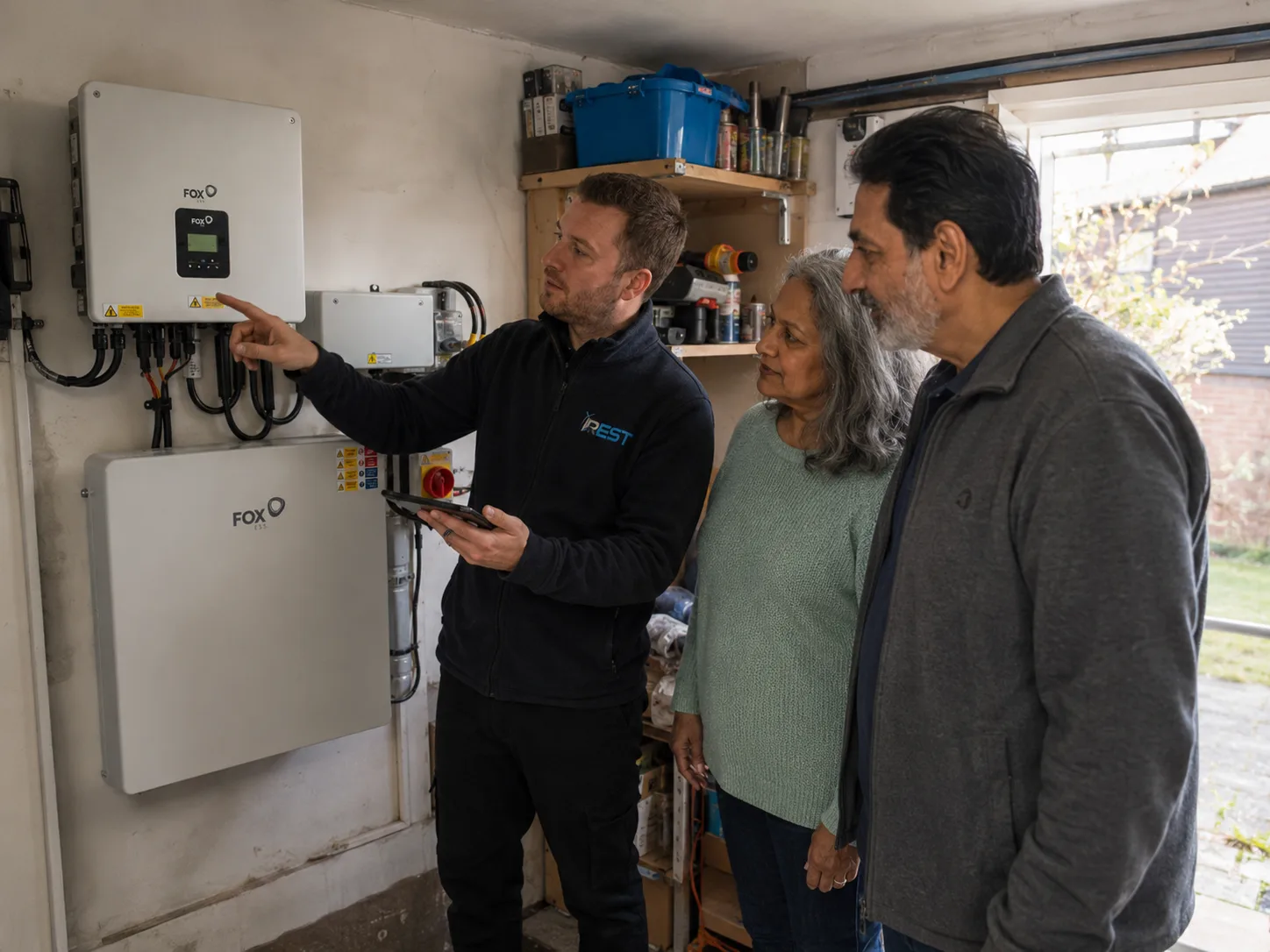
Solar panels alone can't power a UK home. What they produce - direct current, or DC electricity - isn't the form your sockets, lights or appliances actually use. The inverter is the component that converts it into alternating current (AC), the standard your home already runs on. Without one working correctly, the electricity your panels generate is unusable.
By Russell Andrews
Why the conversion is necessary
UK homes run on a 230V AC supply. Solar panels generate DC power at a voltage that varies constantly with sunlight levels - more on a bright afternoon, less under cloud. The inverter's job is to take that variable DC input and output a stable, usable 230V AC supply, whether that electricity is being used in your home immediately or exported to the grid.
This isn't just a one-off conversion. A good inverter is also managing your system's efficiency in real time - tracking each panel's output, adjusting for changing light conditions, and reporting performance data you can actually check.
Why inverter quality affects your whole system, not just efficiency
Because every watt your panels generate passes through the inverter, a poorly specified or badly matched inverter genuinely limits what your whole system can deliver - regardless of how good the panels themselves are. Three things matter in practice:
| What it affects | Why it matters |
| Performance tracking and monitoring | Lets you (and your installer) spot a fault early, rather than losing months of generation before noticing a problem |
| Shading tolerance | Varies significantly by inverter type - relevant if any part of your roof is shaded at any point in the day |
| Battery compatibility | Some inverter and battery pairings are meaningfully more efficient than others, even if you're not adding storage on day one |
The types, briefly
Inverters broadly fall into three categories - string, microinverter and hybrid - each suited to different roofs and priorities. That comparison is detailed enough to deserve its own explanation: see our string vs micro-inverters guide for which type actually suits your property, and our best solar inverters 2026 shortlist for specific brands worth considering.
Lifespan and warranty - what's realistic
Solar panels are typically warrantied for 25 years or more. Inverters generally aren't - most standard string inverters carry a manufacturer warranty of 5-12 years, with premium and microinverter products often extending to 20-25 years. That gap matters: budget for the realistic possibility of replacing or servicing your inverter at least once during the life of your panels, and factor the difference in warranty length into any price comparison between brands, not just the upfront cost.
What actually shortens an inverter's working life
Heat - inverters mounted in direct sun or a poorly ventilated loft space run hotter, which shortens component life.
Being undersized for the array feeding it, forcing it to run at or near capacity for long periods.
Basic electrical protection quality, which varies more between budget and premium brands than most buyers expect.
Ask your installer directly where they're proposing to mount your inverter and why - a technically sound system with a poorly sited inverter still underperforms.
What this means when you're choosing a system
Treat the inverter as a genuine specification decision, not an afterthought to the panels. Ask what type is being proposed and why it suits your specific roof, what warranty actually applies and who honours it, and how the system will alert you (or your installer) if something goes wrong. Request a free quote and we'll talk through inverter choice as part of a proposal built around your actual roof, not a generic system.